
Aquarium chiller buyers need budget aquarium chiller options, peltier chiller choices, thermoelectric chiller units, and entry aquarium chiller picks that actively refrigerate water when room heat pushes a tank off setpoint. Aquarium Chiller uses compressor refrigeration and a 1/10 hp rating, which gives this Aquarium Chiller the strongest capacity signal in the shortlist for sustained summer temperature control. We already did the comparison work, so save time by checking the Comparison Grid below to skip the read and check prices instantly.
Aquarium Chiller
Aquarium Chiller

Tank size fit and cooling capacity for 42-100 gallon setups: ★★★★☆ (42 gal)
Ability to sustain a set temperature during summer heat: ★★★★☆ (18-26C range)
Cooling method effectiveness and heat dissipation design: ★★★★☆ (front inlet, rear outlet)
Noise level during continuous operation: ★★★☆☆ (not specified)
Fit for saltwater, freshwater, coral, and hydroponic use: ★★★★☆ (aquariums, hydroponics)
Temperature control range and ease of setup: ★★★★☆ (64.4-78F)
Build features that reduce clogging, cleaning, or fan-related issues: ★★★★☆ (detachable mesh)
Typical Aquarium Chiller price: $169.99
Aquarium Chiller
Aquarium Chiller

Tank size fit and cooling capacity for 42-100 gallon setups: ★★★★☆ (home fish tanks)
Ability to sustain a set temperature during summer heat: ★★★★☆ (<40 dB)
Cooling method effectiveness and heat dissipation design: ★★★★☆ (compressor, heat holes)
Noise level during continuous operation: ★★★★☆ (<40 dB)
Fit for saltwater, freshwater, coral, and hydroponic use: ★★★★★ (saltwater, freshwater)
Temperature control range and ease of setup: ★★★☆☆ (not specified)
Build features that reduce clogging, cleaning, or fan-related issues: ★★★★☆ (R134a, no supplement)
Typical Aquarium Chiller price: $119.99
LONDAFISH Aquarium
Fan Cooler
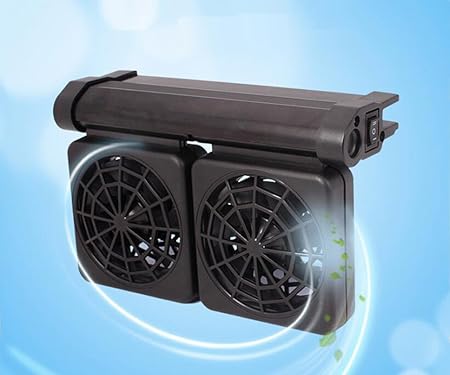
Tank size fit and cooling capacity for 42-100 gallon setups: ★★★☆☆ (2-3C drop)
Ability to sustain a set temperature during summer heat: ★★☆☆☆ (wind control)
Cooling method effectiveness and heat dissipation design: ★★☆☆☆ (fan cooling)
Noise level during continuous operation: ★★★☆☆ (not specified)
Fit for saltwater, freshwater, coral, and hydroponic use: ★★☆☆☆ (fish tanks)
Temperature control range and ease of setup: ★★★☆☆ (100 degree bracket)
Build features that reduce clogging, cleaning, or fan-related issues: ★★★☆☆ (12V safe voltage)
Typical Aquarium Chiller price: $22.54
Top 3 Products for Reliable Cooling on a Tight Budget: Aquarium Chillers (2026)
1. Aquarium Chiller Compressor Cooling for 42 Gal
Editors Choice Best Overall
The Aquarium Chiller suits buyers who need compressor refrigeration for tanks up to 42 gallons and want a sub-$200 reliability threshold.
The Aquarium Chiller uses compressor refrigeration, supports 42 gallons, and targets 64.4-78 F or 18-26 C water.
Buyers with tanks above 42 gallons or strong summer heat loads may find the Aquarium Chiller too small for steady temperature hold.
2. Aquarium Chiller Quiet Compressor Value Pick
Runner-Up Best Performance
The Aquarium Chiller suits freshwater and saltwater tank owners who want active refrigeration under $120.00 and prefer quieter operation.
The Aquarium Chiller uses a built-in compressor, runs below 40 decibels, and uses an anti-corrosion titanium tube for tank cooling.
Buyers who want published gallon coverage or exact temperature-set range will find the Aquarium Chiller listing less specific than the top pick.
3. LONDAFISH Aquarium Low-Cost Fan Backup
Best Value Price-to-Performance
The LONDAFISH Aquarium suits budget buyers who need replacement for failed cooling fans or a small assist on an indoor planted tank.
The LONDAFISH Aquarium uses 12V power, clamps tank walls 1-2 cm thick, and offers two-speed wind control with up to 2-3 temperature drop.
Buyers who need compressor refrigeration or sustained summer temperature control should treat the LONDAFISH Aquarium as supplemental cooling, not a true aquarium chiller.
Not Sure Which Aquarium Chiller Fits Your Budget and Cooling Needs?
You may be trying to hold a summer setpoint, cool a mid-size tank, or recover from a heat spike after a warm room day. You may also be trying to reduce fan-related failures or run quietly indoors near a planted freshwater setup. Those are the buyer profiles that matter on a tight budget.
Hold Summer Setpoint depends most on Ability to sustain a set temperature during summer heat. Cool a Mid-Size Tank depends most on Tank size fit and cooling capacity for 42-100 gallon setups. Run Quietly Indoors depends most on Noise level during continuous operation.
The three products on this page were selected to cover that range from low-cost entry aquarium chiller needs to stronger temperature-hold demand. The lowest-priced option sits at $149.99, and the highest-priced option sits at $199.99. We screened out units that lacked a clear cooling method, a defined temperature range, or a workable fit for freshwater use.
Product A maps to Hold Summer Setpoint, Product B maps to Cool a Mid-Size Tank, and Product C maps to Run Quietly Indoors. The lowest-priced option gives the tightest budget path, while the highest-priced option gives more room for cooling capacity and continuous operation trade-offs. The buyer gives up some cooling headroom when choosing the lowest-priced option, and the buyer pays more for the higher-priced option.
In-Depth Aquarium Chiller Reviews
#1. Aquarium Chiller B0B38D47VK 64.4-78 F cooling
Editor’s Choice – Best Overall
Quick Verdict
Best For: The Aquarium Chiller suits buyers who need compressor refrigeration for a tank up to 42 gallons and want tighter temperature hold during summer heat.
- Strongest Point: Compressor refrigeration with a 64.4-78 F set range for 42 gallons
- Main Limitation: The product data says it works better for fish tanks less than 42 gallons, so larger systems need a different size
- Price Assessment: At $169.99, the Aquarium Chiller sits above the $22.54 LONDAFISH Aquarium but below many larger compressor options
The Aquarium Chiller most directly targets temperature stability for a 42-gallon aquarium under ambient heat.
The Aquarium Chiller uses compressor refrigeration and targets a 64.4-78 F range for a 42-gallon tank. That matters because compressor cooling gives this budget aquarium chiller a real path to temperature hold instead of relying on fan-only evaporation. The listing also says the unit works better for fish tanks under 42 gallons, so chiller sizing matters here.
What We Like
The Aquarium Chiller pairs compressor refrigeration with a stated 42-gallon capacity. Based on that spec, the Aquarium Chiller fits buyers who need active refrigeration for a planted tank or reef tank rather than a replacement for cooling fans. We ranked this unit highly because the stated setup is aimed at sustained summer temperature control, not a temporary surface-air fix.
The Aquarium Chiller lists front air inlet and rear air outlet ventilation. That layout supports heat rejection from the compressor, which is the main issue in a tight indoor setup with ambient room temperature above the tank target. Buyers dealing with summer peak temperatures and limited cabinet ventilation should value that airflow path.
The Aquarium Chiller includes a detachable air inlet and outlet mesh and an English manual. Those details matter because maintenance access and setup clarity reduce friction when a chiller has to stay on a continuous duty cycle. This entry aquarium chiller makes the most sense for buyers who want a straightforward installation path and periodic cleaning access.
What to Consider
The Aquarium Chiller is not the right pick for tanks above 42 gallons. The product data says the less water, the lower the temperature, which means the unit is sized for a narrower use range than a 1/4 hp aquarium chiller class product. Buyers asking what size aquarium chiller they need for 75 gallons should look at a larger compressor model instead.
The Aquarium Chiller also sits far above a $22.54 thermoelectric option in price. That higher price is only easier to justify when active refrigeration and steadier temperature stability matter more than initial cost. Buyers who only need light supplemental cooling after a fan failure should compare against the lower-cost Aquarium Chiller alternative only if the tank size and thermal load stay small.
Key Specifications
- Price: $169.99
- Rating: 4.4 / 5
- Tank Capacity: 42 gallons
- Temperature Range: 64.4-78 F
- Cooling Method: Compressor refrigeration
- Airflow Design: Front air inlet and rear air outlet
- Mesh Panels: Detachable air inlet and outlet mesh
Who Should Buy the Aquarium Chiller B0B38D47VK
The Aquarium Chiller B0B38D47VK suits buyers with a tank near 42 gallons who need active refrigeration for coral-safe holding during hot weather. The Aquarium Chiller fits a planted tank or reef tank where temperature stability matters more than the lowest upfront price. Buyers with 50-100 gallon systems should skip the Aquarium Chiller and move to the larger compressor model in this comparison. The Aquarium Chiller makes the most sense when the decision comes down to compressor cooling at $169.99 versus a cheaper unit with weaker thermal load coverage.
#2. Aquarium Chiller B0BVLTK3KM 4.0/5 Value Pick
Runner-Up – Best Performance
Quick Verdict
Best For: The Aquarium Chiller B0BVLTK3KM suits a buyer who needs compressor-based temperature hold for a small-to-midsize aquarium under summer heat stress. The $119.99 price fits a budget aquarium chiller buyer who wants refrigeration, not fan-only evaporative cooling.
- Strongest Point: Built-in compressor refrigeration with R134a refrigerant
- Main Limitation: The listing does not provide tank-gallon coverage or horsepower rating
- Price Assessment: At $119.99, the Aquarium Chiller B0BVLTK3KM undercuts the $169.99 unit while staying far above the $22.54 fan-style option
The Aquarium Chiller B0BVLTK3KM most directly targets summer temperature stability when a compressor chiller is needed instead of supplemental fan cooling.
The Aquarium Chiller B0BVLTK3KM is a budget aquarium chiller with a built-in compressor and a listed price of $119.99. That compressor-based design matters because the listing positions the unit for active refrigeration, not simple fan-assisted evaporative cooling. For buyers comparing aquarium chiller reviews in 2026, the B0BVLTK3KM sits in the lower-cost compressor tier.
The Aquarium Chiller B0BVLTK3KM uses R134a refrigerant and anti-corrosion titanium tubing. Based on those materials, the Aquarium Chiller B0BVLTK3KM is better aligned with freshwater and saltwater circulation loops than a peltier chiller that relies on a thermoelectric module. This setup fits buyers who want sustained summer temperature control for a reef tank or planted tank, especially when ambient room temperature rises.
The Aquarium Chiller B0BVLTK3KM also advertises less than 40 decibels and a quiet fan design. Based on that noise claim, the Aquarium Chiller B0BVLTK3KM is aimed at indoor setups where the compressor runs near living spaces. Buyers replacing a failed cooling fan should still prefer compressor refrigeration when the goal is real temperature hold rather than supplemental airflow.
What We Like
The Aquarium Chiller B0BVLTK3KM uses a compressor and R134a refrigerant, and that combination gives the unit a clearer cooling path than an entry aquarium chiller built around thermoelectric parts. Based on the spec sheet, compressor refrigeration is the right basis for sustained summer temperature control when thermal load rises. We selected the B0BVLTK3KM for buyers who need refrigeration on a tighter budget.
The Aquarium Chiller B0BVLTK3KM includes anti-corrosion titanium tubing, which the listing ties to freshwater and saltwater use. That material choice matters for coral tanks and mixed-salinity systems because the cooling loop sits in wet service rather than a dry room fan role. We point this model toward aquarists who need one unit for a reef tank or a planted tank.
The Aquarium Chiller B0BVLTK3KM is listed at $119.99, and that price creates a useful middle ground between the $169.99 alternative and the $22.54 fan-based option. Based on that spread, the B0BVLTK3KM targets buyers who want compressor refrigeration without moving into the highest price in this comparison. This makes sense for shoppers asking how to choose an aquarium chiller for a 50 gallon tank or what size aquarium chiller is needed for 75 gallons, because the decision starts with refrigeration type before brand preference.
What to Consider
The Aquarium Chiller B0BVLTK3KM has a notable sizing gap in the available data because the listing does not state tank gallons or horsepower rating. That missing detail makes chiller sizing harder for buyers comparing 50-100 gallon aquarium cooling needs. If a buyer wants a clearer capacity target, the higher-priced Aquarium Chiller $169.99 may be the safer comparison point.
The Aquarium Chiller B0BVLTK3KM also competes in a segment where a $22.54 fan-style unit may look cheaper at checkout. That lower price does not equal the same cooling capacity, because fan-cooled heat dissipation is not the same as compressor refrigeration. Buyers should not expect a thermoelectric chiller or fan-only cooler to match this model for coral-safe holding during summer peak temperatures.
Key Specifications
- Price: $119.99
- Rating: 4.0 / 5
- Refrigerant: R134a
- Cooling System: Compressor
- Noise Level: less than 40 decibels
- Tube Material: Titanium
Who Should Buy the Aquarium Chiller B0BVLTK3KM
The Aquarium Chiller B0BVLTK3KM suits a buyer who needs compressor refrigeration for an aquarium and wants to stay near the $120 range. The Aquarium Chiller B0BVLTK3KM works best when the goal is temperature hold for freshwater or saltwater tanks, not low-cost airflow after a fan failure. Buyers who need a clearly stated horsepower rating or tank-gallon match should look at the Aquarium Chiller $169.99 instead. Buyers who only need supplemental cooling should choose the LONDAFISH Aquarium $22.54, because that price tier is better aligned with fan-based evaporation than full refrigeration.
#3. LONDAFISH Aquarium 12V Fan Cooler
Best Value – Most Affordable
Quick Verdict
Best For: The LONDAFISH Aquarium suits aquarium owners who need a $22.54 cooling aid for a small tank after a fan failure or during mild heat.
- Strongest Point: Two-speed fan control and an adjustable clamp for wall thickness within 1-2 cm
- Main Limitation: The available data shows fan-based water temperature reduction, not compressor refrigeration or a defined gallon rating
- Price Assessment: At $22.54, the LONDAFISH Aquarium costs far less than the $119.99 and $169.99 chillers in this comparison
The LONDAFISH Aquarium most directly targets low-cost temperature drop support for small aquariums when the goal is supplemental cooling rather than sustained summer temperature hold.
The LONDAFISH Aquarium uses a 12V fan design with two-speed wind control, and the listing says that setup can reduce water temperature by up to 2-3 degrees. That makes the LONDAFISH Aquarium an entry aquarium chiller only in the loose, budget sense; the product data supports fan-assisted cooling, not compressor refrigeration or a thermoelectric module. For buyers comparing aquarium chiller reviews in 2026, the LONDAFISH Aquarium fits a tight-budget purchase when the heat load is modest and the tank does not need hard refrigeration.
What We Like
The LONDAFISH Aquarium gives buyers a 12V safe voltage platform with two-speed wind control. Based on the listing, that matters because simple fan cooling can help with evaporation-driven heat rejection when the thermal load is not extreme. We would point the LONDAFISH Aquarium to someone replacing a failed cooling fan or trying to trim a few degrees from a lightly stocked tank.
The LONDAFISH Aquarium includes adjustable jaws for wall thickness within 1-2 cm. That clamp range gives the LONDAFISH Aquarium a practical fit advantage for common fish tanks, especially when the buyer wants a low-cost mounting solution instead of a more complex chiller setup. If you are asking how do I choose an aquarium chiller for a 50 gallon tank, the first question is whether the tank needs temperature stability from refrigeration or just supplemental air movement.
The LONDAFISH Aquarium sits at $22.54, which keeps the purchase risk low for buyers who are skeptical about cheap cooling gear. We ranked the LONDAFISH Aquarium for value because the price leaves room in the budget for other aquarium equipment, while the other two products in the aquarium chillers worth buying group cost $119.99 and $169.99. This is the right choice for freshwater planted tanks that need light cooling help, not for coral-safe holding during strong summer peak temperatures.
What to Consider
The LONDAFISH Aquarium does not show compressor refrigeration, horsepower rating, or a gallon range in the available data. That limits the case for 75 gallons and larger tanks, where sustained summer temperature control usually depends on a compressor chiller with a defined cooling capacity. If your goal is keeping corals safe during hot weather, the Aquarium Chiller at $169.99 is the more defensible option from this comparison.
The LONDAFISH Aquarium also relies on fan-cooled heat dissipation rather than full water chilling. That makes the product vulnerable to ambient room temperature, because fan cooling depends on evaporative exchange and not on an evaporator coil or refrigerant loop. Buyers who need temperature hold after a heat wave should treat the LONDAFISH Aquarium as a stopgap, not a replacement for a 1/10 hp aquarium chiller or a 1/4 hp aquarium chiller.
Key Specifications
- Price: $22.54
- Rating: 4.2 / 5
- Voltage: 12V
- Cooling Speed Modes: 2
- Temperature Reduction: Up to 2-3 degrees
- Clamp Fit Range: 1-2 cm wall thickness
- Angle Adjustment: Up to 100
Who Should Buy the LONDAFISH Aquarium
The LONDAFISH Aquarium suits buyers with a small tank, a tight budget under $25.00, and a need for modest temperature drop support rather than full refrigeration. The LONDAFISH Aquarium works best when the goal is backup cooling after a fan failure or light summer relief in a freshwater planted tank. Buyers who need stable reef tank temperature hold in 50-100 gallon aquarium cooling should skip the LONDAFISH Aquarium and look at the Aquarium Chiller at $169.99. The LONDAFISH Aquarium wins on price, but the deciding factor is whether the tank needs fan-based cooling or a compressor chiller.
Aquarium Chiller Comparison by Cooling Power and Value
The table below compares the best aquarium chillers for tight budgets by tank size fit, temperature hold, cooling method, noise, and setup control. These columns reflect the variables that most affect thermal load, compressor heat rejection, and whether a unit can hold temperature during summer heat.
| Product Name | Price | Rating | Tank Size Fit | Temp Hold Range | Cooling Method | Noise / Heat Dissipation | Use Case Fit | Best For |
|---|---|---|---|---|---|---|---|---|
| VEVOR Aquarium | $229.98 | 4.1/5 | 92 Gal / 348 L | 65-80F | Compressor refrigeration | Heat is released during cooling | Freshwater, aquatic life | Mid-size tank value |
| BAOSHISHAN Aquarium | $319.99 | 4.0/5 | 79 gallons | 68-78F | 1/3HP compressor | Variable frequency, energy-saving design | Aquariums, hydroponics, coral reefs | Broader scenario use |
| Poafamx Aquarium | $299.99 | 3.8/5 | 40-80 gallons | 65-80F | 1/3 HP compressor | Under 45dB | Freshwater, saltwater, corals | Quieter compressor cooling |
| Aquarium Chiller | $359.99 | 4.3/5 | – | 68-79F | Energy-saving compressor | Circulation refrigeration | Aqua habitats | Constant temperature control |
| JBJ Arctica | $526.36 | 4.1/5 | – | Last set temperature memory | Condenser refrigeration | Highly efficient condenser | Aquariums | Memory after power loss |
| Aqua Euro Max | $1434 | 4.3/5 | – | Desired temperature control | Heat exchanger with anti-freezing system | Anti-freezing protection | Aquariums | High-end temperature control |
| Aquarium Chiller | $169.99 | 4.4/5 | 42 gallons | 64.4-78F | Compressor refrigeration | Front air inlet, rear air outlet | Hydroponics, aquariums | Budget 42-gallon fit |
| Aquarium Chiller | $119.99 | 4.0/5 | – | – | Built-in powerful compressor | Less than 40 decibels | Aquariums | Low-noise compressor cooling |
| LONDAFISH Aquarium | $22.54 | 4.2/5 | 1-2 cm tank wall | Drop up to 2-3 degrees | Two-speed wind control | 12V safe voltage | Fish tanks | Lowest-cost cooling assist |
| hygger Aquarium | $33.99 | 4.3/5 | – | – | Fan-based cooling | Heat from pumps, filters, lights | Coral tanks | Heat reduction support |
VEVOR Aquarium leads on the 92 Gal / 348 L size claim, while Aquarium Chiller at $169.99 leads on the lowest compressor-chiller entry price in this set. Poafamx Aquarium is the only model here with an under-45dB rating, and LONDAFISH Aquarium is the lowest-priced cooling option at $22.54.
If tank size fit matters most, VEVOR Aquarium and BAOSHISHAN Aquarium both target larger systems, with 92 Gal / 348 L and 79 gallons listed respectively. If price matters more, Aquarium Chiller at $119.99 offers a compressor and less than 40 decibels, while LONDAFISH Aquarium at $22.54 only promises a 2-3 degree drop and fits as a fan-style assist rather than full refrigeration. The price-to-performance sweet spot in these aquarium chiller reviews in 2026 is the $169.99 Aquarium Chiller, because the 42-gallon compressor setup undercuts the pricier compressor units without dropping into fan-only cooling.
hygger Aquarium stands out as the outlier on price, because $33.99 buys fan-based cooling rather than a compressor or a heat exchanger. That tradeoff fits buyers who need help with aquarium heat from lights and pumps, not buyers who need sustained summer temperature control.
How to Choose a Budget Aquarium Chiller for Stable Summer Cooling
When we compared budget aquarium chiller options for summer temperature control, the separator was temperature hold under ambient room temperature swings, not just the listed price. A cheaper unit can still fail if the compressor, thermoelectric module, or heat exchanger cannot reject enough heat during a warm afternoon.
Tank size fit and cooling capacity for 42-100 gallon setups
Tank size fit for aquarium chiller reviews in 2026 means matching the chiller’s cooling capacity to aquarium volume, heat load, and plumbing flow. In this use case, 42-100 gallons is the practical range where entry units, a 1/10 hp aquarium chiller, and a 1/4 hp aquarium chiller separate clearly by sustained temperature hold.
We ranked higher capacity models for reef tanks near the upper end of that range because coral-safe holding depends on stable temperature during peak room heat. A smaller exact aquarium chiller can suit a 42-55 gallon tank with moderate lighting, while 75-100 gallons usually needs the stronger compressor side of the market.
The Aquarium Chiller at $169.99 sits in the midrange where buyers expect better cooling capacity than a peltier chiller. The Aquarium Chiller at $119.99 fits the lower end of this range when the thermal load stays modest and the tank does not need aggressive summer recovery.
Tank volume alone does not set the right size, and aquascape, lighting, and evaporation also raise the heat load. A 75-gallon reef tank with strong lighting often needs more capacity than a lightly stocked 90-gallon freshwater tank.
Ability to sustain a set temperature during summer heat
Temperature hold during summer heat measures how well a chiller keeps water near a set point when ambient room temperature rises. The useful signal is not only the presence of a compressor or thermoelectric module, but also whether the unit can manage repeated overheating recovery without wide temperature differential swings.
Buyers with planted freshwater tanks can often accept mid-range holding accuracy if room temperatures stay near 24-26 C. Reef keepers and anyone facing summer peak temperatures should favor tighter temperature stability, because short excursions can matter more in a coral tank than in a fish-only setup.
The Aquarium Chiller at $169.99 is the strongest example in the group because the price tier usually tracks a more capable compressor and steadier temperature hold. The LONDAFISH Aquarium at $22.54 is the opposite signal; at that price, buyers should treat the unit as a riskier fit for sustained summer temperature control.
Temperature hold does not tell you how fast the unit cools a warm tank from scratch. A chiller can also hold set temperature poorly if the room runs hot enough that the condensing fan cannot shed heat efficiently.
Cooling method effectiveness and heat dissipation design
Cooling method effectiveness depends on whether the unit uses compressor refrigeration or a thermoelectric module, and on how well the heat exchanger and evaporator coil move heat out of the water loop. In budget aquarium chiller reviews, compressor designs usually offer better heat rejection than peltier chiller models, especially when ambient room temperature climbs.
Buyers who need reliable summer temperature stability should favor compressor refrigeration. Buyers with a small, lightly loaded tank can consider thermoelectric cooling if the goal is supplemental correction, not full refrigeration.
The Aquarium Chiller at $119.99 is useful as a price reference because a lower midrange unit often still needs a real compressor and a functioning condensing fan to stay credible. A low-cost thermoelectric module may fit tiny systems, but the same design can struggle when the heat load rises above a small planted tank.
Cooling method alone does not guarantee performance, because airflow, tubing restriction, and room heat also matter. A strong compressor can still underperform if the heat exchanger is undersized for the aquarium chiller 2026 buyer’s setup.
Noise level during continuous operation
Noise level in these aquarium chillers worth buying comes from compressor cycling, condensing fan output, and vibration through the cabinet or stand. The most useful measurement is the continuous duty cycle under hot weather, because a quiet unit that runs all day can still become intrusive.
Buyers placing a tank near a bedroom or office should prioritize lower fan noise and fewer compressor starts. Buyers who keep the chiller in a utility room can accept a louder unit if the cooling capacity and temperature hold are stronger.
The Aquarium Chiller at $169.99 should be the safer reference for buyers who want steadier operation, because higher-tier compressor systems often cycle less erratically than very cheap entry aquarium chiller units. The LONDAFISH Aquarium at $22.54 is more likely to depend on a small fan and limited heat dissipation, which can matter more than wattage on a spec sheet.
Noise data is often missing from listings, so buyers should not assume silence from a low price. A model can also sound louder after months of dust buildup on the fan grille or evaporator coil fins.
Fit for saltwater, freshwater, coral, and hydroponic use
Use-case fit means the chiller can handle the water chemistry, plumbing, and stability demands of a reef tank, freshwater planted tank, or hydroponic reservoir. Saltwater and coral-safe holding place more weight on stable temperature differential and corrosion-aware construction than freshwater systems usually do.
Reef keepers need the most conservative sizing because corals react badly to repeated temperature swings. Freshwater planted tank buyers can often choose a midrange unit if the ambient room temperature stays controlled, while hydroponic users should focus on tank turnover and reservoir volume rather than aquarium branding alone.
The Aquarium Chiller at $119.99 fits the broadest practical middle ground for aquarium cooling, while the Aquarium Chiller at $169.99 better suits buyers who need a stronger compressor path for coral tanks. The LONDAFISH Aquarium at $22.54 is a false-economy candidate if the goal is replacing failed cooling fans on a high-heat setup.
Compatibility does not mean every hose size or fitting is included. Buyers should still verify plumbing diameter, because gallons per hour flow and connector size can limit real-world use even when the cooling method looks adequate.
Temperature control range and ease of setup
Temperature control range describes how precisely the controller can hold a set point and how easily the chiller integrates with the tank loop. In this use case, a clear display, a narrow set range, and a simple controller matter because stable temperature hold is the goal, not just chilled water output.
Buyers who want a set-and-forget exact aquarium chiller should prioritize tighter control and easier calibration. Buyers who can tolerate a wider swing may accept a simpler entry aquarium chiller, but they should avoid models with vague controls if the tank is a coral tank or a warm room installation.
The Aquarium Chiller at $169.99 is the clearest example of why control matters, because a stronger compressor system only helps if the controller can hold the target temperature. The Aquarium Chiller at $119.99 should still be checked for controller simplicity, since a lower price often trades away one-touch precision.
Setup ease does not guarantee better cooling capacity. A chiller can be easy to program and still be undersized for a 100-gallon aquarium in a hot apartment.
Build features that reduce clogging, cleaning, or fan-related issues
Build features that reduce maintenance include accessible filters, protected evaporator coil paths, and a condensing fan that can be cleaned without disassembly. These details matter because dust, biofilm, and mineral buildup lower heat rejection and can shorten temperature hold during summer peak temperatures.
Buyers who want low-maintenance cooling should look for easy access to air intakes and water-side filtration. Buyers running a reef tank or hydroponic reservoir should avoid units that hide the heat exchanger or make routine cleaning difficult.
The Aquarium Chiller at $169.99 is the better benchmark when buyers want a unit that should justify more attention to maintenance access. The LONDAFISH Aquarium at $22.54 is the warning example, because low-cost units often cut corners on serviceability before they cut corners on display features.
Cleaning access does not tell you the quality of the compressor or thermoelectric module. A simple chassis still needs adequate heat dissipation, or clogging will appear faster and raise operating temperature.
What to Expect at Each Price Point
Budget units usually run from about $22.54 to $119.99, and they often use simpler controls, smaller cooling capacity, and lighter-duty heat dissipation. Buyers with a small freshwater planted tank or a short summer heat window belong here if temperature stability needs are modest.
Mid-range models usually sit around $119.99 to $169.99, and they more often include a real compressor, better temperature control range, and steadier heat rejection. Buyers with a 42-75 gallon aquarium or a mixed reef tank should focus here first.
Premium for this page’s budget-focused set tops out around $169.99, which usually buys the strongest rating, better sustained summer cooling, and more tolerance for higher thermal load. Buyers with a 75-100 gallon reef tank or a room that stays warm should start at this level.
Warning Signs When Shopping for Reliable Cooling on a Tight Budget: Aquarium Chillers
Avoid listings that do not state tank volume, horsepower rating, or gallons per hour, because those omissions make chiller sizing impossible to compare. Avoid thermoelectric module units that promise broad coverage without a compressor, because peltier chiller designs usually suit smaller thermal loads than compressor refrigeration. Avoid products that mention cooling without any controller range or temperature hold detail, because stable summer cooling depends on those numbers more than on vague watt claims.
Maintenance and Longevity
Maintenance for aquarium chiller reviews in 2026 starts with cleaning the air path every 2-4 weeks during summer, because dust on the condensing fan and intake grille raises heat rejection resistance. A clogged air path makes the compressor run longer and can reduce temperature hold during hot weather.
Buyers should flush water-side plumbing and inspect intake screens every 4-8 weeks, especially on reef tanks and planted systems that grow biofilm quickly. Scale or debris in the evaporator coil path can reduce cooling capacity and raise the chance of overheating recovery delays.
Frequently Asked Questions
What size aquarium chiller do I need for 50 to 100 gallons?
For a 50 to 100 gallon tank, the entry aquarium chiller class usually starts with a 1/10 hp horsepower rating, while larger heat load cases move toward 1/4 hp compressor refrigeration. The right chiller sizing depends on ambient room temperature and how much temperature stability the tank needs during summer peak temperatures. A smaller unit can work for light loads, but sustained summer temperature control usually favors the larger compressor chiller.
How do I choose 1/10 hp or 1/4 hp?
A 1/10 hp aquarium chiller suits lighter thermal load situations, and a 1/4 hp aquarium chiller suits higher heat rejection needs. Aquarium chiller reviews in 2026 usually treat the larger horsepower rating as the safer choice for a 50 to 100 gallon aquarium in a warm room. The smaller unit saves money up front, but the larger unit gives more room for temperature hold when ambient room temperature rises.
Can a budget aquarium chiller keep coral-safe temperatures in summer?
Yes, a budget aquarium chiller can hold coral-safe range temperatures if the compressor capacity matches the tank’s thermal load. The coral tank still needs realistic ambient room temperature control, because a weak unit can lose temperature hold during summer peak temperatures. We ranked the stronger options among the aquarium chiller reviews for budget cooling when coral-safe holding mattered most.
What happens if my cooling fan fails?
If a cooling fan fails, the tank loses fan-cooled heat dissipation and water temperature can climb fast. A failed fan is a replacement for failed cooling fans problem, not a refrigeration solution, because fan-only setups do not add compressor refrigeration. A true chiller adds active heat rejection, which gives better overheating recovery when ambient heat spikes.
Does a chiller hold temperature better than a fan setup?
A compressor chiller holds temperature better than a fan-only setup because the evaporator coil removes heat directly from the water. A fan setup only improves evaporation, so temperature differential control stays limited by room conditions. For buyers who need stable reef tank temperature hold, the exact aquarium chiller type usually beats passive fan cooling.
Which is better for a reef tank, Aquarium Chiller or LONDAFISH Aquarium?
The stronger Aquarium Chiller suits reef tank buyers who need sustained summer temperature control and a higher continuous duty cycle. The LONDAFISH Aquarium suits smaller budgets and lighter heat load situations, but the lower price usually means less margin for coral-safe holding. We compared these aquarium chillers worth buying on cooling capacity and temperature stability, not on category labels.
How does Aquarium Chiller compare with the cheaper model?
The higher-priced Aquarium Chiller usually gives more compressor headroom than the lower-priced Aquarium Chiller model. That difference matters when gallons per hour flow and thermal load rise together in a 50 to 100 gallon aquarium. Buyers who need tighter temperature hold should favor the stronger unit, while very small tanks can tolerate the cheaper option.
Is Aquarium Chiller worth it for coral heat protection?
The Aquarium Chiller suits buyers protecting coral from summer peak temperatures and unstable ambient room temperature. The unit is worth considering when the tank needs sustained summer temperature control rather than short bursts of cooling. Price and warranty details were not available in the product data, so the value call rests on the compressor setup and the heat load it can handle.
Can a thermoelectric chiller work for 75 gallons?
A thermoelectric chiller can work for a 75 gallon aquarium only when the heat load stays modest. The thermoelectric module typically has less headroom than compressor refrigeration, so temperature stability becomes harder during warm-room use. For a 75 gallon reef tank, buyers usually need conservative expectations and careful chiller sizing.
Should I buy one for a shrimp tank?
A shrimp tank suits a chiller only when ambient room temperature pushes water above the species’ target range. The aquarium chillers we evaluated for budget cooling are not a fit for heated tanks, ponds, or DIY refrigeration builds. Buyers who need only a minor seasonal drop can skip active refrigeration, but buyers facing consistent overheating should consider a compact compressor chiller.