
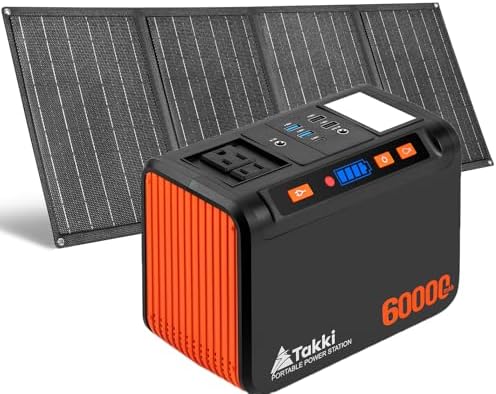
We selected it for this answer because the full review data lines up the capacity, output limit, and recharge time that decide camping use.
For a deeper dive into the hardware, see our full review of the SP811M.
What SP811M can power on a camping trip
That matters for portable power station buyers because a campsite load often mixes phones, lights, and a small compressor or medical device, and the wrong wattage or runtime guess ends the trip early. SP811M can run a laptop about 3.5 times, a smartphone 17+ times, a mini car fridge for 3+ hours, and a CPAP for 3+ hours, but the 110V pure sine wave inverter still caps the AC side at 250W rated with 450W peak. The usable runtime will also be lower than 222Wh after inverter loss, so plan around your own device watt draw, not the battery label alone. The included 40W solar panel and AC charger both matter here, because slow replenishment changes whether you have power again by the next morning.
You can find a detailed breakdown of SP811M performance specs in our dedicated analysis.
What to Check Before Buying the SP811M
- Check your device’s running wattage first. If a fridge, CPAP, or charger chain needs more than 250W continuously, the station is not a fit.
- Check starting surge separately from running draw. The 450W peak only covers brief spikes, not sustained use.
- Check your runtime target in watt-hours. A 222Wh pack will not support the same runtime as larger 300Wh or 1,000Wh class stations.
- Check whether your gear needs AC, USB-C, QC 3.0, or standard USB-A. SP811M offers 8 total ports, including 2x QC 3.0, 2x 5V 2.4A USB ports, and a 118W Type-C output.
- Check for any cable or adapter your setup needs. The listing states the charging methods, but it does not spell out every proprietary lead in your own kit.
- Check how you will recharge it in bad weather. The 40W solar panel is rated for 80% in 67 hours, so overcast conditions will stretch that further.
Where the SP811M Sits Among Camping Power Options
SP811M sits in the small portable power station class, not the 1,000Wh class that suits longer off-grid stays. It is a better match for light camping, short trips, and low-draw electronics than for kettles, microwaves, or other high-draw appliances. If you need a unit that can stay useful through repeated cloudy days, or you want one box to cover heavier AC loads, look at larger stations instead. If your camp setup is mostly phones, a laptop, lights, and a modest fridge window, this size is easier to justify.
Many users wonder if this power station runs essential devices, so we address that specific question here.
If you need more options, browse top-rated power units for camping trips.
When SP811M is enough for low-watt camping gear
Choose SP811M if your camping plan centers on low-watt devices, short runtime needs, and a simple charging setup. Skip it if your fridge runs long, your CPAP needs all-night backup, or your gear regularly pushes past 250W. In that case, a larger capacity station will save you from a return, a rebuild, and a campsite without power.
For medical needs, explore selecting a reliable power station for CPAP.
The other portable battery generator guides we have published
- Portable Power Stations for Emergency Backup Compared
- Choosing the Best Portable Power Station for Small Apartments Under $500
- Best Portable Power Station for Camping
- Portable Power Station for Home Backup Under $500 Compared
- Choosing the Best Portable Power Station for CPAP
- The Portable Power Stations That Work Best for Travel