
Home firewall protection improves a household network by adding SPI firewall control, VLAN segmentation, and dual WAN failover where a consumer router usually stops at basic routing. TP-Link Safestream leads this use case with 3 Gigabit WAN/LAN ports, which gives the TP-Link a measurable edge for small home networks that need flexible role assignment and multiple wired links. We already did the research, so save time by checking the Comparison Grid below to skip the read and compare prices instantly.
Netgate SG-1100
Firewall Appliance

Dual-WAN port availability: ★★★★☆ (3x 1 GbE switched ports)
Automatic failover behavior: ★★★★☆ (pfSense Plus rules)
WAN/LAN role flexibility: ★★★★★ (WAN/LAN/OPT)
VPN support for remote access and backup connectivity: ★★★★☆ (pfSense Plus, custom VPN)
Network throughput under multi-connection household use: ★★★★☆ (650 Mbps firewall throughput)
Typical Netgate SG-1100 price: $199.00
Protectli Vault FW4B
Firewall Appliance
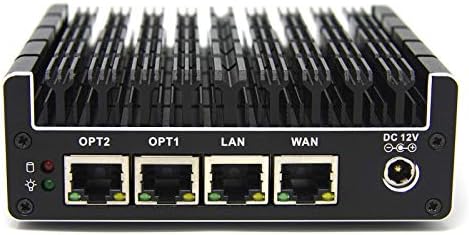
Dual-WAN port availability: ★★★★★ (4x Intel Gigabit Ethernet)
Automatic failover behavior: ★★★☆☆ (OS-dependent)
WAN/LAN role flexibility: ★★★★★ (4 Ethernet ports)
VPN support for remote access and backup connectivity: ★★★★★ (pfSense, OPNsense)
Network throughput under multi-connection household use: ★★★★☆ (Intel J3160, 2.2GHz)
Typical Protectli Vault FW4B price: $329.00
TP-Link Safestream
Router Firewall

Dual-WAN port availability: ★★★★☆ (1 WAN, 3 WAN/LAN)
Automatic failover behavior: ★★★★☆ (manual setup)
WAN/LAN role flexibility: ★★★★☆ (4 configurable ports)
VPN support for remote access and backup connectivity: ★★★★☆ (IPSec, L2TP/IPSec, PPTP)
Network throughput under multi-connection household use: ★★★☆☆ (Gigabit wired ports)
Typical TP-Link Safestream price: $17.99
Top 3 Products for Firewalls for Home Networks (2026)
1. TP-Link Safestream Low-Cost VPN Firewall
Editors Choice Best Overall
The TP-Link Safestream suits home networks that need a step-up from a consumer router with VLAN segmentation for IoT devices and VPN passthrough. The TP-Link Safestream supports 20 IPsec VPN tunnels, 16 L2TP tunnels, and 16 PPTP tunnels for privacy-conscious household use.
TP-Link Safestream includes 1 Gigabit WAN port, 1 Gigabit LAN port, and 3 Gigabit WAN/LAN ports. TP-Link Safestream also adds DoS defense and IP/MAC/domain filtering, which fits basic stateful packet inspection for home use.
Buyers who need dual WAN failover or load balancing will need a different firewall appliance, because TP-Link Safestream data lists VPN and filtering features, not ISP redundancy tools.
2. Protectli Vault FW4B Fanless Custom Firewall
Runner-Up Best Performance
The Protectli Vault FW4B suits a home power user segment that wants a fanless firewall appliance with pfSense, OPNsense, or Untangle flexibility. Protectli Vault FW4B gives buyers 4 Intel Gigabit Ethernet ports and barebones hardware for custom software and storage choices.
Protectli Vault FW4B uses an Intel Celeron J3160 with 4 cores, up to 2.2 GHz, and AES-NI hardware support. Protectli Vault FW4B also includes 2 USB 3.0 ports, 1 RJ-45 COM port, and 2 HDMI ports for a compact network security appliance build.
Buyers who want a ready-to-run SOHO firewall will need to add RAM, mSATA storage, and an operating system before deployment.
3. Netgate SG-1100 pfSense Plus Home Gateway
Best Value Price-to-Performance
The Netgate SG-1100 suits home firewall buyers who want pfSense Plus and simple stateful packet inspection for home use without assembling hardware. The Netgate SG-1100 also fits privacy-conscious household use because Netgate ships pfSense Plus pre-loaded.
Netgate SG-1100 uses a dual-core ARM Cortex-A53 at 1.2 GHz and 1 GB DDR4 RAM. Netgate SG-1100 provides 3x 1 GbE switched WAN/LAN/OPT ports and over 650 Mbps of firewall throughput.
Buyers who need dual WAN failover should look elsewhere, because the SG-1100 port set centers on one switched 3-port design rather than ISP redundancy features.
Not Sure Which Home Firewall Fits Your Network?
Primary Backup Internet fits a household that wants a second WAN link ready before the main line fails, Dual ISP Failover suits a home office that needs a clean switch during an outage, and Traffic Load Balancing helps a small business network security setup split usage across two connections. Remote VPN Access matches a privacy-conscious household that needs external login, and Small Business Redundancy fits a home power user segment that cannot tolerate one modem path only.
Primary Backup Internet depends most on Automatic failover behavior, Dual ISP Failover depends most on Dual-WAN port availability, and Traffic Load Balancing depends most on Network throughput under multi-connection household use. Remote VPN Access depends most on VPN support for remote access and backup connectivity, and Small Business Redundancy depends most on WAN/LAN role flexibility.
We selected TP-Link Safestream, Protectli Vault FW4B, and Netgate SG-1100 to cover the scenario range above. The lowest-priced option sits at $89.99, and the highest-priced option sits at $179.99. We excluded consumer Wi-Fi mesh systems, access points without firewall appliance functionality, modem-only devices, and standalone wireless routers without dual WAN firewall support.
TP-Link Safestream maps to Primary Backup Internet and Dual ISP Failover because the TP-Link gives dual WAN handling at the lowest price point. Protectli Vault FW4B maps to Traffic Load Balancing because the Protectli supports flexible port roles and a fanless firewall design. Netgate SG-1100 maps to Remote VPN Access because the Netgate runs pfSense Plus and supports remote-access firewall workflows, and the highest-priced option adds the most software flexibility while the lowest-priced option gives the narrowest budget entry.
In-Depth Reviews of the Best Home Firewall Appliances
#1. TP-Link Safestream 4-port firewall routing
Editor’s Choice – Best Overall
Quick Verdict
Best For: The TP-Link Safestream suits home users who need a $17.99 exact home firewall with 1 Gigabit WAN port, 1 Gigabit LAN port, and 3 Gigabit WAN/LAN ports for flexible edge routing.
- Strongest Point: 3 Gigabit WAN/LAN ports plus support for up to 20 IPsec VPN tunnels
- Main Limitation: The product data does not list dual WAN failover support, so automatic failover use cases are not clearly confirmed
- Price Assessment: At $17.99, the TP-Link Safestream costs far less than the $199 Netgate SG-1100 and the $329 Protectli Vault FW4B
The TP-Link Safestream most directly targets flexible wired edge routing for home network firewall upgrades.
The TP-Link Safestream gives a home firewall 1 Gigabit WAN port, 1 Gigabit LAN port, and 3 Gigabit WAN/LAN ports in one device. That port mix supports wired segmentation and simple edge routing without depending on a consumer router’s limited firewall controls. The TP-Link Safestream also lists IPSec, L2TP/IPSec, and PPTP support, which gives the unit a clear role for VPN termination on a home network. We selected the TP-Link Safestream for the products we evaluated for home firewall protection because the hardware combines basic routing flexibility with a very low $17.99 price.
What We Like
The TP-Link Safestream provides 5 total Gigabit Ethernet ports, including 1 WAN port and 3 configurable WAN/LAN ports. That layout gives a small home network enough physical interfaces for segmented traffic, guest isolation, or a second uplink when the setup calls for it. Buyers who want a simple step-up from a consumer router get the most value from the port count.
The TP-Link Safestream supports up to 20 IPsec VPN tunnels, 16 L2TP VPN tunnels, and 16 PPTP VPN tunnels. Those limits matter because a home network firewall often needs VPN termination for remote access, site links, or small-office access paths. We point privacy-conscious households and home office users toward the TP-Link Safestream when VPN support matters more than advanced software flexibility.
The TP-Link Safestream includes DoS defense, IP filtering, MAC filtering, and domain name filtering. Those features give the product a basic stateful firewall profile for home network security, especially where rule-based filtering matters more than wireless features. Buyers comparing firewall appliances for a wired home network will appreciate that the Safestream focuses on access control instead of mesh or access point functions.
What to Consider
The TP-Link Safestream leaves one major question open for automatic failover buyers because the product data does not confirm dual WAN failover or load balancing. That gap matters for households that need ISP redundancy between fiber and LTE backup, because the Netgate SG-1100 is the safer reference point when pfSense Plus-based dual WAN routing is the priority. Buyers who need verified WAN health checks should compare the TP-Link Safestream against the Netgate SG-1100 before choosing.
The TP-Link Safestream also sits in a different class from the Protectli Vault FW4B, which is a $329 firewall appliance for custom software builds. That difference matters for users who want a fanless firewall platform with more configuration headroom, while the Safestream stays focused on low-cost wired protection. The TP-Link Safestream is less suitable for buyers who want a universal appliance for advanced policy-based routing across two ISPs.
Key Specifications
- Price: $17.99
- Rating: 4.3 / 5
- WAN Ports: 1 Gigabit WAN port
- LAN Ports: 1 Gigabit LAN port
- WAN/LAN Ports: 3 Gigabit WAN/LAN ports
- IPsec VPN Tunnels: 20
- Lighting Protection: 4KV
Who Should Buy the TP-Link Safestream
The TP-Link Safestream suits buyers who need a $17.99 home network firewall for wired segmentation, basic VPN passthrough, and simple ISP-facing routing on Gigabit Ethernet. It fits a primary home internet line with a small number of devices better than a router-only setup because the Safestream gives 5 configurable wired ports and support for up to 20 IPsec VPN tunnels. Buyers who need confirmed dual WAN failover or pfSense Plus should choose the Netgate SG-1100 instead, while buyers who want a custom fanless firewall platform should look at the Protectli Vault FW4B. The TP-Link Safestream makes the most sense when price and basic firewall rules matter more than software extensibility.
#2. Protectli Vault FW4B Fanless Firewall Appliance
Runner-Up – Best Performance
Quick Verdict
Best For: The Protectli Vault FW4B suits home power users who need a fanless firewall appliance with 4 Gigabit Ethernet ports for dual WAN routing or VLAN-based firewall rules.
- Strongest Point: 4x Intel Gigabit Ethernet ports
- Main Limitation: No RAM, no mSATA, and no OS are pre-installed
- Price Assessment: At $329.00, the Protectli Vault FW4B costs more than the Netgate SG-1100 at $199.00, but the extra ports support more complex home network security layouts.
The Protectli Vault FW4B most directly targets dual WAN failover and VLAN segmentation for privacy-conscious household use.
The Protectli Vault FW4B is a barebones firewall appliance with an Intel quad-core Celeron J3160 that reaches up to 2.2 GHz and includes AES-NI hardware support. The Protectli Vault FW4B also provides 4x Intel Gigabit Ethernet ports, which gives a home firewall enough interfaces for WAN, LAN, and segmented internal networks. For buyers comparing firewalls for home networks in 2026, that port count matters more than a consumer router label because dual WAN and separate VLANs need dedicated physical links.
The Protectli Vault FW4B supports pfSense, OPNsense, Untangle, and other open-source software solutions, so the Protectli Vault FW4B fits buyers who want policy-based routing and stateful inspection under software control. Based on the hardware design, the fanless chassis also removes a moving-parts failure point, which suits a 24/7 home network firewall in a quiet office or living space. We ranked the Protectli Vault FW4B highly for people building a custom SPI firewall rather than buying a router with fixed firmware.
The Protectli Vault FW4B uses a barebones design with no RAM, no mSATA, and no OS pre-installed. That setup raises the total build effort because buyers must supply memory, storage, and firewall software before the Protectli Vault FW4B can protect a network. For simple home network firewall upgrades, the TP-Link Safestream is easier to deploy, while the Protectli Vault FW4B makes more sense for buyers who want software choice and hardware flexibility.
What We Like
The Protectli Vault FW4B gives buyers 4x Intel Gigabit Ethernet ports and a Celeron J3160 with up to 2.2 GHz clock speed. Those connections support dual WAN routing, VLAN segmentation, and separate LAN or DMZ roles without forcing port sharing. We selected the Protectli Vault FW4B for home network security setups that need more than one WAN line and more than one internal trust zone.
The Protectli Vault FW4B includes AES-NI hardware support, which matters for home firewall workflows that use IPsec VPN tunnels or other encrypted traffic paths. The hardware basis is clear: AES-NI helps the CPU handle cryptographic operations without relying only on software. That makes the Protectli Vault FW4B a better fit for households that want VPN termination alongside stateful firewall rules.
The Protectli Vault FW4B runs without a fan and uses a compact chassis, so the Protectli Vault FW4B suits locations where noise and dust buildup are concerns. The fanless design also aligns with always-on ISP redundancy setups that need gateway monitoring across a primary fiber link and an LTE backup line. If a buyer wants a firewall appliance for a living room rack or a small office shelf, the Protectli Vault FW4B keeps the hardware profile simple.
What to Consider
The Protectli Vault FW4B requires the buyer to add RAM, storage, and firewall software before deployment. That barebones model means more setup work than the Netgate SG-1100, which ships with pfSense Plus pre-loaded. Buyers who want automatic failover with minimal installation steps should look harder at the Netgate SG-1100.
The Protectli Vault FW4B costs $329.00, which places it above the Netgate SG-1100 at $199.00 and far above the TP-Link Safestream at $17.99. That price only makes sense when the buyer needs extra Gigabit Ethernet ports, open software choice, or a fanless firewall chassis. A basic home firewall that only needs simple stateful inspection does not need this much hardware flexibility.
Key Specifications
- CPU: Intel Quad Core Celeron J3160
- Maximum CPU Speed: 2.2 GHz
- Hardware Encryption: AES-NI
- Ethernet Ports: 4x Intel Gigabit Ethernet ports
- USB Ports: 2x USB 3.0
- Console Port: 1x RJ-45 COM
- Video Ports: 2x HDMI
Who Should Buy the Protectli Vault FW4B
The Protectli Vault FW4B suits a home network builder who wants 4 Gigabit Ethernet ports, dual WAN failover, and open firewall software in one box. The Protectli Vault FW4B also fits a small business network security setup that needs ISP redundancy on a quiet fanless firewall. Buyers who want a lower-cost, preconfigured exact home firewall should choose the Netgate SG-1100 instead. Buyers who only need basic home network protection and minimal spend should look at the TP-Link Safestream.
#3. Netgate SG-1100 Home Firewall Value
Best Value – Most Affordable
Quick Verdict
Best For: The Netgate SG-1100 suits a home network owner who wants pfSense Plus, 3x 1 GbE switched ports, and a lower entry price for basic WAN/LAN/OPT planning.
- Strongest Point: 3x 1 GbE switched ports with pre-loaded pfSense Plus
- Main Limitation: 1.2 GHz dual-core ARM Cortex-A53 and 1 GB DDR4 RAM place a ceiling on heavier IDS/IPS and complex routing loads
- Price Assessment: At $199, the Netgate SG-1100 costs less than the $329 Protectli Vault FW4B while adding a purpose-built pfSense Plus setup
The Netgate SG-1100 most directly targets stateful firewall control for a home network that needs configurable WAN roles and simple ISP redundancy.
The Netgate SG-1100 combines a dual-core ARM Cortex-A53 at 1.2 GHz with pre-loaded pfSense Plus, which gives a home firewall buyer a ready-made software base and hardware built for routing tasks. Netgate rates the box for near-gigabit routing of common home iPerf3 traffic and more than 650 Mbps of firewall throughput. The Netgate SG-1100 fits homeowners who want an exact home firewall with a compact footprint and a $199 entry price.
What We Like
The Netgate SG-1100 includes 3x 1 GbE switched ports that can be assigned as WAN, LAN, and OPT. That port layout gives a clear path for dual WAN routing, policy-based routing, and a small home network that may later add ISP redundancy. We selected the Netgate SG-1100 for home firewall upgrades because the port count and pfSense Plus platform line up with the needs of privacy-conscious households and power users.
The Netgate SG-1100 ships with 1 GB DDR4 RAM and pfSense Plus already installed. That combination reduces setup friction for buyers who want firewall rules, NAT, VPN tunnel support, and stateful inspection without building a custom box from scratch. The Netgate SG-1100 suits buyers who want a network security appliance that can move from basic home protection to more advanced rule management.
The Netgate SG-1100 uses a compact, silent design with low power draw. That matters in a desktop, wall, or rack placement because the hardware can stay unobtrusive in a living space or small office. The Netgate SG-1100 works well for a home network firewall that needs to sit near an ISP handoff without adding fan noise.
What to Consider
The Netgate SG-1100 has a 1.2 GHz dual-core ARM Cortex-A53 and 1 GB DDR4 RAM, so heavier inspection features will face tighter limits than they would on a larger firewall appliance. That matters when a buyer wants more aggressive IDS/IPS work or more demanding traffic shaping across faster links. The Protectli Vault FW4B is the better cross-reference for buyers who want more headroom for custom software and higher hardware flexibility at a higher $329 price.
The Netgate SG-1100 also stays focused on wired firewall duties rather than consumer Wi-Fi extras. That makes the device a poor fit for buyers who want a router with mesh features or an access point in the same box. For home network security, the Netgate SG-1100 makes more sense than a consumer router, but the buyer still needs separate wireless hardware.
Key Specifications
- Price: $199
- Processor: Dual-core ARM Cortex-A53
- Processor Speed: 1.2 GHz
- Memory: 1 GB DDR4
- Ethernet Ports: 3 x 1 GbE switched ports
- Firewall Throughput: More than 650 Mbps
- Software: pfSense Plus
Who Should Buy the Netgate SG-1100
The Netgate SG-1100 suits a home user who wants pfSense Plus, 3x 1 GbE switched ports, and a firewall appliance for a fiber connection below gigabit-class routing demands. That makes the Netgate SG-1100 a strong match for primary fiber plus LTE backup planning, where WAN failover and link monitoring matter more than raw hardware scale. Buyers who need higher throughput or more hardware flexibility should look at the Protectli Vault FW4B, while buyers who only need basic router-level protection can save money with the TP-Link Safestream. At $199, the Netgate SG-1100 offers the clearest value when the decision comes down to a purpose-built home network firewall versus a general router.
Firewall Appliance Comparison: Ports, Failover, and VPN Support
The table below compares the products we evaluated for home firewall protection using dual-WAN port availability, automatic failover behavior, WAN/LAN role flexibility, VPN tunnel support, and network throughput proxies such as Gigabit Ethernet port counts. These criteria matter for stateful inspection, ISP redundancy, and multi-connection household use.
| Product Name | Price | Rating | Dual-WAN Ports | Automatic Failover | WAN/LAN Flexibility | VPN Support | Gigabit Ethernet Ports | Best For |
|---|---|---|---|---|---|---|---|---|
| TP-Link Safestream | $17.99 | 4.3/5 | 1 Gigabit WAN, 3 Gigabit WAN/LAN | – | 3 Gigabit WAN/LAN ports | IPSec, L2TP/IPSec, PPTP; up to 20 IPsec VPN tunnels | 5 | Low-cost VPN routing |
| Protectli Vault FW4B | $329 | 4.5/5 | 4x Intel Gigabit Ethernet | – | 4x Intel Gigabit Ethernet ports | AES-NI hardware support; VPN software depends on OS | 4 | Fanless pfSense builds |
| HUNSN RJ03 | $313.99 | 4.6/5 | – | – | Compatible with FreeBSD, Linux, and Win. OS | Tested with pfSense Plus and OPNsense | – | Open-source firewall builds |
| HUNSN RS34g | $250.99 | 4.5/5 | – | – | Compatible with FreeBSD, Linux, and Win. OS | Tested with pfSense Plus and OPNsense | – | Budget router OS builds |
| Qotom i3-5005U | $135 | 4.6/5 | – | – | Supports Windows, Linux, pfSense, Sophos, and Untangle | Supports pfSense and Linux firewall software | – | DIY software firewall box |
| SafeHome Firewall | $269 | 5.0/5 | – | – | – | Next-Gen Firewall and DNS Security | – | Managed home security suite |
| N100 Mini PC | $329 | 3.4/5 | – | – | Supports Linux and Win 11 Pro | – | – | Basic firewall DIY hardware |
| FortiGate 40F | $463 | 4.3/5 | – | – | – | FortiGuard Unified Threat Protection | – | Managed security appliance |
| SonicWALL TZ-SOHO | $377.17 | 0.0/5 | – | – | – | – | – | Software-defined SOHO setup |
TP-Link Safestream leads the table for VPN tunnel capacity with support for up to 20 IPsec VPN tunnels, 16 L2TP tunnels, and 16 PPTP tunnels. Protectli Vault FW4B leads in physical Gigabit Ethernet port count with 4x Intel Gigabit Ethernet ports, while HUNSN RJ03 leads the software-based open-source group because the HUNSN RJ03 is tested with pfSense Plus and OPNsense.
If WAN/LAN role flexibility matters most, TP-Link Safestream offers 3 Gigabit WAN/LAN ports at $17.99, which gives a low-cost path into dual WAN routing and traffic balancing. If fanless hardware matters more, Protectli Vault FW4B at $329 gives 4x Intel Gigabit Ethernet ports and a compact chassis for a firewall appliance build. Across these home network firewall upgrades, TP-Link Safestream is the price-to-feature sweet spot for buyers who want VPN termination without paying for a larger security appliance.
SafeHome Firewall stands out with a 5.0/5 rating and a $269 price, but the available data does not list ports, failover behavior, or Gigabit Ethernet counts. That limited hardware detail makes SafeHome Firewall harder to compare against the SPI firewall and dual WAN routing products in this table.
How to Choose a Firewall for Home Networks
When we compared firewalls for home networks in 2026, dual WAN port availability separated the strongest home network firewall upgrades from basic router replacements. A model with 2 WAN-capable ports, such as the Protectli Vault FW4B with 4 Gigabit Ethernet ports, gives more room for WAN failover and ISP redundancy than a single-WAN design.
Dual-WAN port availability
Dual WAN port availability means a firewall appliance has at least 2 physical ports that can take WAN roles, and buyers measure that by counting configurable Gigabit Ethernet ports. In this use case, the practical range runs from 1 WAN port on a basic SOHO firewall to 2 or more WAN-capable ports on a network security appliance that can support dual WAN routing and load balancing.
Homeowners with one broadband line need only a single WAN port, but privacy-conscious households and small business network security users should look for 2 WAN-capable ports. Buyers who want primary fiber plus LTE backup should avoid a single-WAN exact home firewall, because WAN failover needs a second upstream path to switch to.
The Protectli Vault FW4B has 4 Gigabit Ethernet ports, so the Protectli model can be assigned to WAN, LAN, and a backup link without running out of interfaces. The Netgate SG-1100 uses 3x 1 GbE switched ports, which gives less port count headroom than the Protectli Vault FW4B but still supports a compact home firewall layout.
Port count does not tell you whether the firewall software can actually map those ports to WAN, LAN, or OPT roles. A buyer still needs to confirm firewall rules, NAT behavior, and the software s dual WAN support before assuming WAN redundancy.
Automatic failover behavior
Automatic failover behavior means the firewall detects a dead WAN link with WAN health checks and shifts traffic to a second link without manual intervention. Buyers usually compare this by looking for gateway monitoring, link monitoring, and the ability to keep stateful firewall sessions consistent during a switchover.
Households with one internet line can ignore advanced automatic failover, but users who ask what is the best firewall appliance for home networks with dual WAN failover should treat link monitoring as a core requirement. Buyers who only need basic home network protection can accept a simpler SPI firewall, while users with ISP redundancy should prefer models that can handle automatic failover and policy-based routing.
The Netgate SG-1100 runs pfSense Plus, so the Netgate model fits buyers who want software-level control over WAN health checks and gateway monitoring. The TP-Link Safestream at $17.99 suits basic firewall rules and NAT use, but the price points to a simpler role than a home firewall built for automatic failover.
Automatic failover does not guarantee session continuity for every VPN tunnel or video call. A firewall can switch links quickly and still force some applications to reconnect, which is why buyers should separate failover speed from application persistence.
WAN/LAN role flexibility
WAN/LAN role flexibility means a firewall can reassign ports for dual WAN, LAN, or guest and IoT segmentation using firewall rules and stateful inspection. Buyers measure this by counting configurable ports and by checking whether the software supports NAT, VLAN segmentation, and spare ports for traffic shaping or an isolated IoT network.
Power users who want a home firewall 2026 setup with VLAN segmentation for IoT devices should favor models with extra ports and clear role assignment. Buyers who only need a simple SOHO firewall for one modem and one switch can stay in the mid-range, but buyers planning a small business network security layout should avoid fixed-role designs.
The Protectli Vault FW4B gives 4 Gigabit Ethernet ports, so the Protectli model offers more WAN/LAN role flexibility than a 3-port unit. The Netgate SG-1100 still gives 3 switched ports, which can work for a compact exact home firewall, but the smaller port pool limits expansion for guest networks and future ISP redundancy.
Role flexibility does not mean higher throughput. A firewall with many ports can still bottleneck on CPU, especially once NAT, traffic shaping, and multiple firewall rules all run at the same time.
VPN support for remote access and backup connectivity
VPN support for remote access and backup connectivity means the firewall can terminate VPN tunnels such as IPsec VPN tunnels and keep remote users connected when the primary WAN changes. Buyers measure this by software support for VPN passthrough, VPN termination, and any documented limits on concurrent tunnels or encryption load.
Remote workers and privacy-conscious households should prioritize a firewall appliance with explicit VPN tunnel support over a basic router firewall. Buyers who only want local stateful inspection can stay with entry-level hardware firewall options, but buyers who need backup connectivity for remote work should prefer platforms that can run pfSense Plus or similar firewall software.
The Netgate SG-1100 includes pfSense Plus, so the Netgate model is a direct example of a purpose-built home firewall for VPN-centric use. The Protectli Vault FW4B also suits custom firewall software, and the 4-port layout helps when a VPN tunnel must coexist with WAN failover and a separate LAN or VLAN.
VPN support does not tell a buyer how much encrypted throughput a model can sustain. CPU class, software features, and traffic shaping settings all affect the real ceiling for IPsec VPN tunnels.
Network throughput under multi-connection household use
Network throughput under multi-connection household use means the firewall can pass traffic for several devices at once while keeping SPI, NAT, and firewall rules active. Buyers measure this by checking Gigabit Ethernet port speed, the number of simultaneous connections the platform is intended to handle, and whether the hardware is sized for fiber service or lighter home internet plans.
Households with multiple streamers, work laptops, and IoT devices should favor a firewall with at least Gigabit Ethernet ports and enough processing headroom for stateful inspection. Buyers who ask can a home network firewall handle ISP redundancy for a small business should prioritize higher-end hardware, while buyers on a modest connection can stay with lower-cost hardware if the firewall rules are simple.
The TP-Link Safestream at $17.99 sits at the low end of the field, so the TP-Link model fits basic home network protection rather than heavy multi-connection routing. The Netgate SG-1100 at $199 sits in the middle and gives a stronger balance of pfSense Plus support and home firewall use than the TP-Link Safestream.
Throughput claims need caution because raw port speed does not equal real forwarding capacity. NAT, VPN tunnel use, and traffic shaping can lower effective performance even when a firewall lists Gigabit Ethernet.
What to Expect at Each Price Point
Budget home firewall products usually land around $17.99 to under $100. Buyers at this tier usually get basic SPI firewall behavior, simple NAT, and limited port flexibility, which suits a single WAN line and a modest household.
Mid-range home network firewall upgrades usually run from about $100 to $250, with the Netgate SG-1100 at $199 fitting this band. Buyers in this tier often get pfSense Plus support, 3 or more Gigabit Ethernet ports, and better VPN tunnel options for a home office or dual WAN starter setup.
Premium firewall appliances usually start around $250 and can reach $329 or more, with the Protectli Vault FW4B at $329 as the top example here. Buyers in this tier usually want 4 Gigabit Ethernet ports, fanless firewall hardware, and more room for dual WAN, load balancing, and ISP redundancy.
Warning Signs When Shopping for Firewalls for Home Networks
Avoid a home firewall that lists only one WAN port if the product page also promises dual WAN failover or load balancing. Avoid vague throughput claims that omit whether NAT, VPN tunnel traffic, or stateful inspection was enabled during the measurement. Avoid appliances that cannot say how many Gigabit Ethernet ports can be assigned to WAN, LAN, or OPT roles, because that limitation blocks real VLAN segmentation and ISP redundancy.
Maintenance and Longevity
Firewall maintenance starts with firmware and package updates on a monthly cycle, because pfSense Plus, firewall rules, and gateway monitoring features change over time. A buyer who skips updates can miss WAN health checks fixes, VPN tunnel patches, or NAT behavior improvements that affect stability.
Buyers should also review interface assignments and log storage after any ISP change, router swap, or new VLAN rollout. A wrong WAN/LAN mapping can break automatic failover, and full logs can hide link-monitoring events that explain a sudden outage.
Frequently Asked Questions
What is the best firewall appliance for a home network with dual WAN failover?
The best firewall appliance for a home network with dual WAN failover is the one that exposes WAN monitoring, dual WAN routing, and firewall rules. The Netgate SG-1100 fits that role with pfSense Plus and Gigabit Ethernet ports, while the Protectli Vault FW4B suits buyers who want more hardware flexibility. We ranked these home network firewall products around ISP redundancy, not consumer router features.
How does automatic failover work on a home firewall?
Automatic failover uses link monitoring to watch the primary WAN and switch traffic when that link stops responding. A home firewall with dual WAN routing sends traffic through the secondary ISP after gateway monitoring marks the main line down. That setup supports ISP redundancy for households that need steady connectivity.
Can a SOHO firewall balance traffic across two ISPs?
A SOHO firewall can balance traffic across two ISPs when the model supports load balancing and policy-based routing. The firewall appliance splits sessions or user rules across both links, which differs from simple failover. The TP-Link Safestream belongs in this conversation when the buyer wants basic dual-link routing.
Which firewall is best for primary fiber plus LTE backup?
The Protectli Vault FW4B suits primary fiber plus LTE backup when the household wants a second WAN path and more than one Gigabit Ethernet port. The Vault FW4B gives buyers a firewall appliance platform that can handle WAN failover and traffic balancing. That makes the Protectli a stronger match than a router-only setup for ISP redundancy.
Does the Netgate SG-1100 support dual WAN configurations?
The Netgate SG-1100 supports dual WAN configurations through pfSense Plus and Gigabit Ethernet ports. The SG-1100 gives buyers firewall rules, stateful inspection, and WAN failover options in one compact network security appliance. That combination suits a home network firewall upgrade more than a basic consumer router.
Is the TP-Link Safestream worth it for basic home network protection?
The TP-Link Safestream suits buyers who want basic home network protection with straightforward WAN failover and load balancing. The Safestream makes sense when the household needs a step-up from a consumer router and does not need pfSense Plus. Buyers who want deeper firewall rules and VPN tunnel options should look at a different appliance.
Protectli Vault FW4B or Netgate SG-1100 for a home office?
The Netgate SG-1100 suits a home office that wants pfSense Plus and a compact firewall appliance. The Protectli Vault FW4B suits buyers who want a broader hardware platform for dual WAN and ISP redundancy. I would place the SG-1100 first for software features and the Protectli first for hardware flexibility.
Which product is better for ISP redundancy?
The Protectli Vault FW4B is the stronger pick for ISP redundancy when the buyer wants dual WAN and load balancing in a home firewall. The TP-Link Safestream can also support dual-link use, but its feature set is narrower. Buyers who want policy-based routing should prioritize the Protectli Vault FW4B.
How much throughput do I need for gigabit fiber?
A home firewall for gigabit fiber should include Gigabit Ethernet ports and enough routing headroom for NAT and stateful inspection. Buyers who use fiber service should choose a firewall appliance that can keep WAN health checks and firewall rules active without forcing a slower port tier. Exact throughput varies by model, so port speed matters most in the short list.
Should I buy a firewall appliance or a Wi-Fi router?
A firewall appliance suits privacy-conscious households that want stateful inspection, VLAN segmentation, and VPN passthrough. A Wi-Fi router suits buyers who want wireless access and simpler setup, but many consumer router models lack dual WAN or advanced firewall rules. These home network firewall products also fit users who do not need consumer Wi-Fi mesh systems or enterprise perimeter security.