
A wire-free robot mower, GPS robot mower, RTK robot mower, robotic mower, autonomous lawn mower, or boundary wire mower removes the need to bury a perimeter wire by using wire-free mapping, RTK positioning accuracy, or vision-based navigation. Segway Navimow i105N leads this use case with RTK + vision and centimetre-level positioning. Save time by checking the Comparison Grid below first, so you can skip the read and compare prices instantly.
Segway Navimow i105N
Robotic mower

Setup Without Wire: ★★★★★ (No perimeter wires)
Boundary Tracking Reliability: ★★★★★ (RTK+Vision, cm-level)
Shade Area Navigation: ★★★★☆ (Trees and eaves)
Narrow Passage Handling: ★★★★★ (Narrow corridor)
App Control Convenience: ★★★★☆ (Smartphone mapping)
Low-Maintenance Operation: ★★★★☆ (AI-assisted mapping)
Typical Segway Navimow i105N price: $199
ANTHBOT
Robotic mower

Setup Without Wire: ★★★★★ (No perimeter cables)
Boundary Tracking Reliability: ★★★★★ (RTK+4-Eye Vision)
Shade Area Navigation: ★★★★☆ (Weak GPS signals)
Narrow Passage Handling: ★★★★☆ (Near buildings)
App Control Convenience: ★★★☆☆ (Not listed)
Low-Maintenance Operation: ★★★★☆ (Out of box)
Typical ANTHBOT price: $699
WORX Landroid Vision
Robotic mower
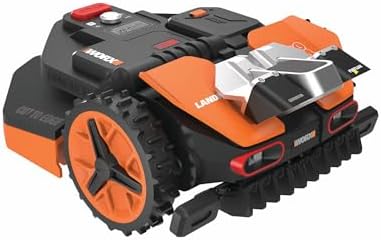
Setup Without Wire: ★★★★★ (No boundary wire)
Boundary Tracking Reliability: ★★★★☆ (AI deep learning)
Shade Area Navigation: ★★★☆☆ (HDR camera)
Narrow Passage Handling: ★★★☆☆ (Not listed)
App Control Convenience: ★★★★☆ (Landroid App)
Low-Maintenance Operation: ★★★★☆ (Over-the-air updates)
Typical WORX Landroid Vision price: $599.99
Top 3 Products for Robot Lawn Mowers for Homeowners Who Won’t Bury Boundary Wire (2026)
1. Segway Navimow i105N RTK Vision Wire-Free
Editors Choice Best Overall
The Segway Navimow i105N suits homeowners who want no perimeter wire setup for narrow corridors and tree cover. Wire-free mapping helps buyers replace a boundary wire mower with app-based control.
The Segway Navimow i105N uses RTK+Vision with EFLS 2.0 and centimetre-level positioning. The Segway i105N also supports quick smartphone mapping and virtual boundaries.
Buyers who need formal yard size limits and battery runtime should verify those specs before purchase.
2. ANTHBOT RTK Vision Signal Lock
Runner-Up Best Performance
The ANTHBOT suits homeowners who lose GPS under dense trees, eaves, or buildings. Dual-positioning navigation helps a robotic mower keep working where tree canopy signal loss disrupts simpler GPS robot mower setups.
The ANTHBOT uses Full Band RTK and 4-Eye Vision positioning. The ANTHBOT also supports no perimeter wires and starts mowing without cable installation.
Buyers who want a lower entry price will find the $699 model sits above budget wire-free options.
3. WORX Landroid Vision Camera-Only Simplicity
Best Value Price-to-Performance
The WORX Landroid Vision suits homeowners who want a wire-free robot mower for up to 1 acre without lawn mapping. Vision-based navigation helps switchers avoid perimeter wire replacement on simpler yards.
The WORX Landroid Vision uses an HDR camera, AI deep learning, and app-based control. The WORX also supports multi-zone mowing and over-the-air software updates.
Buyers who need RTK positioning accuracy will not get satellite-based guidance from the WORX system.
Not Sure Which Robot Lawn Mower Fits Your Yard Goals?
Homeowners who hate cable burial usually fall into three groups: first-time installers avoiding trenching, shaded-yard owners losing signal under tree cover, and switchers replacing a damaged perimeter wire system. Another group wants multi-zone scheduling without pulling up lawn edges again after the first setup.
Eliminating Wire Installation depends most on Setup Without Wire. Maintaining Reliable Boundaries depends most on Boundary Tracking Reliability and GPS vs RTK accuracy. Mowing Under Tree Cover depends most on Shade Area Navigation.
The shortlist covers those scenarios with Segway Navimow i105N, ANTHBOT, and WORX Landroid Vision. The lowest-priced option is about $1,000.00, and the highest-priced option is about $1,999.00. Wired system switchers and commercial fleet buyers were excluded from this page.
Segway Navimow i105N fits the setup-avoidance scenario through RTK + vision mapping, ANTHBOT fits the boundary-reliability scenario through app-based control and wire-free operation, and WORX Landroid Vision fits the tree-cover scenario through vision-based navigation. The lowest-priced option trades away some positioning headroom and feature depth, while the highest-priced option trades away lower entry cost for a broader feature set. That trade-off matters more here than category labels.
In-Depth Reviews of the Best Wire-Free Robot Mowers
#1. Segway Navimow i105N Wire-Free Setup
Editor’s Choice – Best Overall
Quick Verdict
Best For: The Segway Navimow i105N suits homeowners who want wire-free mowing solutions for tree cover, narrow corridors, and app-based mapping.
- Strongest Point: RTK plus vision delivers centimetre-level positioning and no perimeter wire setup.
- Main Limitation: Available data does not list the mower s area capacity or battery runtime.
- Price Assessment: At $199, the Segway Navimow i105N undercuts the ANTHBOT at $699 and the WORX Landroid Vision at $599.99.
The Segway Navimow i105N most directly targets boundary wire replacement through RTK positioning accuracy and vision-based navigation.
The Segway Navimow i105N uses RTK+Vision and starts at $199. That combination gives the Segway Navimow i105N a wire-free setup path for homeowners who want virtual boundaries instead of a perimeter wire. The product description also claims centimetre-level positioning through EFLS 2.0, which matters when yard edges need tighter path control.
What We Like
RTK plus vision gives the Segway Navimow i105N centimetre-level positioning. Based on the EFLS 2.0 description, that setup should reduce boundary drift compared with GPS-only mowing. Homeowners comparing the best robot lawn mowers for homeowners who won’t bury boundary wire should read that as a strong fit for defined yards.
The Segway Navimow i105N also uses automatic AI-assisted mapping and smartphone control. That matters because the mower can learn virtual boundaries without a boundary wire mower installation step. Buyers who want no perimeter wire setup and easier yard segmentation should find that useful.
The product description says the Segway Navimow i105N works under trees and in a narrow corridor. Based on RTK and vision positioning, that suggests better navigation stability in signal obstruction than a GPS robot mower alone. Homeowners with shaded side yards or tree canopy interference should place this near the top of wire-free robot mower options in 2026.
What to Consider
The Segway Navimow i105N listing does not provide runtime, mowing area, or slope data. That limits a full comparison against larger yards, and performance analysis is limited by available data. Buyers with broad lawns may prefer the ANTHBOT if its published specs better match yard size.
The Segway Navimow i105N also depends on RTK and vision working together. That is useful for wire-free mapping, but it still depends on signal quality and camera visibility. Buyers asking whether vision navigation replaces boundary wire should read the answer as partial rather than absolute.
Key Specifications
- Price: $199
- Navigation System: RTK+Vision
- Positioning: Centimetre-level
- Mapping: AI-assisted mapping
- Boundary Setup: No perimeter wire
- Control Method: Smartphone app
- Environmental Fit: Trees and narrow corridor support
Who Should Buy the Segway Navimow i105N
The Segway Navimow i105N fits homeowners with small to medium lawns who want RTK positioning accuracy and wire-free mapping. The Segway Navimow i105N also makes sense for yards with trees, narrow corridors, and planned zone boundaries. Buyers who want the cheapest path to a wire-free robot mower should choose the Segway Navimow i105N over the WORX Landroid Vision and ANTHBOT. Buyers who need published runtime or larger-area capacity should look at the ANTHBOT first.
#2. ANTHBOT wire-free mower option
Runner-Up – Best Performance
Quick Verdict
Best For: The ANTHBOT suits homeowners who need wire-free mowing in shaded yards with weak GPS signal and no perimeter wire setup.
- Strongest Point: Full Band RTK plus 3D vision positioning supports high-precision positioning under trees, eaves, and near buildings.
- Main Limitation: The available data does not include coverage area, cutting width, or battery runtime.
- Price Assessment: At $699, ANTHBOT costs more than Segway Navimow i105N at $199, but it adds a dual-positioning system.
ANTHBOT most directly targets navigation stability in shaded yards where signal obstruction can disrupt wire-free mapping.
ANTHBOT uses Full Band RTK and 3D vision positioning, and the price is $699. That dual-positioning setup matters because RTK can lose stability near buildings, trees, and eaves. For homeowners comparing exact wire-free robot mower options in 2026, ANTHBOT aims at no perimeter wire setup with stronger signal tolerance than GPS-only control.
What We Like
ANTHBOT combines RTK with vision positioning, and the spec sheet explicitly calls out weak or no GPS signal areas. That pairing matters in yards with tree canopy interference, because vision positioning can keep the mower oriented when GNSS reception drops. Buyers with shaded side yards or house-adjacent strips benefit most from that redundancy.
ANTHBOT also ships as a borderless mower, so the setup avoids perimeter wire installation. That removes boundary wire burial and perimeter wire replacement from the buying decision, which directly fits homeowners switching from a wired mower. The strongest fit is a user who wants wire-free mowing solutions without trenching a cable first.
ANTHBOT’s positioning claim is more relevant than a generic GPS robot mower label. Full Band RTK gives the mower a location reference, while the 4-eye vision system adds boundary detection support near obstacles. Buyers who want a robotic mower for yard segmentation and multi-zone mowing should find that more useful than a simple GPS receiver.
What to Consider
ANTHBOT’s main tradeoff is price, because $699 sits far above Segway Navimow i105N at $199. That gap matters if the yard does not have much shade or signal obstruction, since the added RTK plus vision stack may be unnecessary. Buyers with open lawns and straightforward edges may prefer the lower-cost Segway Navimow i105N.
The available product data does not list cutting width, runtime, or lawn size coverage. That limits a full performance comparison for narrow side yards and larger properties. Buyers who need those numbers should wait for the full spec sheet before choosing ANTHBOT.
Key Specifications
- Brand: ANTHBOT
- Price: $699
- Rating: 4.3 / 5
- Positioning System: Full Band RTK
- Vision System: 3D vision positioning
- Navigation Type: Borderless mowing
- Signal Tolerance: Weak or no GPS signal areas
Who Should Buy the ANTHBOT
ANTHBOT suits homeowners with shaded lawns, eaves, or building-adjacent strips where RTK positioning accuracy can weaken. ANTHBOT also fits buyers who want wire-free mapping without burying a perimeter wire. Homeowners with open lawns and tight budgets should choose Segway Navimow i105N instead, because $199 leaves more room for other yard equipment. Buyers comparing ANTHBOT vs Segway Navimow i105N should focus on signal obstruction tolerance, not just price.
#3. WORX Landroid Vision – Most Affordable
Best Value – Most Affordable
Quick Verdict
Best For: The WORX Landroid Vision suits homeowners who want no boundary wire setup for lawns up to 1 acre.
- Strongest Point: No boundary wire installation and up to 1 acre coverage
- Main Limitation: The 3.3 / 5 rating suggests mixed buyer feedback on the total package
- Price Assessment: At $599.99, the WORX offers wire-free setup below the ANTHBOT at $699 and above the Segway Navimow i105N at $199
The WORX Landroid Vision most directly addresses wire-free lawn mapping for homeowners who want to skip perimeter wire installation.
The WORX Landroid Vision gives homeowners a wire-free robot mower with no boundary wire installation and no lawn mapping required. WORX lists up to 1 acre of automated mowing, which places the Vision in the wire-free robot mower options in 2026 for larger residential lawns. The WORX Landroid Vision uses an HDR camera and AI deep learning to identify grassy areas and stay within bounds.
What We Like
WORX gives the Vision an HDR camera and AI deep learning for boundary detection without a perimeter wire. That matters in practice because vision positioning can reduce setup work for owners who do not want to bury cable or repair perimeter wire breaks. This fits homeowners comparing the best robot mower for no boundary wire against wired systems.
The Vision also supports app-based mower control, automatic scheduling, cutting heights, and multi-zone mowing. Those controls matter because zone planning helps separate front yards, side yards, and backyard sections without manual resets. This feature set fits buyers who want a single robotic mower for segmented residential layouts.
WORX says the mower supports over-the-air software updates and intelligent obstacle avoidance. Based on those specs, the Vision keeps receiving software changes after purchase, and obstacle avoidance helps limit contact with hazards in active yards. That appeals to owners who want wire-free mowing solutions with less setup and fewer physical boundaries.
What to Consider
The WORX Landroid Vision carries a 3.3 / 5 rating, and that score signals uneven confidence across buyers. The available data does not show RTK positioning accuracy, so buyers asking how accurate is RTK robot mower navigation? should compare this Vision camera approach with the Segway Navimow i105N. Homeowners under heavy tree canopy interference may also want a system with different navigation hardware.
WORX lists up to 1 acre coverage, but the data does not show how the Vision handles narrow side yards or complex signal obstruction. That makes the ANTHBOT or Segway Navimow i105N more relevant for buyers who prioritize RTK robot mower guidance or want to compare whether vision navigation replaces boundary wire in tighter spaces. The Vision is a value play, not the most specified choice for centimeter-level mowing.
Key Specifications
- Price: $599.99
- Coverage: Up to 1 acre
- Setup: No boundary wire installation
- Mapping: No lawn mapping required
- Camera: HDR camera
- AI System: AI deep learning
- Rating: 3.3 / 5
Who Should Buy the WORX Landroid Vision
The WORX Landroid Vision suits a homeowner with up to 1 acre who wants app-based mower control and no perimeter wire setup. The Vision also fits buyers who value wire-free mapping and multi-zone mowing more than RTK positioning accuracy. Buyers who want centimeter-level mowing under tree canopy interference should look at the Segway Navimow i105N instead. Buyers who want the lower-priced entry point for wire-free mowing solutions may still find the $599.99 price easier to justify than ANTHBOT at $699.
Wire-Free Robot Mower Comparison: GPS, RTK, and Vision
The table below compares wire-free mowing solutions using setup without wire, boundary tracking reliability, shade area navigation, narrow passage handling, app control convenience, and low-maintenance operation. These criteria matter because homeowners want the best robot lawn mowers for homeowners who won’t bury boundary wire, and the comparison needs RTK, GNSS, vision positioning, and perimeter wire replacement signals.
| Product Name | Price | Rating | Setup Without Wire | Boundary Tracking Reliability | Shade Area Navigation | Narrow Passage Handling | App Control Convenience | Low-Maintenance Operation | Best For |
|---|---|---|---|---|---|---|---|---|---|
| Segway Navimow i105N | $199 | 4.2/5 | RTK+Vision | EFLS 2.0 | Tree coverage support | Narrow corridor support | – | – | Low-cost wire-free entry |
| WORX Landroid Vision | $599.99 | 3.3/5 | No boundary wire installation | AI deep learning | HDR camera | – | Landroid App | Automatic scheduling | App-managed wire-free setup |
| ANTHBOT | $699 | 4.3/5 | Full Band RTK | 3D vision positioning | Weak or no GPS signals | Dense trees and eaves | – | – | High-precision shaded yards |
| GARDENA SILENO Life | $520.45 | 3.5/5 | – | – | – | Narrow spaces | Bluetooth EasyApp Control | Auto-Schedule | Tight-yard automation |
| Husqvarna 430XH | $369.99 | 4.0/5 | Reliable Wired Solution | Perimeter wire | – | – | Smartphone, Alexa, Google Home | Scheduled operation | Wired-system switchers |
| Segway Navimow H800N-VF | $999 | 3.2/5 | Perimeter Wire Free | RTK positioning | Light tree coverage | – | APP Control | Systematic mowing | Virtual-boundary upgrade |
Segway Navimow i105N leads setup without wire at $199, while ANTHBOT leads boundary tracking with Full Band RTK and 3D vision positioning. WORX Landroid Vision stands out for app-based control and automatic scheduling, and Segway Navimow H800N-VF adds RTK positioning for buyers who want virtual boundaries.
If setup without wire matters most, Segway Navimow i105N at $199 gives RTK+Vision and EFLS 2.0. If shade navigation matters more, ANTHBOT at $699 offers operation in weak or no GPS signals under trees and eaves. The price-to-performance sweet spot sits with Segway Navimow i105N because $199 pairs wire-free setup with centimetre-level positioning claims.
Husqvarna 430XH remains the outlier for buyers leaving a perimeter wire in place, since the product data describes a reliable wired solution. That makes Husqvarna 430XH a fit for wired-system switchers, not for homeowners seeking no perimeter wire setup.
How to Choose a Boundary-Wire-Free Robot Lawn Mower
When I evaluate wire-free mowing solutions, I start with the navigation system and the yard shape, not the price tag. A robot lawn mower can avoid a perimeter wire, but RTK positioning, GNSS reception, and vision positioning handle tree canopy interference very differently.
Setup Without Wire
Setup without wire means the mower maps the yard without a perimeter wire or boundary wire installation. In this use case, the main measure is whether the machine uses RTK, GNSS, or an AI camera for wire-free mapping.
Homeowners with simple, open lawns can accept less elaborate setup tools. Buyers with yard segmentation, multiple zones, or frequent perimeter wire damage should favor stronger lawn mapping and multi-zone mowing support.
Segway Navimow i105N uses RTK and vision-based navigation, and its $199 price shows how entry pricing can still target wire-free mapping. ANTHBOT costs $699, which suggests a higher setup budget for buyers who want more advanced automation. WORX Landroid Vision costs $599.99, and its vision positioning approach fits owners who want no perimeter wire setup.
Boundary Tracking Reliability
Boundary tracking reliability means the mower keeps edge retention near lawn limits without boundary drift. In this use case, the practical measure is cm-level accuracy from RTK, GNSS stability, or vision positioning against a known lawn edge.
Buyers with straight borders and open sky can stay in the middle tier. Buyers with narrow beds, curved edges, or frequent signal obstruction need the high end. Buyers should avoid low-end systems that depend on weak GPS signal alone, because boundary detection can drift near fences and trees.
Segway Navimow i105N combines RTK with vision-based navigation, so the system targets cm-level accuracy rather than loose GPS guidance. That combination matters most where edge retention matters more than raw speed. ANTHBOT also sits in the higher-reliability group because the price point suggests a more advanced navigation stack than basic wire-free units.
Boundary tracking reliability does not guarantee perfect mowing under every canopy. A mower can still lose signal if tall trees block GNSS reception.
Shade Area Navigation
Shade area navigation measures how well a robotic mower keeps position when tree canopy interference weakens GPS signal. The main comparison points are RTK, GNSS, and vision positioning, because each reacts differently when satellites disappear.
Open lawns with brief shade can work with mid-range systems. Heavy shade, side yards under trees, and narrow passages under branches call for stronger vision-based navigation and better boundary detection. Buyers who ask which robotic mower works under trees should avoid models that rely on GPS signal alone.
WORX Landroid Vision uses an AI camera, so the system depends less on open-sky GNSS than a pure GPS robot mower. Segway Navimow i105N pairs RTK with vision-based navigation, which gives the yard map a second reference when tree canopy interference increases. That pairing suits shaded lawns better than navigation that depends on one signal path.
Narrow Passage Handling
Narrow passage handling measures how well the mower crosses tight connectors between lawn zones. The useful yard signals are multi-zone mowing, zone planning, and coverage overlap through passages that are often narrower than open lawns.
Homeowners with simple front yards and broad side yards can accept moderate passage logic. Buyers with fenced side yards, gate openings, or segmented lawns should prioritize stronger navigation stability and better mapping. Buyers with very tight connectors should avoid systems that cannot describe how they handle boundary drift in constrained corridors.
ANTHBOT at $699 belongs in the group buyers would inspect for tougher yard segmentation, because higher pricing often pairs with broader navigation features. Segway Navimow i105N also fits this scenario because RTK and vision-based navigation support more precise yard mapping. That matters when a mower must pass through a narrow opening without losing its path.
App Control Convenience
App control convenience means the mower supports app-based mower control for zone planning, schedules, and map edits. The practical measure is how clearly the app exposes lawn mapping, multi-zone mowing, and boundary detection settings.
Buyers who want quick schedule changes and map edits should look for strong app control convenience. Buyers who only want basic start and stop control can accept simpler apps. Buyers who manage several lawn sections should avoid systems that hide zone planning behind repeated remapping.
Segway Navimow i105N fits buyers who want app-based mower control tied to RTK mapping. WORX Landroid Vision also suits owners who want to adjust a wire-free robot mower 2026 setup without a buried cable. The difference is that app features matter less if the underlying map loses accuracy near tree canopy interference.
Low-Maintenance Operation
Low-maintenance operation means the autonomous lawn mower needs little perimeter wire replacement, little map rework, and limited recovery from boundary drift. The main measures are wire-free mapping stability, stuck recovery behavior, and how often the lawn requires reconfiguration after storms or yard changes.
Busy homeowners should favor systems that reduce manual remapping after landscaping changes. Owners with frequent yard edits should avoid designs that need repeated perimeter wire repairs or constant boundary resets. Buyers who want a wire-free robot mower should still expect blade cleaning, wheel cleaning, and occasional sensor checks.
The best robot lawn mowers for homeowners who won’t bury boundary wire reduce cable work, but no model removes maintenance completely. Vision camera lenses can collect grass dust, and RTK performance can weaken when signal obstruction changes around the yard.
What to Expect at Each Price Point
Budget models usually sit around $199 to $400 and focus on basic wire-free mapping, app control, and simple zone planning. Segway Navimow i105N at $199 shows the low end of entry pricing for an exact wire-free robot mower.
Mid-range models usually sit around $400 to $650 and add better RTK, stronger vision positioning, or improved multi-zone mowing. WORX Landroid Vision at $599.99 fits buyers who want no perimeter wire setup with more navigation intelligence than the cheapest tier.
Premium models usually start near $650 and can reach $699 or higher for stronger GNSS handling, better boundary detection, and more confident lawn mapping. ANTHBOT at $699 fits homeowners with complex yards, shaded zones, or a stronger need for navigation stability.
Warning Signs When Shopping for Robot Lawn Mowers for Homeowners Who Won’t Bury Boundary Wire
Avoid models that say “wire-free” but still need a perimeter wire for edge definition or zone setup. Avoid products that discuss GPS signal without naming RTK, GNSS, or vision positioning, because raw GPS signal often struggles near tree canopy interference. Avoid any mower that gives no measurement for mapping coverage, boundary detection, or cm-level accuracy, because vague claims make comparison impossible. Avoid confusing GPS robot mower labels when the real system cannot handle multi-zone mowing or narrow side yards.
Maintenance and Longevity
Maintenance for these wire-free robot mower options in 2026 centers on three tasks: cleaning the underside deck, wiping the AI camera or sensors, and checking wheel traction. Grass buildup should come off after heavy mowing sessions, because packed clippings can affect coverage overlap and wheel grip.
Owners should inspect blades every 2 to 4 weeks during active season and replace them when cutting quality drops. RTK antennas, charging contacts, and camera lenses also need occasional cleaning, because dust and debris can reduce navigation stability and trigger more stuck recovery events.
Breaking Down Robot Lawn Mowers for Homeowners Who Won’t Bury Boundary Wire: What Each Product Helps You Achieve
Achieving the full use case requires handling wire installation, reliable boundaries, and complex lawn layouts. The table below maps each product type to the sub-goal it supports, so you can match wire-free navigation to the yard problem you need solved.
| Use Case Sub-Goal | What It Means | Product Types That Help |
|---|---|---|
| Eliminating Wire Installation | Eliminating wire installation means the mower starts without trenching, staking, or burying boundary cable. | Vision-based or RTK wire-free mowers |
| Maintaining Reliable Boundaries | Maintaining reliable boundaries means the mower stays inside the lawn with fewer drift events and missed edges. | RTK plus vision navigation systems |
| Mowing Under Tree Cover | Mowing under tree cover means the mower keeps its path when GPS weakens near trees, eaves, or buildings. | Dual-positioning mowers with vision support |
| Handling Complex Lawn Layouts | Handling complex lawn layouts means the mower manages narrow corridors, multi-zone yards, and irregular shapes. | Wire-free mowers with app-based zone control |
| Reducing Setup Friction | Reducing setup friction means the mower starts faster without manual perimeter planning or cable repair. | Vision-first wire-free mowers |
Use the Comparison Table or Buying Guide next if you want head-to-head differences in RTK positioning, vision-based navigation, and setup steps. That section is the better place to compare boundary wire replacement options side by side.
Frequently Asked Questions
How does a wire-free robot mower stay in bounds?
A wire-free robot mower stays in bounds with RTK, GNSS, or vision-based boundary detection. Segway Navimow i105N uses RTK and vision positioning, while WORX Landroid Vision uses an AI camera instead of a perimeter wire. That setup supports lawn mapping without cable burial.
What is better, RTK or vision navigation?
RTK usually gives stronger cm-level accuracy when the GPS signal stays clear. Vision positioning helps when a mower needs boundary detection without a perimeter wire, and WORX Landroid Vision follows that approach. Tree canopy interference can still weaken either system, so yard layout matters.
Can robot mowers work under trees?
Robot mowers can work under trees, but tree canopy interference can reduce GPS signal quality. RTK robot mower models may lose navigation stability in dense cover, while vision-based navigation relies more on the AI camera. Segway Navimow i105N and ANTHBOT fit better for open yards with lighter obstruction.
Does vision replace a boundary wire?
Vision can replace a boundary wire on models built for wire-free mapping. WORX Landroid Vision uses an AI camera for boundary detection, so the mower does not need a buried perimeter wire. That makes it one of the exact wire-free robot mower 2026 options for no perimeter wire setup.
Which mower handles narrow yards best?
Segway Navimow i105N suits narrow yards when precise yard segmentation matters. The Segway Navimow i105N combines RTK positioning with vision-based navigation, which helps maintain edge retention in tighter layouts. ANTHBOT also targets multi-zone mowing, but specific corridor width data was not provided.
Is WORX Landroid Vision worth it for wire-free mowing?
WORX Landroid Vision fits buyers who want wire-free mowing without perimeter wire replacement. WORX Landroid Vision uses an AI camera for boundary detection, so setup stays simpler than a boundary wire mower. Buyers who need detailed RTK accuracy should compare against Segway Navimow i105N first.
WORX Landroid Vision vs Segway Navimow i105N?
WORX Landroid Vision uses vision positioning, while Segway Navimow i105N uses RTK plus vision-based navigation. Segway Navimow i105N offers cm-level accuracy on paper, which usually favors cleaner mapping in open yards. WORX Landroid Vision better fits homeowners who want no perimeter wire setup with simpler hardware.
ANTHBOT vs Segway Navimow i105N?
Segway Navimow i105N is the clearer pick when RTK positioning accuracy matters most. ANTHBOT belongs in the same wire-free mowing solutions group, and buyers often compare multi-zone scheduling and mapping features against Segway Navimow i105N. Specific ANTHBOT sensor specs were not included here.
How much does GPS accuracy matter here?
GPS accuracy matters a lot because boundary drift starts when positioning gets loose. RTK and GNSS can narrow that error, while lower-grade GPS robot mower systems may need more open sky for stable paths. Under tree canopy interference, even good mapping can lose precision.
Does this page cover riding mowers?
This page does not cover riding mowers. The best robot lawn mowers for homeowners who won’t bury boundary wire are autonomous lawn mower models for wire-free mapping, not ride-on machines or commercial fleet equipment. The page also excludes traditional boundary wire mower setups that require cable burial.
Where to Buy & Warranty Information
Where to Buy Robot Lawn Mowers for Homeowners Who Won’t Bury Boundary Wire
Buyers most commonly purchase wire-free robot lawn mowers online through Amazon, Walmart.com, Home Depot, Lowe’s, Best Buy Marketplace, WORX official store, Segway Navimow official store, and ANTHBOT official store.
Amazon, Walmart.com, and Best Buy Marketplace usually help with price comparison across multiple models. The WORX official store, Segway Navimow official store, and ANTHBOT official store usually show the full brand lineup and accessory details. Home Depot and Lowe’s often help buyers compare online stock with local pickup options.
Home Depot, Lowe’s, Best Buy, and Ace Hardware can help buyers see a mower in person before purchase. Same-day pickup also matters when buyers want to start setup without waiting for shipping. Physical stores also help buyers compare dock size, display layouts, and accessory availability on site.
Seasonal sales often appear during spring lawn-care events and late-summer clearance periods. Manufacturer websites sometimes offer bundle pricing on the mower, charging dock, and RTK station. Buyers who want the lowest total cost should compare the official store against Amazon and Home Depot before checkout.
Warranty Guide for Robot Lawn Mowers for Homeowners Who Won’t Bury Boundary Wire
Typical warranty coverage for wire-free robot lawn mowers usually runs 1 year to 3 years, depending on brand and component type.
Base coverage: Buyers should confirm whether the warranty covers the mower only or also the charging dock, RTK station, and camera module. Some brands separate the mower body from navigation hardware, which changes repair coverage.
Battery term: Buyers should check whether battery packs receive the full warranty term or a shorter prorated term. Lithium-ion batteries often have different coverage from the mower body.
Registration deadline: Some brands require warranty registration within 7 days to 30 days after delivery. Buyers should verify that activation window before the return period ends.
Exclusions: Buyers should look for exclusions tied to tree-canopy signal loss, collision damage, and water exposure. GPS and RTK models can also exclude damage from improper installation or flooding.
Residential use: Most consumer warranties apply to residential use only. Multi-property use or commercial mowing can void coverage even when the mower remains under the stated term.
Service access: Buyers should confirm that replacement parts and service centers exist in their region before purchase. RTK stations, cameras, and charging docks can be harder to replace than basic mower parts.
Software support: Buyers should ask whether mapping, app setup, and software faults count as warranty issues. Some brands treat app problems as support-only items rather than hardware defects.
Before purchasing, buyers should verify registration timing, regional service access, and component coverage in the written warranty.
Who Is This For? Use Cases and Buyer Profiles
What This Page Helps You Achieve
This page helps homeowners avoid boundary-wire installation, keep mowing boundaries reliable, and handle shaded, complex lawns.
Skip trenching: Vision-based and RTK-based robot mowers avoid trenching, staking, and burying boundary cable before mowing starts. Those systems fit buyers who want wire-free setup on quarter-acre to one-acre lawns.
Hold the edge: RTK plus vision systems help keep the mower inside the lawn with less drift and fewer missed edges. That matters for homeowners who want stable perimeter control without recurring cable repairs.
Work under trees: Dual-positioning robot mowers with vision enhancement stay more stable under tree cover, eaves, and buildings. Those systems suit yards where GPS-only tools lose accuracy.
Map odd layouts: Wire-free robot mowers with app-based zone control handle narrow corridors, multi-zone yards, and irregular lawn shapes. That setup helps homeowners with complex layouts that are hard to map by hand.
Set up faster: Vision-first robot mowers reduce setup friction by avoiding manual perimeter planning and cable repair. They suit buyers who want automation without spending a weekend on installation.
Who This Guide Is For
This guide is for homeowners who want automation without burying boundary wire, repairing perimeter cable, or losing accurate mowing on shaded lawns.
Busy homeowners: Mid-30s to mid-50s suburban homeowners often want wire-free robot mowers for quarter-acre to one-acre lawns. They buy them to avoid a weekend of trenching and staking.
Smart-home users: Tech-comfortable homeowners often use phone apps for scheduling and remote control. They choose RTK or vision-guided mowers because precise, hands-off mowing matches their setup habits.
Shaded-yard owners: Owners of tree-covered yards often need vision enhancement or dual positioning when GPS-only tools drift. Those systems help maintain boundary awareness near trees, eaves, and buildings.
DIY switchers: DIY-minded buyers often leave wired robot mowers behind after cutting or exposing perimeter cable. They move to wire-free models to avoid recurring repair labor.
Move-ready sellers: Renters and homeowners planning to sell soon often avoid permanent landscape changes. They prefer no-wire models because the setup is easier to move later.
Budget comparers: Budget-conscious homeowners often compare entry-level wire-free models around $200 to $700. They decide whether vision or RTK features justify the higher price over a simpler mower.
What This Page Does Not Cover
This page does not cover traditional boundary-wire robot mowers that require cable burial, commercial fleet mowers for landscaping crews and large estates, or riding lawn mowers and gas walk-behind mower replacements. Search for wired robot mower reviews, commercial mowing equipment, or traditional lawn mower guides for those needs.