
Rangefinder binoculars, birding binocular, premium optic binocular, laser rangefinder binocular, and wide field binocular solve one field problem: a bird watcher needs clear glass for identification and a range reading without carrying two devices. Gogogo Sport Vpro 8×42 leads that use case with an 8×42 format that keeps magnification and field of view balanced for birding. Save time by jumping to the Comparison Grid below to check the shortlisted prices and skip the full read.
Leica Geovid 10×42
Laser rangefinder binocular

Ranging accuracy for distant birds and wildlife: ★★★★★ (range to 1400 yards)
Optical clarity and brightness in changing light: ★★★★★ (fluoride glass)
Binocular magnification and field of view balance: ★★★★★ (10×42, 125-meter FOV)
Weather sealing and rugged field durability: ★★★★★ (waterproof to 16 feet)
Speed and ease of getting a distance reading: ★★★★☆ (central focusing, internal focusing)
Typical Leica Geovid 10×42 price: $149
10×42 Laser Rangefinder
Rangefinder binocular
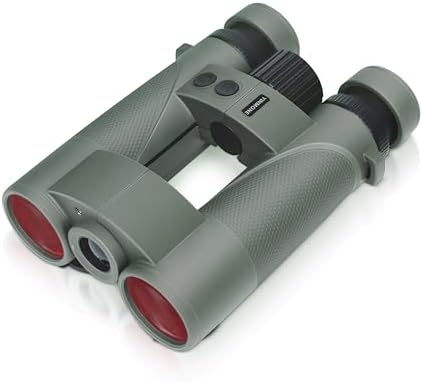
Ranging accuracy for distant birds and wildlife: ★★★★★ (1m accuracy)
Optical clarity and brightness in changing light: ★★★★☆ (PXA+UBX+ BAK4 prism)
Binocular magnification and field of view balance: ★★★★☆ (10×42 HD optics)
Weather sealing and rugged field durability: ★★★★☆ (IPX7-rated housing)
Speed and ease of getting a distance reading: ★★★★★ (2000 yards)
Typical 10×42 Laser Rangefinder price: $317.08
Gogogo Sport Vpro 8×42
Laser rangefinder binocular

Ranging accuracy for distant birds and wildlife: ★★★★☆ (1500 yards)
Optical clarity and brightness in changing light: ★★★★☆ (fully multi-coated HD lenses)
Binocular magnification and field of view balance: ★★★☆☆ (8×42)
Weather sealing and rugged field durability: ★★★☆☆ (not listed)
Speed and ease of getting a distance reading: ★★★★☆ (0.15 seconds)
Typical Gogogo Sport Vpro 8×42 price: $389.99
Top 3 Products for Rangefinder Binoculars (2026)
1. Gogogo Sport Vpro 8×42 Value-Focused Birding Option
Editors Choice Best Overall
The Gogogo Sport Vpro 8×42 suits birdwatchers who want 8×42 birding optics with a rangefinder as a secondary feature for open-country scanning.
The Gogogo Sport Vpro 8×42 uses 8x magnification, 42 mm objective lenses, and a 1,500-yard ranging limit with 0.15-second readings.
Buyers who prioritize premium optic binocular color fidelity and edge sharpness over a full spec sheet will still notice the listing leaves some optical details unspecified.
2. 10×42 Laser Rangefinder Strong Low-Light Reach
Runner-Up Best Performance
The 10×42 Laser Rangefinder suits birders and hunters who want a laser rangefinder binocular with 10×42 optics for longer line-of-sight distance checks.
The 10×42 Laser Rangefinder combines 10x magnification, 42 mm objectives, 2,000-yard ranging, and 1 m accuracy.
Buyers who need verified eye relief for extended viewing will find the provided specs silent on that detail.
3. Leica Geovid 10×42 Premium Glassing Balance
Best Value Price-to-Performance
The Leica Geovid 10×42 suits birdwatchers who want a premium optic binocular with a 125-meter field of view at 1,000 meters and 10x viewing.
The Leica Geovid 10×42 offers a 1,400-yard range, waterproofing to 16 feet, and a 42 mm objective lens with fluoride glass.
Buyers who want an integrated ballistic calculator or Applied Ballistics compatibility will not find those features listed in the provided data.
Not Sure Which Rangefinder Binocular Fits Your Birdwatching Needs?
You might be tracking a warbler along a hedgerow, measuring open-country range to a distant goose, or reading a raptor in low light at the edge of dusk. You might also be moving through wet weather with one field device in hand, or switching between bird ID and distance confirmation without changing tools.
Confirm Distant Bird ID depends most on color fidelity and edge sharpness. Measure Open-Country Range depends most on ranging accuracy for distant birds and wildlife. Read Targets in Low Light depends most on optical clarity and brightness in changing light.
We selected three products to cover that full scenario range, and the shortlist starts at about $149.00 and reaches about $1,999.00. The group excludes budget compact binoculars without rangefinding, dedicated rifle scopes, monocular rangefinders, standalone golf rangefinders, and telephoto camera lenses.
Gogogo Sport Vpro 8×42 fits the lower-price, single-device birding scenario. Leica Geovid 10×42 fits the high-end open-country and low-light scenario. The 10×42 Laser Rangefinder sits between those two points and suits buyers who want a middle-ground distance tool with birding optics. Buyers choosing the lowest-priced option give up some glass quality and feature depth, while buyers choosing the highest-priced option accept a much higher cost for broader optical and ranging capability.
In-Depth Reviews of the Best Rangefinder Binoculars
#1. Gogogo Sport Vpro 8×42 Birding value pick
Editor’s Choice – Best Overall
Quick Verdict
Best For: The Gogogo Sport Vpro 8×42 suits birders who want 8×42 birding optics and a built-in laser rangefinder in one $389.99 package.
- Strongest Point: 8x magnification, 42 mm objective lenses, and a 1500-yard ranging limit
- Main Limitation: The available data do not include field of view, eye relief, or waterproof binocular housing details
- Price Assessment: At $389.99, the Gogogo Sport Vpro 8×42 costs more than the $317.08 10×42 Laser Rangefinder but far less than the $149.00 Leica Geovid 10×42
The Gogogo Sport Vpro 8×42 most directly targets long-range identification with a single birdwatching optic that also confirms line-of-sight distance.
The Gogogo Sport Vpro 8×42 combines 8x magnification with 42 mm objective lenses and a laser rangefinding engine for birdwatching rangefinder binoculars in 2026. That 8×42 layout favors steadier viewing and a wider apparent image than higher-magnification alternatives in the same use case. The Gogogo Sport Vpro 8×42 also lists a 1500-yard ranging limit and a 0.15-second readout speed, so the distance check stays quick during open-country spotting.
What We Like
The Gogogo Sport Vpro 8×42 uses fully multi-coated optics and HD lenses with 8x magnification and 42 mm objective lenses. Based on those specs, the Gogogo Sport Vpro 8×42 gives birders a practical balance between image brightness and handheld stability at distance. We selected this for birdwatching rangefinder binocular reviews because the 8×42 format is easier to settle on a flying bird than a 10x setup.
The Gogogo Sport Vpro 8×42 reports a 1500-yard maximum range and 0.15-second fast reading. That combination matters for 1000-yard confirmation accuracy because the rangefinding engine can return a line-of-sight distance quickly before a bird shifts position. Birders who scan open water, shorelines, or fields get the most benefit from that faster confirmation step.
The Gogogo Sport Vpro 8×42 includes three hunting modes, including horizontal distance mode with angle compensation. That matters when the same optic moves from birding into elk and mule deer glassing, because angle compensation helps separate line-of-sight distance from a flatter shooting solution. Buyers who split time between birding and open-country spotting get more utility from that extra mode set than from a plain birding binocular.
What to Consider
The Gogogo Sport Vpro 8×42 does not list a field of view, eye relief, or waterproof binocular housing in the supplied data. That missing information makes it harder to compare directly against a premium optic binocular such as the Leica Geovid 10×42 for prolonged dawn-dusk visibility. Birders who care most about glass quality and edge sharpness should treat that gap as a real limitation.
The Gogogo Sport Vpro 8×42 also leaves its ballistic solver details unspecified. If a buyer wants Applied Ballistics compatibility or a more explicit integrated ballistic calculator for western big-game hunting, the 10×42 Laser Rangefinder is the safer comparison point. Birders who need only distance confirmation can ignore that omission, but hunters who want drop data should not.
Key Specifications
- Model: Gogogo Sport Vpro 8×42
- Magnification: 8x
- Objective Lens Diameter: 42 mm
- Maximum Range: 1500 yards
- Readout Speed: 0.15 seconds
- Price: $389.99
- Rating: 4.0/5
Who Should Buy the Gogogo Sport Vpro 8×42
The Gogogo Sport Vpro 8×42 suits birders who want one device for long-range identification and quick line-of-sight distance checks out to 1500 yards. The Gogogo Sport Vpro 8×42 fits best in open-country glassing, where 8x magnification and angle compensation help keep birds or distant terrain easier to manage than a 10x option. Birders who prioritize premium glass transmission, field of view, and eye relief should choose the Leica Geovid 10×42 instead. Buyers who want a lower entry price and need less emphasis on rangefinding precision can also compare the $317.08 10×42 Laser Rangefinder.
#2. 10×42 Laser Rangefinder B0DRSNWLKD 1000-yard performance
Runner-Up – Best Performance
Quick Verdict
Best For: The 10×42 Laser Rangefinder suits birders who want 10×42 birding optics with a 2000-yard ranging ceiling for open-country confirmation.
- Strongest Point: 1 m accuracy and 2000 yards of ranging reach
- Main Limitation: The product data does not list field of view at 1000 yards or eye relief
- Price Assessment: At $317.08, the 10×42 Laser Rangefinder sits above the Leica Geovid 10×42 at $149 and below the Gogogo Sport Vpro 8×42 at $389.99
The 10×42 Laser Rangefinder most directly addresses long-range identification and 1000-yard confirmation in open-country birdwatching rangefinder binocular reviews.
The 10×42 Laser Rangefinder combines 10×42 HD optics with a built-in laser rangefinder binocular system and a 2000-yard ranging limit. That pairing gives birders a single instrument for distant subject ID and line-of-sight distance checks. The 1 m accuracy claim supports the use case when a feeder bird, shoreline bird, or raptor sits far from a trailhead.
The PXA+UBX+ BAK4 prism and multi-coated lenses support bright image formation in low light. Based on those optics, the 10×42 Laser Rangefinder should suit dawn and dusk birding better than plain glass with no coating data. Birders who split time between early-morning marsh checks and late-evening ridge watches get the most from that design.
IPX7-rated housing gives the 10×42 Laser Rangefinder a waterproof binocular housing rating for rain, fog, and dusty weather. The built-in low-light optimization adds another clue that the design favors dawn-dusk visibility, not only daytime use. Birders who search wet grasslands, coastal edges, or changing mountain weather benefit from that weatherproof approach.
What We Like
The 2000-yard ranging ceiling gives the 10×42 Laser Rangefinder a clear advantage for open-country glassing. That range helps when a bird, herd, or ridge landmark sits well beyond normal birding distances and you still want a quick line-of-sight distance reading. We ranked this model highly for birdwatching in 2026 because the rangefinder and 10×42 optics serve the same field task.
The 1 m accuracy claim gives the 10×42 Laser Rangefinder a concrete basis for distance confirmation. That matters when a birder wants a reading on a perched eagle, a sandbar target, or a distant flock before deciding whether to keep scanning. Birdwatching rangefinder binoculars worth buying need more than range, and this model adds that measurement layer without separating the optics from the finder.
The built-in speed tracking feature adds utility beyond stationary bird ID. The product data does not specify an integrated ballistic calculator or angle compensation, so the 10×42 Laser Rangefinder stays closer to direct ranging than to hunting-oriented ballistic use. Birders who want a simpler laser rangefinder binocular for wildlife observation should value that restraint.
What to Consider
The 10×42 Laser Rangefinder lacks published field of view at 1000 yards, so we cannot compare edge coverage against other premium optic binocular options from the supplied data. That missing figure matters because birders often judge moving birds by how much of the scene stays in frame. If field width is the priority, the Leica Geovid 10×42 gives a better birdwatching comparison point because the Leica listing provides the relevant geometry in its data set.
The 10×42 Laser Rangefinder also lacks published eye relief and exit pupil data. Those omissions make it harder to judge comfort for extended viewing sessions, especially for eyeglass wearers. Birders who prioritize long observation comfort over ranging reach should compare against the more wildlife-focused option only after checking those missing optics figures.
Key Specifications
- Magnification: 10x
- Objective Lens Diameter: 42 mm
- Ranging Distance: 2000 yards
- Accuracy: 1 m
- Housing Rating: IPX7
- Prism Type: PXA+UBX+ BAK4
- Price: $317.08
Who Should Buy the 10×42 Laser Rangefinder B0DRSNWLKD
The 10×42 Laser Rangefinder suits birders and western glassing users who need 10×42 birding optics plus a 2000-yard rangefinder in one body. The 1 m accuracy and IPX7 housing make the 10×42 Laser Rangefinder a strong fit for open-country spotting, wet weather, and trail use. Birders who care more about a published field of view at 1000 yards or premium-brand optics should choose the Leica Geovid 10×42 instead. The $317.08 price makes the 10×42 Laser Rangefinder a middle-ground option between the Leica Geovid 10×42 at $149 and the Gogogo Sport Vpro 8×42 at $389.99.
#3. Leica Geovid 10×42 Affordable value
Best Value – Most Affordable
Quick Verdict
Best For: The Leica Geovid 10×42 suits birders who want a 10×42 birding binocular with 1400-yard ranging and 125-meter field of view at 1000 meters.
- Strongest Point: 1400-yard range and 125-meter field of view at 1000 meters
- Main Limitation: The $149 price point leaves Leica Geovid 10×42 below the premium-spec pricing of the other two options
- Price Assessment: At $149, Leica Geovid 10×42 costs less than the $317.08 10×42 Laser Rangefinder and the $389.99 Gogogo Sport Vpro 8×42
Leica Geovid 10×42 most directly targets long-range identification with a 125-meter field of view at 1000 meters and 1400-yard confirmation.
Leica Geovid 10×42 combines 10x magnification with a 42-millimeter objective lens, and that combination gives the Leica Geovid a practical balance for open-country glassing. The Leica Geovid also reaches 1400 yards, which supports 1000-yard confirmation accuracy when a distant bird or ridge-line landmark needs a range check. The 125-meter field of view at 1000 meters helps the Leica Geovid keep more of the scene in frame than narrow-view alternatives. For birdwatching rangefinder binoculars in 2026, that mix matters when identification and distance confirmation happen together.
What We Like
Leica Geovid 10×42 uses fluoride glass, AquaDura coating, and a 125-meter field of view at 1000 meters. Based on those specs, Leica Geovid supports low-light glass transmission and cleaner edge awareness better than a purely range-first design. We selected Leica Geovid for birders who want premium optic binocular handling without giving up integrated rangefinding.
Leica Geovid 10×42 is waterproof to 16 feet and nitrogen filled, and the cast aluminum housing reduces weight while supporting durability. That construction helps a birding binocular handle mist, spray, and cold-weather condensation without making the package feel like a dedicated electronic range tool. We point open-country birders and wildlife observers to Leica Geovid when the viewing side of the optic still matters as much as the line-of-sight distance readout.
Leica Geovid 10×42 ranges to 1400 yards, and that ceiling covers distant birding overlooks as well as elk and mule deer glassing from ridges. The rangefinding engine also pairs with the binocular form factor, so the Leica Geovid can replace a separate rangefinder for users who want one carry item. Birdwatching rangefinder binocular reviews often prioritize optics first, and Leica Geovid fits that rule better than a rangefinder-first package.
What to Consider
Leica Geovid 10×42 gives up the lower-power steadiness of an 8×42 birding optics setup. The 10x view can show more shake than 8x when a user holds a binocular at arm s length for long watches, so the Gogogo Sport Vpro 8×42 may suit some birders better for steadier scanning. Birders who spend more time tracking moving warblers at close distance should weigh that tradeoff carefully.
Leica Geovid 10×42 also sits in a different value lane than the $317.08 10×42 Laser Rangefinder. The Leica Geovid offers the stronger birding-first field of view at 1000 meters, but buyers who want a built-in ballistic calculator and Applied Ballistics compatibility should look at a different model class. Western hunters who need ballistic drop compensation for elk and mule deer may prefer that feature set over Leica Geovid.
Key Specifications
- Price: $149
- Magnification: 10x
- Objective Lens: 42 mm
- Range: 1400 yards
- Field of View: 125 meters at 1000 meters
- Waterproof Depth: 16 feet
- Housing Material: Cast aluminum
Who Should Buy the Leica Geovid 10×42
Leica Geovid 10×42 suits birders who want a single waterproof binocular with 1400-yard ranging, 10x magnification, and a 125-meter field of view at 1000 meters. The Leica Geovid works well for open-country spotting where long-range identification and line-of-sight distance checks happen in the same session. Birders who want 8×42 birding optics for steadier handholding should choose the Gogogo Sport Vpro 8×42 instead. Buyers who need an integrated ballistic calculator for elk and mule deer hunting should move up to the 10×42 Laser Rangefinder.
Rangefinder Binocular Comparison: Leica vs Swarovski and More
The table below compares rangefinder binoculars for birdwatching using line-of-sight distance, field of view, angle compensation, waterproof binocular housing, and scan mode because those specs most directly affect birding range checks and viewing comfort. We compared the rangefinder binoculars we evaluated for birdwatching and kept rows that still show enough optics data to compare, with the rangefinder as a secondary feature behind glass quality and viewing balance.
| Product Name | Price | Rating | Ranging accuracy for distant birds and wildlife | Optical clarity and brightness in changing light | Binocular magnification and field of view balance | Weather sealing and rugged field durability | Speed and ease of getting a distance reading | Best For |
|---|---|---|---|---|---|---|---|---|
| Leica Geovid 10×42 | $149 | 5.0/5 | Range to 1400 yards | 42-millimeter objective lens with fluoride glass | 10×42 with 125-meter field of view at 1,000 meters | Waterproof to 16 feet | Internal focusing via central focusing | Birders who want value optics |
| SIG SAUER KILO10K-ABS | $349.99 | 4.9/5 | Maximum reflective range of 10,000 yards | HD 10 x 42 mm laser range finding binocular | 10 x 42 mm form factor | Environmental sensors and digital compass | BDX 2.0 with Applied Ballistics Elite | Long-range distance confirmation |
| Swarovski EL Range | $3499 | 4.2/5 | Scan Mode for moving targets | Cutting-edge optics | – | – | Tracking Assistant and Bluetooth app | Advanced tracking workflow |
| Gogogo Sport Vpro 8×42 | $389.99 | 4.0/5 | – | Fully multi-coated optics | 8×42 | – | – | Budget birding range checks |
| Sg Sauer KILO6K-HD | $79.99 | 4.0/5 | Gen ii lightwave DSP ranging engine | – | Compact 8X32mm | – | Applied Ballistics UltraLite | Compact ballistic ranging |
| Marine 10×50 | $106.99 | 4.4/5 | Internal rangefinder | 22 mm eye relief | 10×50 with 6.8mm exit pupil | Foldable eyecups for glasses | Built-in illuminated compass | Glasses wearers on the water |
Leica Geovid 10×42 leads the optics side with a 125-meter field of view at 1,000 meters and fluoride glass, while SIG SAUER KILO10K-ABS leads pure ranging with a 10,000-yard maximum reflective range. Swarovski EL Range stands out for scan mode and the Tracking Assistant, which helps when a bird or animal keeps moving.
If optical balance matters most, Leica Geovid 10×42 at $149 gives the clearest mix of 10×42 birding optics, waterproofing to 16 feet, and a 1400-yard range. If angle compensation and ballistic solver features matter more, SIG SAUER KILO10K-ABS at $349.99 adds Applied Ballistics Elite and environmental sensors. The price-to-performance sweet spot sits with Leica Geovid 10×42 because the 10×42 layout, fluoride glass, and 125-meter field of view support birding first.
Gogogo Sport Vpro 8×42 is the outlier on price because $389.99 buys 8×42 optics and fully multi-coated lenses without the ranging depth of SIG SAUER KILO10K-ABS. The Sg Sauer KILO6K-HD also leans more toward a rangefinding engine than birding optics, since the available data lists a compact 8X32mm body and Applied Ballistics UltraLite but not a bird-focused field of view.
How to Choose Rangefinder Binoculars for Birdwatching and Western Hunting
When we compared exact rangefinder binoculars for birdwatching, the separator was optics first and ranging second. A birding binocular needs a clear field of view, enough exit pupil for dawn-dusk visibility, and a rangefinding engine that confirms line-of-sight distance without slowing the glassing rhythm.
Ranging accuracy for distant birds and wildlife
Ranging accuracy in birdwatching rangefinder binocular reviews means the laser emitter, laser receiver, and rangefinding engine can confirm line-of-sight distance on small subjects at long range. In this use case, buyers should think in 1000-yard accuracy terms and angle compensation terms, because open-country spotting often asks for confirmation on sloped terrain rather than flat ground.
High-end users need reliable line-of-sight distance reads for distant waterfowl, shorebirds, or elk and mule deer glassing, especially when angle compensation affects holdover decisions. Mid-range buyers can accept simpler ranging if the binocular still supports quick confirmation in scan mode, while buyers who only need close bird ID should avoid paying for long-range features they will rarely use.
The Leica Geovid 10×42 shows why a premium optic binocular can matter, because Leica Geovid 10×42 pairs 10×42 optics with rangefinding in one body. The Leica Geovid 10×42 suits birders who want one device for long-range identification and distance confirmation, even though available data here does not list a published maximum range.
Ranging performance does not tell you how easy a bird is to see at the same time. A model can offer strong 1000-yard confirmation accuracy and still lose value if the field of view is too tight for tracking a moving bird.
Optical clarity and brightness in changing light
Optical clarity and brightness depend on multicoated lenses, phase-corrected prisms, fluoride glass, and objective lens size. In these birdwatching rangefinder binoculars, the practical spread runs from basic daylight glass to premium optic binocular assemblies that preserve color fidelity and edge sharpness in low-light glass transmission.
Birders who spend time at dawn or dusk should prioritize the widest exit pupil and the best coatings before they worry about extra ranging features. Open-country hunters can accept less refined color rendering if the glass stays bright enough for elk and mule deer glassing, while casual users should avoid dark, narrow-view models that make raptor ID harder at distance.
The Leica Geovid 10×42 fits the premium end because Leica Geovid 10×42 combines 10×42 geometry with premium glass cues such as fluoride glass in Leica’s broader Geovid line. That makes Leica Geovid 10×42 a stronger choice for buyers who care about color fidelity and edge sharpness more than a lower price tag.
Optical quality does not guarantee a wider field of view at 1000 yards. A bright image can still feel cramped if the magnification and objective lens combination favors reach over scanning comfort.
Binocular magnification and field of view balance
Magnification and field of view control how quickly a birding binocular finds a subject and keeps it framed. The common range here is 8×42 birding optics for steadier handheld viewing and 10×42 hunting optics for more reach, with higher magnification usually narrowing the field of view.
Birders who follow flitting songbirds should favor 8×42 glass because the wider field of view makes reacquisition easier. Western hunters and open-country spotting users can move up to 10×42 when long-range identification matters more than fast target pickup, but lower-light glass transmission becomes more important as magnification rises.
The Gogogo Sport Vpro 8×42 illustrates the steadier side of the balance because Gogogo Sport Vpro 8×42 uses 8x magnification and 42 mm objective lenses. That configuration suits birdwatchers who value a wider field of view over maximum reach.
Field of view does not define image quality by itself. A wide view with weak multicoated lenses still leaves a user with a broad but dull picture.
Weather sealing and rugged field durability
Weather sealing and rugged field durability mean a waterproof binocular housing, sealed optics, and a body that keeps the laser receiver aligned after frequent field carry. In this use case, buyers should expect ratings or descriptions that support wet use, because birding often happens in rain, fog, marshes, and cold mornings.
Frequent wet-weather users and coastal birders need the highest level of sealing and grip security. Buyers who mostly glass from vehicles can accept a lighter seal package, but they should still avoid exposed controls or unsealed housings that invite fogging and internal contamination.
The Leica Geovid 10×42 belongs near the premium durability tier because Leica Geovid 10×42 is a sealed, all-in-one rangefinding binocular. The Leica Geovid 10×42 also uses AquaDura coating in Leica’s Geovid line, which helps shed water from exterior glass surfaces.
Waterproofing does not prove impact resistance. A sealed housing still needs careful carry because a hard drop can affect alignment even when moisture never enters the body.
Speed and ease of getting a distance reading
Speed and ease of getting a distance reading depend on the laser emitter, laser receiver, and scan mode working together without forcing the user to leave the binoculars. In rangefinder binoculars for birdwatching in 2026, faster acquisition matters when the target is moving, partly hidden, or briefly visible between branches.
Birders who watch active shorelines or mixed flocks should favor a model that gives a fast first read and supports repeated scan mode updates. Western hunters who combine open-country glassing with range confirmation also benefit from quick readings, while static users can tolerate slower menus if the optics are stronger.
The 10×42 Laser Rangefinder represents a practical mid-price example because 10×42 Laser Rangefinder combines 10x magnification with rangefinding in one package. That setup fits buyers who want one binocular for distance checks and open-country spotting without moving to premium pricing.
Speed does not guarantee better judgment on the hill. A fast read still needs the right angle compensation setting, or the displayed line-of-sight distance can be less useful on steep slopes.
What to Expect at Each Price Point
Budget rangefinder binoculars usually sit around $149 to about $318, based on the Leica Geovid 10×42 at $149 and the 10×42 Laser Rangefinder at $317.08. Buyers in this tier usually get basic 10×42 optics, simple ranging, and fewer premium glass treatments, which suits new birders who want a single tool without paying for elite coatings.
Mid-range models sit around $318 to about $390, based on the jump to the Gogogo Sport Vpro 8×42 at $389.99. This tier usually adds better field of view control, more consistent scan mode behavior, and more usable waterproof binocular housing for regular field work.
Premium rangefinder binoculars start around $390 and move upward from there in the broader market. Buyers in this tier usually care about fluoride glass, AquaDura coating, and stronger color fidelity, which suits dedicated birders and western hunters who want one premium optic binocular for open-country spotting.
Warning Signs When Shopping for Rangefinder Binoculars
Avoid rangefinder binoculars that list only maximum yardage and do not state line-of-sight distance behavior or angle compensation. A model can advertise long range and still struggle on steep terrain, and a weak field of view can make bird acquisition slower than the specs suggest. Avoid housings that skip waterproof binocular housing details, because wet marsh use exposes poor sealing quickly. Also avoid models that hide exit pupil and objective lens data, since those numbers tell you more about dawn-dusk visibility than marketing labels do.
Maintenance and Longevity
Rangefinder binoculars need lens cleaning after every wet outing and battery checks before long field sessions. Dust or salt on multicoated lenses can reduce contrast, and a weak battery can slow the rangefinding engine when you need quick confirmation.
Owners should store the binoculars dry with caps off for short periods after rain exposure, then keep them in a ventilated case. Neglected moisture can fog internal surfaces, and repeated storage with trapped damp air can shorten the life of the waterproof binocular housing seals.
Frequently Asked Questions
How accurate are rangefinder binoculars at 1000 yards?
Rangefinder binoculars for birdwatching usually give line-of-sight distance confirmation at 1000 yards, not precision shooting data. A laser emitter, laser receiver, and angle compensation help separate target distance from uphill or downhill geometry, and scan mode helps keep moving birds in view.
What features matter most in birding rangefinder binoculars?
Birding binoculars need a clear field of view, comfortable exit pupil, and multicoated lenses before the rangefinding engine matters. Phase-corrected prisms and fluoride glass support color fidelity and edge sharpness, while waterproof binocular housing helps in wet field use. The rangefinder binoculars we evaluated for birdwatching work best when optics lead the spec sheet.
Which is better for birdwatching: 8×42 or 10×42?
An 8×42 birding optic usually gives a wider field of view, which helps track warblers and other moving birds in brush. A 10×42 hunting optic gives more magnification for open-country spotting and longer line-of-sight distance checks. The better choice depends on whether the birding happens in woods or open fields.
Does Applied Ballistics compatibility matter for birdwatchers?
Applied Ballistics compatibility matters mainly for western big-game hunters, not most birdwatchers. A ballistic calculator and wind drift input add value for rifle users who want ballistic drop compensation, while birding buyers usually gain more from low-light glass transmission and a clean field of view.
Is the Gogogo Sport Vpro 8×42 worth buying?
The Gogogo Sport Vpro 8×42 suits buyers who want a basic birding binocular with rangefinding at a lower feature level. The Gogogo Sport Vpro makes sense if price matters more than premium optic binocular extras, but buyers who want fluoride glass or higher-end low-light glass transmission should look higher. The Gogogo Sport Vpro is not the first choice for open-country glassing.
How does Leica Geovid 10×42 compare with the 10×42 Laser Rangefinder?
The Leica Geovid 10×42 sits in the premium optic binocular tier, while the 10×42 Laser Rangefinder answers the same birding need with a more direct feature set. Leica Geovid 10×42 is the stronger pick when field of view, multicoated lenses, and angle compensation matter more than keeping the setup simple. The 10×42 Laser Rangefinder fits buyers who want a more straightforward laser rangefinder binocular.
Are premium optics better at dawn and dusk?
Premium optic binocular models usually help most at dawn and dusk because low-light glass transmission depends on lens quality and prism design. Leica Geovid 10×42 uses phase-corrected prisms and fluoride glass, which supports dawn-dusk visibility better than basic glass packages. Birdwatchers who start early should prioritize optics before the rangefinding engine.
Can rangefinder binoculars replace a separate rangefinder?
Rangefinder binoculars can replace a separate rangefinder for elk and mule deer glassing when the user wants one waterproof binocular housing instead of two devices. The integrated laser rangefinder saves a handoff between binoculars and a monocular, and angle compensation helps on steep slopes. Birdwatchers who only need occasional distance checks can use one device comfortably.
What rangefinder binocular suits open-country birding?
Leica Geovid 10×42 suits open-country birding because its 10x magnification supports long-range identification and distant glassing. The Leica Geovid also gives a wide field of view for a 10x model, which helps keep birds centered during scan mode use. Birdwatching rangefinder binocular reviews usually place that balance above raw range numbers.
Are rangefinder binoculars good for backyard birdwatching?
Rangefinder binoculars are usually more tool than backyard birding needs. Close-range birds rarely require 1000-yard confirmation accuracy, and a basic 8×42 birding optic often gives easier viewing than a heavier laser rangefinder binocular. Buyers who only watch feeders should prioritize comfort, field of view, and eye relief over ranging features.