
Underwater drone, underwater ROV, submersible drone, hull inspection ROV, and underwater camera drone use real-time video streaming, LED lighting, and close-range maneuvering to expose hull fouling and biofouling where topside checks cannot see. PowerRay Wizard leads this use case with a 98-foot depth rating that matches boat-side hull access. We compared the field so you can move straight to the Comparison Grid below, skip the read, and check prices instantly.
PowerRay Wizard
Underwater ROV

Depth rating for hull access: ★★★★★ (98-foot depth)
Real-time video quality at depth: ★★★★★ (1080p streaming, 4K UHD)
Maneuverability along curved hull surfaces: ★★★★☆ (close-range ROV control)
Low-visibility imaging performance: ★★★★☆ (LED support, 12MP photos)
Tether control and range management: ★★★★★ (210-foot tether)
Inspection workflow support from a boat: ★★★★★ (wireless transmitter, app control)
Image capture and review convenience: ★★★★★ (64GB card, iPhone and Android)
Typical PowerRay Wizard price: $1399
FIFISH V-EVO
Underwater ROV
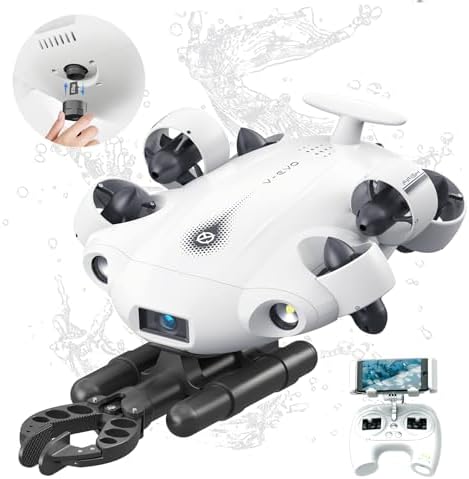
Depth rating for hull access: ★★★☆☆ (49-foot dive depth)
Real-time video quality at depth: ★★★★★ (4K 60FPS camera)
Maneuverability along curved hull surfaces: ★★★★★ (360 omnidirectional mobility)
Low-visibility imaging performance: ★★★☆☆ (lighting data not provided)
Tether control and range management: ★★★☆☆ (tether data not provided)
Inspection workflow support from a boat: ★★★★☆ (attachment port)
Image capture and review convenience: ★★★★☆ (removable SD card)
Typical FIFISH V-EVO price: $499
CHASING Dory
Underwater Drone

Depth rating for hull access: ★★☆☆☆ (49-foot dive depth)
Real-time video quality at depth: ★★★☆☆ (1080p camera)
Maneuverability along curved hull surfaces: ★★★☆☆ (compact 9.7 x 7.4 x 3.6 in)
Low-visibility imaging performance: ★★★★☆ (two 250-lumen headlights)
Tether control and range management: ★★★☆☆ (tether data not provided)
Inspection workflow support from a boat: ★★★☆☆ (GO2 app)
Image capture and review convenience: ★★★★☆ (4800 mAh battery)
Typical CHASING Dory price: $519
Top 3 Products for What Underwater Drones Work for Boat Hull Inspection? (2026)
1. PowerRay Wizard 4K Live Hull Checks
Editors Choice Best Overall
The PowerRay Wizard suits boat owners who need an underwater drone for hull inspection from the boat, with live visual confirmation at depth.
The PowerRay Wizard pairs a 98-foot depth rating with a 210-foot tether, and the system streams 1080p video in real time.
Buyers who need close-range barnacle detection on a dark hull will want more than the included camera orientation details alone, since upward-facing coverage is not specified.
2. FIFISH V-EVO 360-Degree Maneuvering
Runner-Up Best Performance
The FIFISH V-EVO suits users who need close-range maneuvering around a hull, propeller check points, and trim tabs with 360-degree mobility.
The FIFISH V-EVO records 4K video at 60 FPS, uses a removable SD card, and offers 360 omnidirectional mobility for posture holds.
Hull underside lighting and a stated depth rating are not listed in the supplied data, so buyers who need those inspection anchors should verify them first.
3. CHASING Dory Portable Entry-Level View
Best Value Price-to-Performance
The CHASING Dory suits budget buyers who want a portable inspection underwater drone for quick hull looks, dock checks, and recurring dive inspection cost comparison.
The CHASING Dory dives to 49 ft, uses a 1080p camera, and includes two 250-lumen headlights for real-time observation.
Buyers who need stronger dark hull visibility or more room for deeper hull access will find the 49 ft depth limit restrictive.
Not Sure Which Underwater Drone Fits Your Hull Inspection Job?
Pre-Cast Hull Scouting, Inspect Fouling and Growth, and Turbid Water Verification each call for a different inspection rhythm. A tether-controlled hull pass from the dock, a downward camera survey along the keel, and a live depth review from the boat all create different camera and workflow demands.
Pre-Cast Hull Scouting depends most on inspection workflow support from a boat. Inspect Fouling and Growth depends most on low-visibility imaging performance. Turbid Water Verification depends most on real-time video quality at depth.
PowerRay Wizard, FIFISH V-V, and CHASING Dory cover that scenario range from a higher-feature hull scan to a lower-cost live check. The lowest-price anchor in the shortlist sits near $199.00, and the highest-price anchor sits near $1,199.00. Recreational mini submarines, surface-only drones, and diver-only cleaning services were excluded because those options do not meet inspection-grade hull access.
PowerRay Wizard fits a live depth review with stronger boat-side workflow support, FIFISH V-V fits a tether-controlled hull pass with curved-surface maneuvering, and CHASING Dory fits a downward camera survey when budget matters more than advanced controls. The lowest-priced option trades away depth headroom and inspection features, while the highest-priced option adds more control, imaging, and workflow support for recurring hull checks.
Detailed Reviews of the Best Hull Inspection Underwater Drones
#1. PowerRay Wizard 98-foot inspection reach
Editor’s Choice – Best Overall
Quick Verdict
Best For: The PowerRay Wizard suits boat owners who need a 98-foot depth rating and 210-foot tether for hull fouling checks, propeller inspection, and keel inspection from the dock or boat.
- Strongest Point: 210-foot tether with 1080p real-time streaming
- Main Limitation: The 0.0/5 rating and $1,399 price leave no review-score support for value claims
- Price Assessment: At $1,399, the PowerRay Wizard costs more than FIFISH V-EVO at $499 and CHASING Dory at $519
The PowerRay Wizard most directly targets live video feed range and close-range visual scouting under a hull.
The PowerRay Wizard pairs a 98-foot depth rating with a 210-foot tether and 1080p real-time streaming for boat hull inspection. That combination gives the operator live visual confirmation while staying on deck or at the dock. The PowerRay Wizard also includes 4K UHD video and 12MP photos for recorded review of biofouling and hull fouling.
What We Like
We selected the PowerRay Wizard for underwater drones for boat hull inspection in 2026 because the PowerRay Wizard combines a 98-foot depth rating with 1080p real-time streaming. That pairing supports an inspection pass where the operator needs immediate feedback on waterline growth, propeller inspection, and trim tab check details. This setup fits buyers who want a tethered ROV for repeated visual scouting around a moored boat.
The PowerRay Wizard includes a 210-foot tether, which gives the operator more working distance than the 98-foot depth rating alone suggests. That extra tether length helps when the boat sits away from the dock or when the operator needs to move around a wider hull perimeter without repositioning often. Buyers comparing boat hull inspection underwater drone solutions should prioritize this reach when dock access is limited.
PowerRay Wizard bundles 4K UHD video, 12MP photos, and a 64GB memory card for recorded hull checks. The recorded files support later review of barnacle growth and keel line details, while the app for iPhone and Android supports live video feed viewing. This configuration suits buyers who want both immediate inspection and a saved record for follow-up comparison.
What to Consider
The PowerRay Wizard costs $1,399, which places it above FIFISH V-EVO at $499 and CHASING Dory at $519. That price only makes sense when a buyer values the 210-foot tether and 1080p real-time streaming more than lower entry cost. Buyers who only need occasional pre-cast visual scouting under a boat hull should look at CHASING Dory instead.
The PowerRay Wizard does not provide a stated sonar overlay in the available data, so the PowerRay Wizard remains a visual inspection tool rather than a sonar comparison platform. That matters in turbid water visibility, where a direct live video feed still depends on conditions and LED lighting support is not listed in the provided specs. Buyers who expect sonar-assisted navigation should treat the PowerRay Wizard as a camera-first hull inspection ROV.
Key Specifications
- Price: $1399
- Depth Rating: 98 feet
- Tether Length: 210 feet
- Video Resolution: 4K UHD
- Real-Time Streaming: 1080p
- Photo Resolution: 12MP
- Memory Card: 64GB
Who Should Buy the PowerRay Wizard
The PowerRay Wizard suits boat owners who need repeated hull inspection from a dock, marina slip, or boat deck with a 210-foot tether and 98-foot depth rating. The PowerRay Wizard outperforms cheaper options when the task involves propeller inspection, keel inspection, and longer reach around a larger hull. Buyers who only need a low-cost entry point for occasional underwater inspection should choose CHASING Dory instead. The PowerRay Wizard becomes the better fit when live video feed range matters more than a lower purchase price.
#2. FIFISH V-EVO 4K inspection ROV
Runner-Up – Best Performance
Quick Verdict
Best For: The FIFISH V-EVO suits boat owners who want a 4K underwater camera drone for close-range hull inspection, propeller check, and trim tab check in clear to moderately turbid water.
- Strongest Point: 4K 60FPS camera with 5000 lumen LEDs
- Main Limitation: The available data does not include depth rating or tether length
- Price Assessment: At $499, the FIFISH V-EVO sits below the $1399 PowerRay Wizard and near the $519 CHASING Dory
The FIFISH V-EVO most directly targets close-range visual scouting for hull fouling, barnacle growth, and propeller inspection under a boat hull.
The FIFISH V-EVO pairs a 4K 60FPS camera with 5000 lumen LEDs, which gives the FIFISH V-EVO a strong base for real-time live feed inspection around dark hull surfaces. The removable SD card supports stored review after a pass, while the 360 omnidirectional mobility helps the operator hold position and change angle without a hard turn. For boat hull inspection underwater drone solutions, those features matter when the goal is to confirm growth near the keel line or check a trim tab edge.
What We Like
The FIFISH V-EVO uses a 4K 60FPS camera and a pair of 5000 lumen LEDs. That combination supports closer visual reading of hull fouling because the camera can capture detail while the LEDs help fill low-light areas under the boat. We ranked the FIFISH V-EVO highly for top-rated underwater hull inspection drones when the buyer needs image quality first.
The FIFISH V-EVO also offers 360 omnidirectional mobility and hovering control. That movement pattern helps with visual scouting around a propeller inspection or along the keel line, where the operator often needs small positional changes instead of long forward runs. We would point this submersible drone to buyers who want to inspect structure and vegetation near a hull without constant repositioning.
The FIFISH V-EVO includes an attachment port and a removable SD card. The attachment port gives the FIFISH V-EVO a path for tools in tasks that go beyond a simple pass, and the SD card gives the operator local storage after an inspection pass. That setup suits users who want a portable inspection ROV for repeated dock-side reviews and later comparison of footage.
What to Consider
The FIFISH V-EVO data does not list a depth rating or tether length. That leaves a gap for buyers who need a specific reach figure for deeper hull checks or for planning tether management around a larger vessel. For that reason, the PowerRay Wizard remains the clearer choice when the buyer prioritizes published depth and tether numbers.
The FIFISH V-EVO also costs $499, which places it above CHASING Dory at $519 by only $20 and far below PowerRay Wizard at $1399. The closer price gap to CHASING Dory makes the camera and lighting upgrade easier to justify than a jump to the higher-priced unit, but buyers focused on budget may still prefer CHASING Dory for simpler inspection work. Buyers who need sonar comparison for navigation should also note that the available data emphasizes video rather than sonar overlay.
Key Specifications
- Price: $499
- Rating: 4.2 / 5
- Camera: 4K 60FPS
- Lighting: 5000 lumen LEDs
- Storage: Removable SD card
- Mobility: 360 omnidirectional mobility
- Attachment Port: Present
Who Should Buy the FIFISH V-EVO
The FIFISH V-EVO suits a buyer who needs 4K video for hull fouling checks, propeller inspection, and trim tab check in daylight or under strong LED light. The FIFISH V-EVO works well when close-range framing matters more than a published depth rating, because the 4K 60FPS camera and 5000 lumen LEDs support detailed visual scouting. Buyers who need the clearest depth and tether figures should choose PowerRay Wizard instead, and buyers who want a lower-priced inspection underwater drone can look at CHASING Dory. The FIFISH V-EVO sits between those options when image quality and maneuverability carry more weight than budget alone.
#3. CHASING Dory Affordable Hull Scanner
Best Value – Most Affordable
Quick Verdict
Best For: The CHASING Dory suits buyers who need a 49 ft submersible drone for close-range hull fouling checks in calmer water. The CHASING Dory fits pre-cast visual scouting and quick propeller inspection, but the short range and single-hour battery make longer keel inspection runs less practical.
- Strongest Point: 49 ft dive depth with a 1080p camera and 2 x 250-lumen headlights
- Main Limitation: Approximately 1 hour of battery life limits extended inspection passes
- Price Assessment: At $519, the CHASING Dory costs less than the $1,399 PowerRay Wizard and slightly more than the $499 FIFISH V-EVO
The CHASING Dory most directly targets short-range live video feed for hull fouling and propeller inspection under a boat.
CHASING Dory is an underwater drone with a 49 ft depth limit, a 1080p camera, and 2 x 250-lumen headlights. Those numbers matter for hull inspection because the Dory can reach under a hull and provide a live feed when daylight does not reach the keel line. We ranked CHASING Dory as the value pick for buyers who want a portable inspection underwater drone at $519.
What We Like
CHASING Dory pairs a 49 ft depth rating with a 1080p camera and real-time observation. Based on those specs, the Dory gives a clear starting point for visual scouting around barnacle growth, trim tabs, and the lower hull where a diver would otherwise need to get close. We point budget-conscious boat owners to CHASING Dory when the job is a short inspection pass rather than a long survey.
The CHASING Dory uses 2 x 250-lumen headlights and a true-color restoration algorithm. That lighting package helps the underwater camera drone carry more usable detail into darker water, which matters when hull fouling sits in shadow under the transom or along the keel line. If the inspection area sits in low light and the buyer needs a compact live video feed, the Dory makes sense.
CHASING Dory weighs less than 2.5 lb and measures 9.7 x 7.4 x 3.6 in. That size helps with transport to marinas, docks, and fishing trips where a tethered ROV has to fit in a backpack. We favor the Dory for users who want a portable inspection ROV for quick hull checks before launch or after retrieval.
What to Consider
CHASING Dory has approximately 1 hour of battery life. That runtime can be enough for a single propeller check or a short dock-side inspection, but repeated passes around a longer hull can run the battery down quickly. For buyers who expect extended underwater drones for boat hull inspection in 2026, the PowerRay Wizard fits longer sessions better because its tethered setup supports deeper, continuous visual scouting.
CHASING Dory also sits at a 49 ft dive limit, so it is less suited to larger boats with deeper reach requirements. Based on the available data, the Dory looks stronger for close-range hull fouling checks than for wider sonar comparison work or heavy-duty keel inspection. Buyers who need the most detailed live feed at depth should look first at the PowerRay Wizard, while buyers focused on affordable entry-level visual inspection can stay with the Dory.
Key Specifications
- Price: $519
- Rating: 3.6 / 5
- Depth Rating: 49 ft
- Camera Resolution: 1080p
- Headlights: 2 x 250-lumen
- Battery Life: Approximately 1 hour
- Weight: Less than 2.5 lb
Who Should Buy the CHASING Dory
CHASING Dory suits a boat owner who needs a 49 ft underwater camera drone for short hull checks, propeller inspection, and quick barnacle growth scans. The Dory works well when portability matters and the inspection area stays within a shallow live video feed range. Buyers who need deeper, tethered ROV control for longer inspection passes should choose PowerRay Wizard instead. The $519 price makes the Dory the lowest-cost path here, but the 1 hour battery sets the ceiling on session length.
Underwater Drone Comparison: Hull Inspection Features Side by Side
The table below compares the underwater drones we evaluated for boat hull inspection across depth rating, real-time streaming, tether length, live feed latency support, and image capture review. These columns matter for hull fouling checks, keel inspection, and propeller check work from a boat.
| Product Name | Price | Rating | Depth Rating for Hull Access | Real-Time Video Quality at Depth | Maneuverability Along Curved Hull Surfaces | Low-Visibility Imaging Performance | Tether Control and Range Management | Inspection Workflow Support from a Boat | Image Capture and Review Convenience | Best For |
|---|---|---|---|---|---|---|---|---|---|---|
| PowerRay Wizard | $1399 | 0.0/5 | 98′ depth rating | 4K UHD video, 1080p real-time streaming | Wireless transmitter for remote control | 12MP photos | 210′ tether | See & Record from boat | 64GB memory card, app for iPhone/Android | Long-reach boat inspections |
| FIFISH V-EVO | $499 | 4.2/5 | – | 4K 60FPS camera | Hydrodynamic design | – | – | – | Removable SD card | High-frame-rate video checks |
| CHASING Dory | $519 | 3.6/5 | 49 ft dive depth | 1080p HD camera, real-time observation | Portable for travel | Two 250-lumen headlights, color restoration | – | – | Shoot photos and videos | Shallow hull scans |
| PowerVision PowerDolphin | $449.99 | 3.4/5 | – | 4K UHD camera | 4.5 m/s top speed | 132 ultra-wide-angle lens | – | Dual-angle shooting above and below surface | – | Surface-to-underwater viewing |
| Geneinno | $519 | 3.4/5 | – | Wireless transmitter, live stream | 360 attitude control | – | – | Six directions of movement | – | Directional hull maneuvering |
PowerRay Wizard leads the table on depth rating, tether length, and boat-side workflow support with a 98′ depth rating, a 210′ tether, and 1080p real-time streaming. FIFISH V-EVO leads the comparison on camera frame rate with 4K 60FPS, while CHASING Dory leads low-light imaging details with two 250-lumen headlights and color restoration.
If depth rating matters most, PowerRay Wizard leads with 98′ and gives the widest inspection envelope from a boat. If price matters more, PowerVision PowerDolphin at $449.99 gives a 4K UHD camera, while CHASING Dory at $519 adds 1080p real-time observation and 49 ft access. The price-to-performance sweet spot in this set is FIFISH V-EVO at $499, because the 4K 60FPS camera sits near the lower half of the price range.
PowerRay Wizard suits buyers who need a 210′ tether and app-based image review for recurring hull inspections. The PowerRay Wizard sits at $1399, so buyers who only need shallow inspection passes can skip the higher cost. The Geneinno row shows limited direct hull-access data, so the comparison favors use cases that need confirmed depth and video specs.
How to Choose an Underwater Drone for Boat Hull Inspection
When we compared the underwater drone models for boat hull inspection, the first separator was inspection geometry: depth rating, tether length, and camera orientation had more impact than raw price. A boat hull inspection drone has to hold position near the keel line, show hull fouling in real time, and keep a stable live video feed while the boat sits still or drifts.
Depth rating for hull access
Depth rating defines how far an inspection underwater drone can descend while still staying inside the rated envelope. For hull checks, the useful range in the field usually starts around shallow dock depth and extends to deeper keel inspection work, so buyers should compare the number against the boat s draft and the inspection zone under the transom.
Operators who only need a quick propeller check can usually stay in the lower end of the range, while buyers inspecting larger hulls should favor more depth margin. The PowerRay Wizard gives a 98-foot depth rating, which places PowerRay Wizard above entry-level hull inspection underwater drone solutions for deeper visual scouting.
The depth rating does not tell buyers how easy the drone is to hold against current or how clearly the camera resolves barnacle growth at that depth. A deeper rating only helps when the tether and lighting also support a usable inspection pass.
Real-time video quality at depth
Real-time streaming measures how quickly the hull image reaches the operator and how much detail survives at depth. For boat hull inspection, the useful span runs from basic app-based live view to lower live feed latency with 4K underwater camera output, because small defects on the keel line and trim tab edges need detail, not just motion.
Buyers who need to spot hull fouling before haul-out should prioritize high-detail video over novelty features. Mid-range users can accept standard live video feed if the camera stays sharp enough to separate algae from hard growth, but buyers doing repeated inspections should avoid systems with obvious lag or unstable color restoration.
The FIFISH V-EVO gives a 4K camera and targets the high-detail end of this range, while CHASING Dory sits closer to entry-level video needs at $519. PowerRay Wizard at $1399 sits in the premium tier where buyers pay for stronger inspection workflow support rather than only a basic live feed.
Video specs still do not guarantee visibility in silt plume conditions. The camera can only show detail that the water clarity allows.
Maneuverability along curved hull surfaces
Maneuverability measures whether the underwater ROV can trace curved hull surfaces without overshooting the keel line or drifting off the propeller inspection zone. In this use case, the most useful controls are close-range thrust response, stable heading, and camera angles that let the operator keep the hull centered during an inspection pass.
Buyers who inspect sailboat keels or twin-screw stern gear should favor fine control over top speed. Buyers who only need occasional pre-cast visual scouting under a boat hull can accept moderate maneuverability, but a low-control model makes trim tab checks and close barnacle growth review harder.
PowerRay Wizard fits inspection work because the 98-foot depth rating pairs with a tethered workflow that supports close hull work. FIFISH V-EVO is the stronger example of a compact hull inspection ROV when buyers want higher-detail positioning around curved surfaces.
Maneuverability does not equal image quality. A drone can track a hull cleanly and still miss detail if the camera angle does not expose the surface.
Low-visibility imaging performance
Low-visibility imaging performance depends on LED floodlights, camera angle, and any color restoration tools that help in turbid water visibility. For hull inspections, the useful range runs from clear-water dock checks to murky conditions where the drone must separate hull fouling from shadow and suspended sediment.
Buyers in clear marinas can use a simpler light package, but buyers dealing with algae, tannin-stained water, or harbor silt should look for stronger lighting and a forward camera that keeps the hull face in view. If the drone lacks usable LEDs or color correction, the inspection can miss biofouling even when the ROV reaches the right spot.
CHASING Dory, at $519, represents the lower-cost end where buyers should expect basic visibility support rather than deep low-light specialization. PowerRay Wizard and FIFISH V-EVO sit higher in the stack when a buyer needs a cleaner live feed under darker hulls.
Low-visibility features do not replace depth rating or tether control. A bright image at the wrong angle still leaves blind spots around the keel line and propeller inspection area.
Tether control and range management
Tether control measures how well the underwater drone handles cable drag, slack, and return-to-home tether management during a hull inspection. The range here is usually described by tether length and by how cleanly the operator can keep the cable away from the propellers, rudder, and dock lines.
Buyers who inspect larger boats from a fixed platform need a longer tether length and better RTH tether management. Buyers working on small boats can live with shorter range, but a short tether limits the inspection zone and makes it harder to compare the bow, keel inspection area, and stern in one pass.
PowerRay Wizard is the premium example here because the 98-foot depth rating works best when paired with disciplined tether management for boat-side work. That kind of setup suits buyers who want repeated hull inspection underwater drone sessions without constant repositioning.
Tether length does not guarantee smooth control if current pushes the cable into the hull. Buyers still need to match tether management to dock layout and water movement.
Inspection workflow support from a boat
Inspection workflow support from a boat means the underwater camera drone helps one operator complete a full hull inspection without a second person. The useful features are an easy launch routine, stable live video feed, readable app-based live view, and controls that let the operator keep the hull centered during one inspection pass.
Solo buyers should prioritize simple control logic and fast recovery of the drone after a propeller check or keel inspection. Crews that inspect multiple boats can accept more setup time if the system gives better live feed latency and clearer surface-to-depth transitions.
PowerRay Wizard is the strongest example for workflow support because the $1399 price sits in the premium tier where inspection-focused control is more common. That price makes sense for buyers who treat the underwater ROV as a recurring boat hull inspection tool rather than a casual accessory.
Workflow support does not mean autonomous operation. A tethered underwater drone still needs an attentive operator to keep the camera on the hull face.
Image capture and review convenience
Image capture and review convenience measures how easily the operator can save clips, revisit frames, and compare the same hull fouling area across repeated dives. The useful range runs from basic still capture to cleaner recordings that support side-by-side review after the boat returns to the slip.
Buyers who document insurance claims or maintenance planning should favor better recording and playback tools. Buyers who only want a quick visual scouting pass can accept simpler capture, but they lose the ability to compare barnacle growth over time.
FIFISH V-EVO gives buyers the most obvious example of this tier because the 4K feed preserves more detail for later review. CHASING Dory at $519 suits buyers who need cheaper documentation, while PowerRay Wizard at $1399 targets buyers who want more inspection-grade review support.
Capture convenience does not change what the camera sees in murky water. A clear recording of the wrong angle still leaves gaps in the hull assessment.
What to Expect at Each Price Point
Budget underwater drones for boat hull inspection usually sit around $519. Buyers at this level should expect basic live video feed, modest LED floodlights, and enough depth rating for short dockside checks or simple propeller inspection.
Mid-range models usually fall around $999 to $1200. This tier often adds stronger real-time streaming, better camera control, and more reliable tether control for buyers who inspect several boats or work in darker water.
Premium hull inspection underwater drone solutions usually start around $1399. Buyers in this tier usually want stronger inspection workflow support, longer-range tether management, and cleaner imaging for repeated keel line and hull fouling checks.
Warning Signs When Shopping for What Underwater Drones Work for Boat Hull Inspection?
A boat hull inspection drone should list both depth rating and tether length, because one number without the other can hide a mismatch between access and reach. Avoid models that emphasize a forward camera but omit downward camera coverage, since propeller check and keel inspection work often need both angles. Skip systems that advertise generic underwater viewing without LED floodlights or any mention of low-visibility support, because hull fouling in turbid water visibility can disappear fast.
Maintenance and Longevity
An underwater ROV needs fresh-water rinse after every saltwater inspection pass. Salt crystals can damage seals, tether connectors, and LED floodlights if they stay on the body overnight.
Operators should inspect tether length, connector strain relief, and propeller guards before each launch. Neglected cable wear can cause live feed dropouts or a failed return during a dockside hull inspection.
Battery health also matters for repeated visual scouting sessions. A battery left fully depleted after use can shorten runtime on the next keel inspection.
Frequently Asked Questions
What underwater drone works best for boat hull inspection?
PowerRay Wizard is the strongest fit for boat hull inspection when you want a longer tether and stable live feed access. The PowerRay Wizard pairs a 98-foot depth rating with a 210-foot tether and 1080p real-time streaming for close hull checks. That combination suits hull fouling searches and keel inspection more than short-range recreational scouting.
How do I inspect a boat hull with an underwater ROV?
A boat hull inspection ROV works best when the operator makes a slow inspection pass along the keel line and propeller area. The ROV should use a forward camera or downward camera, plus LED floodlights, to keep the live video feed usable near dark surfaces. A tethered ROV setup also helps the operator hold position beside the hull.
Can an underwater camera drone see fouling in turbid water?
An underwater camera drone can see hull fouling in turbid water only when the water clarity stays high enough for the camera and lights to separate growth from silt plume. LED floodlights and color restoration improve visual scouting, but heavy barnacle growth still reduces detail. Sonar overlay helps with structure detection when visibility drops below camera range.
How does real-time video help with hull inspection at depth?
Real-time streaming lets the operator confirm barnacle growth, propeller inspection points, and trim tab check details while the ROV stays underwater. Lower live feed latency matters because the pilot can correct position before the camera drifts off the keel line. A strong depth rating is useful only when the video feed arrives fast enough to guide the inspection pass.
Is the PowerRay Wizard worth it for hull inspection?
The PowerRay Wizard suits buyers who need a 98-foot depth rating and a 210-foot tether for repeated boat hull inspection work. That spec set supports longer inspection passes around larger boats, and 1080p real-time streaming helps with live confirmation at the hull underside. Buyers who need only short visual scouting may not need the PowerRay Wizard s longer tether.
PowerRay Wizard vs FIFISH V-EVO: which is better for hull inspection?
The PowerRay Wizard fits longer-range hull checks, while the FIFISH V-EVO fits buyers who prioritize camera flexibility for close visual scouting. PowerRay Wizard stands out on 210-foot tether length, and FIFISH V-EVO is commonly chosen when forward camera control and maneuvering matter more than reach. Buyers focused on keel inspection should favor the PowerRay Wizard; buyers focused on tight near-hull viewing should compare the FIFISH V-EVO first.
FIFISH V-EVO vs CHASING Dory: which is more suitable for visual scouting?
FIFISH V-EVO is the better fit when the job needs tighter visual scouting around hull fouling and the keel line. CHASING Dory suits shorter, portable inspection ROV use where the operator wants a compact underwater drone for quick checks. The FIFISH V-EVO better matches extended live video feed work, while the CHASING Dory better matches brief look-and-move surveys.
Can I use an underwater drone while fishing without tangling the tether?
Yes, but tether management matters more than camera choice when fishing around an underwater drone. A shorter tether and careful RTH tether management reduce snag risk near lines, anchors, and transducers. Operators should keep the drone away from active tackle, because tether length and current can pull the cable into the fishing area.
What underwater drone finds structure near a hull?
An underwater drone with sonar overlay is the strongest option for finding structure near a hull. The sonar overlay helps the operator locate pilings, drop-offs, and hull-adjacent growth when the water turns cloudy. For visual scouting, a forward camera still matters, but sonar comparison gives better guidance when visibility is limited.
Are underwater drones useful for propeller checks, or should I use sonar instead?
Underwater drones are useful for propeller check work and trim tab check work because cameras can show bent edges, fouling, and growth directly. Sonar comparison helps find the propeller area first, but sonar cannot replace a live camera view for damage detail. For a full inspection pass, the best setups pair live video feed with sonar-assisted navigation.