
Document scanners for cloud integration move paper into SharePoint, Google Drive, and similar cloud destinations without a manual file transfer step, and the right cloud connected scanner or ADF scanner keeps that handoff direct. Doxie Go SE leads this use case with 4,000 pages per charge cycle, which gives the portable option clear staying power for batch intake. We already sorted the research, so you can use the Comparison Grid below to skip the read and check prices instantly.
RICOH fi-8170
Sheetfed scanner

Scan throughput per minute: ★★★★★ (up to 70 ppm)
Desk footprint and portability: ★★★ (desktop unit)
Document feeder capacity: ★★★★★ (100-page ADF)
Cloud and app integration: ★★★ (USB or Ethernet)
Image processing and OCR quality: ★★★★★ (Clear Image Capture)
Connectivity and deployment flexibility: ★★★★ (TWAIN/ISIS)
Typical RICOH fi-8170 price: $672
Fujitsu S1300i
Sheetfed scanner
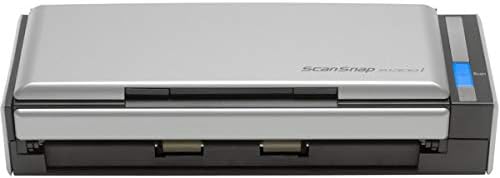
Scan throughput per minute: ★★ (12 duplex ppm)
Desk footprint and portability: ★★★★ (compact USB or AC)
Document feeder capacity: ★★ (10 pages ADF)
Cloud and app integration: ★★★★ (Dropbox, Google Drive)
Image processing and OCR quality: ★★★★ (auto color detection)
Connectivity and deployment flexibility: ★★★ (PC or Mac)
Typical Fujitsu S1300i price: $179
Doxie Go SE
Portable scanner

Scan throughput per minute: ★★★ (8 seconds/page)
Desk footprint and portability: ★★★★★ (battery powered)
Document feeder capacity: ★ (single sheet feed)
Cloud and app integration: ★★★★ (Doxie app sync)
Image processing and OCR quality: ★★★★ (ABBYY OCR)
Connectivity and deployment flexibility: ★★★★★ (no computer required)
Typical Doxie Go SE price: $249
Top 3 Products for Document Scanners for Cloud Integration (2026)
1. Doxie Go SE Portable Cloud Capture
Editors Choice Best Overall
The Doxie Go SE suits mobile workers who want a compact document scanner for local capture and later cloud sync without a PC. Doxie Go SE scans full-color pages in 8 seconds, reaches up to 600 dpi, and stores up to 8,000 pages before sync. The Doxie Go SE does not offer native cloud push without a computer intermediary.
The Doxie Go SE supports portable battery-powered scanning with a rechargeable battery and up to 400 pages per charge. Doxie Go SE also includes OCR through the Doxie app for searchable PDFs. Buyers who need direct scan to SharePoint or Google Drive without manual transfer should look elsewhere.
Doxie Go SE costs $249, and the price fits buyers who value desk-free capture over a network document scanner workflow. Doxie Go SE does not use an ADF scanner mechanism, so batch handling stays limited compared with office feed models.
2. Fujitsu S1300i Direct Cloud Upload
Runner-Up Best Performance
The Fujitsu S1300i suits small teams that need a portable document scanner with scan to Dropbox or Google Drive support from a PC or Mac. Fujitsu S1300i scans up to 12 double-sided pages per minute and holds up to 10 pages in the automatic document feeder. Fujitsu S1300i supports cloud workflow without manual file transfer through compatible cloud destinations.
The Fujitsu S1300i includes USB or AC power, so the scanner works in a desk setup or a carry-friendly setup. Fujitsu S1300i adds automatic color detection, de-skew, and orientation correction for cleaner file handoff. The S1300i still tops out at 10 pages per feed, so larger batch jobs need more reloads.
The Fujitsu S1300i costs $179, which gives the model a strong price-to-performance position for cloud connected scanner buyers. Fujitsu S1300i does not provide native cloud push without a PC intermediary, so the workflow depends on host software.
3. RICOH fi-8170 High-Volume Cloud Feed
Best Value Price-to-Performance
The RICOH fi-8170 suits small office scanning teams that want an ADF scanner for repeatable cloud handoff through USB or Ethernet ECM workflows. RICOH fi-8170 scans up to 70 double-sided pages per minute and uses a 100-page automatic document feeder. RICOH fi-8170 handles receipts, business cards, thick ID cards, and passports.
The RICOH fi-8170 supports network document scanner use through TWAIN and ISIS integration over USB or Ethernet. RICOH fi-8170 also uses Clear Image Capture for image quality control and exit stacker handling for mixed stacks. The fi-8170 does not include built-in Wi-Fi, so wireless direct upload is not part of the design.
The RICOH fi-8170 costs $672, and that price fits buyers who need volume and cloud destination compatibility more than portability. RICOH fi-8170 is not the right choice for a desktop footprint that must stay very small.
Not Sure Which Document Scanner Fits Your Cloud Workflow?
A small office cloud intake team, a space-constrained desk user, and a mobile batch scanning user all need the same paper-to-cloud handoff, but each scenario stresses a different constraint. A mixed-document digitization workflow adds another layer when receipts, forms, and multipage files all need the same cloud destination compatibility.
Small Office Cloud Intake depends most on Cloud and app integration. Space-Constrained Desk Scanning depends most on Desk footprint and portability, while Mobile Batch Scanning depends most on Connectivity and deployment flexibility.
We selected Doxie Go SE, Fujitsu S1300i, and RICOH fi-8170 to cover that scenario range. Doxie Go SE starts at $179.00 in the shortlist, and RICOH fi-8170 reaches $1,995.00 at the high end. We excluded large-format flatbed scanners for oversized documents and high-volume departmental scanners for centralized mailroom workflows.
Doxie Go SE maps to Space-Constrained Desk Scanning, Fujitsu S1300i maps to Mobile Batch Scanning, and RICOH fi-8170 maps to Small Office Cloud Intake. The lowest-priced option gives the smallest entry cost, while the highest-priced option adds a higher-capacity path for heavier intake, so the buyer trades portability-first design against a more desktop-oriented feeder setup.
Detailed Reviews of the Best Cloud-Integrated Document Scanners
#1. Doxie Go SE Portable scanning with cloud sync
Editor’s Choice – Best Overall
Quick Verdict
Best For: The Doxie Go SE suits buyers who need a portable document scanner for 1-device scanning and later cloud upload without a computer intermediary.
- Strongest Point: It scans full-color pages in 8 seconds and stores up to 8,000 pages before sync.
- Main Limitation: It lacks an ADF and tops out at 400 pages per charge, so batch scanning is slower than a workgroup sheetfed scanner.
- Price Assessment: At $249.00, the Doxie Go SE costs more than the Fujitsu S1300i at $179 and far less than the RICOH fi-8170 at $672.
The Doxie Go SE most directly targets computer-free cloud capture for a small office or mobile worker who wants scans ready for later sync.
Doxie Go SE delivers portable document scanner convenience with full-color pages in 8 seconds at up to 600 dpi. The Doxie Go SE also runs on a rechargeable battery and includes memory for offline capture, which supports a mobile workflow when a laptop is not nearby. For document scanners for cloud integration in 2026, that mix fits buyers who value desk clearance and later sync over high-volume throughput.
What We Like
Doxie Go SE scans up to 400 pages per charge and stores up to 8,000 pages before sync. Those numbers matter because the Doxie app can hold a large capture queue before a handoff to cloud storage or a desktop folder. We selected the Doxie Go SE for portable cloud-connected scanning because the battery and onboard memory reduce dependence on a live computer.
The Doxie Go SE uses ABBYY OCR to create multi-page searchable PDFs. That OCR capture basis gives the Doxie Go SE a clear job: turn paper into text that can move into Dropbox, Google Drive, or another app after sync through the Doxie app. Buyers who need scan-to-cloud after travel or desk-side intake benefit most from that software path.
The Doxie Go SE measures roughly the size of a rolled-up magazine, which helps a crowded shelf or small desk. That compact footprint supports buyers who ask for the best document scanner for a desk with limited space and still want document scanners for cloud integration worth buying. If a user needs a device that disappears into a bag after use, the Doxie Go SE fits that portable workflow better than a larger network document scanner.
What to Consider
Doxie Go SE does not include an automatic document feeder, so batch scanning depends on manual page insertion. That limitation matters for users who need duplex scanning across long stacks, and the RICOH fi-8170 is the better match for a 50-plus ppm office workflow. Buyers who process many mixed-page packets in one sitting should treat the Doxie Go SE as a portable capture tool, not a workgroup ADF scanner.
The Doxie Go SE supports only 400 pages per charge, which sets a clear ceiling for heavy daily intake. That battery limit makes the Doxie Go SE less suitable for a small satellite office that wants nonstop office digitization from morning to afternoon. The Fujitsu S1300i is the closer alternative if a buyer wants a lower entry price and still values compact desktop use.
Key Specifications
- Price: $249
- Rating: 4.5 / 5
- Scan Speed: 8 seconds per full-color page
- Optical Resolution: 600 dpi
- Battery Capacity: 400 pages per charge
- Stored Pages Before Sync: 8,000 pages
- Warranty: 1 year
Who Should Buy the Doxie Go SE
The Doxie Go SE suits travelers, field staff, and small teams that need a portable document scanner for one-off intake, later OCR capture, and cloud upload after syncing. The Doxie Go SE works best when desk footprint matters and the page load stays modest, because the battery-backed design supports capture without a computer. Buyers who need duplex feed speed or a document feeder for larger batch scanning should choose the RICOH fi-8170 instead. Buyers who want a lower price for compact desktop scanning should compare the Fujitsu S1300i at $179 before deciding.
#2. Fujitsu S1300i compact cloud scanner
Runner-Up – Best Performance
Quick Verdict
Best For: The Fujitsu S1300i suits a buyer who needs a 10-page feeder, cloud upload, and a compact USB or AC setup for mixed desktop and mobile scanning.
- Strongest Point: Scans up to 12 double-sided pages per minute with a 10-page automatic document feeder.
- Main Limitation: The 10-page ADF capacity is below the 100-page feeder on the RICOH fi-8170.
- Price Assessment: At $179, the Fujitsu S1300i costs less than the $249 Doxie Go SE and far less than the $672 RICOH fi-8170.
The Fujitsu S1300i most directly addresses compact scan-to-cloud capture for a desk with limited space.
The Fujitsu S1300i is a compact document scanner that scans up to 12 double-sided pages per minute and holds 10 pages in its automatic document feeder. That combination points to small-batch office digitization, not mailroom throughput. Fujitsu S1300i also supports cloud upload to Dropbox, Google Drive, and Evernote, which answers the core cloud integration need without a separate file-transfer step.
What We Like
The Fujitsu S1300i uses a 10-page ADF and duplex scanning at up to 12 ppm. Based on those numbers, Fujitsu S1300i fits short batches that need quick scan-to-cloud handoff after capture. We selected Fujitsu S1300i for users who value a small desk footprint more than raw page-per-minute throughput.
Fujitsu S1300i includes intelligent automatic image processing with auto color detection, paper size detection, de-skew, and orientation correction. Those features matter because clean page separation and correction reduce manual cleanup before cloud upload. The Fujitsu S1300i suits a small satellite office that scans invoices, forms, and receipts into Dropbox or Google Drive.
Fujitsu S1300i runs from USB or AC power and supports one-touch scanning through Quick Menu options for PC and Mac. That flexibility helps a shared workspace that needs a portable workflow but still wants desktop control when a computer is available. We ranked Fujitsu S1300i ahead of simpler portable options because the cloud destinations and image processing are more directly aligned with office digitization.
What to Consider
The Fujitsu S1300i is limited by its 10-page ADF capacity. That limit means larger scan jobs need more reloading, which makes the Fujitsu S1300i less efficient than the RICOH fi-8170 for a 50-plus ppm workflow. Buyers who regularly batch-scan thicker stacks should move up to the RICOH fi-8170 instead.
The Fujitsu S1300i also reaches 12 double-sided pages per minute, which sits below higher-volume office scanners. That speed is fine for compact document scanner use, but a buyer with repeated daily batches will feel the ceiling sooner. The Doxie Go SE is the better cross-check if the main priority is portable battery-powered scanning rather than a desktop-first cloud workflow.
Key Specifications
- Price: $179
- Rating: 4.4 / 5
- Scan Speed: 12 double-sided pages per minute
- ADF Capacity: 10 pages
- Power Options: USB or AC
- Cloud Compatibility: Dropbox, Google Drive, Evernote
- Image Processing: Auto color detection, paper size detection, de-skew, orientation
Who Should Buy the Fujitsu S1300i
The Fujitsu S1300i suits a buyer who needs a compact document scanner for Dropbox or Google Drive uploads from a desk with limited space. The Fujitsu S1300i also works well for a small office that scans short daily batches and wants USB or AC power options. Buyers who need a 100-page feeder or higher throughput should choose the RICOH fi-8170, while buyers who want more portable battery-powered scanning should look at the Doxie Go SE. For cloud-first small office use, the Fujitsu S1300i offers the better balance of $179 pricing and integrated destination support than either alternative.
#3. RICOH fi-8170 100-page ADF value pick
Best Value – Most Affordable
Quick Verdict
Best For: The RICOH fi-8170 suits a small office that needs cloud upload from batch scans and wants TWAIN or ISIS handoff through USB or Ethernet.
- Strongest Point: 100-page automatic document feeder and up to 70 double-sided pages per minute
- Main Limitation: The $672 price sits well above the Doxie Go SE at $249 and the Fujitsu S1300i at $179
- Price Assessment: The RICOH fi-8170 costs $672, and that pricing fits buyers who value a 100-page ADF over a lower entry price
The RICOH fi-8170 most directly targets batch scanning for cloud upload after capture.
The RICOH fi-8170 document scanner pairs a 100-page ADF with up to 70 double-sided pages per minute, which gives the scanner a clear lead for office digitization. That combination supports a 50-plus ppm workflow without constant reloading, and the page-per-minute throughput matters when paper arrives in mixed stacks. The RICOH fi-8170 fits buyers who need a network document scanner for a desk or shelf with limited interruption.
What We Like
The RICOH fi-8170 uses a 100-page automatic document feeder and up to 70 duplex pages per minute. Based on those numbers, the RICOH fi-8170 can handle batch scanning more efficiently than compact portable models with smaller feeders. We point small office buyers to the RICOH fi-8170 when the workflow starts with a stack of paper and ends with cloud upload.
RICOH lists TWAIN, ISIS, USB, and Ethernet support for the fi-8170. That interface mix gives the scanner a direct path into ECM software and network document scanner setups without forcing a manual file transfer step. We selected the RICOH fi-8170 for cloud-connected scanning when the office wants scan-to-cloud routing through an existing capture system.
The fi-8170 also handles receipts, business cards, ID cards, and passports. That mixed media handling matters because a cloud connected scanner often has to process both standard pages and irregular items in one queue. The RICOH fi-8170 suits teams that want one sheetfed scanner for intake, filing, and later cloud destination compatibility.
What to Consider
The RICOH fi-8170 costs $672, and that price is the main tradeoff against the smaller scanners in this comparison. Buyers who scan only a few pages at a time may not need a 100-page ADF or 70 ppm throughput, so the value case weakens for light use. The Fujitsu S1300i makes more sense for a compact document scanner budget, and the Doxie Go SE fits portable workflow needs better.
The RICOH fi-8170 depends on USB or Ethernet for integration, and the available data does not describe native Wi-Fi or direct cloud push. That makes the scanner a stronger match for an office-connected capture station than for a user who wants to scan without a computer intermediary. Buyers who need a Wi-Fi document scanner for independent cloud upload should look at other cloud-first scanning options on the page.
Key Specifications
- Price: $672
- Rating: 4.2 / 5
- Automatic Document Feeder: 100 pages
- Duplex Speed: Up to 70 pages per minute
- Connectivity: USB
- Connectivity: Ethernet
- Supported Interfaces: TWAIN and ISIS
Who Should Buy the RICOH fi-8170
The RICOH fi-8170 suits a small satellite office that scans 50 or more pages at a time and needs USB or Ethernet integration with ECM tools. The RICOH fi-8170 handles batch scanning better than compact portable models because the 100-page ADF reduces reloads during office digitization. Buyers who need a portable document scanner or a lower-cost desk scanner should choose the Doxie Go SE or the Fujitsu S1300i instead. The RICOH fi-8170 makes the most sense when page-per-minute throughput matters more than the lowest entry price.
Document Scanner Comparison: Speed, Size, and Cloud Features
The table below compares the best document scanners for cloud integration by scan throughput, desk footprint and portability, ADF capacity, cloud capture, image correction, and connectivity. These columns map to scan-to-cloud use, duplex feed handling, and the deployment details that matter for office digitization without manual file transfer.
| Product Name | Price | Rating | Scan Throughput per Minute | Desk Footprint and Portability | Document Feeder Capacity | Cloud and App Integration | Image Processing and OCR Quality | Connectivity and Deployment Flexibility | Best For |
|---|---|---|---|---|---|---|---|---|---|
| Doxie Go SE | $249 | 4.5/5 | 8 seconds per page | Tiny, battery powered | – | No computer required | 600 dpi | Portable workflow | Mobile one-page scanning |
| Fujitsu S1300i | $179 | 4.4/5 | 12 double-sided pages per minute | Compact and portable | 10 pages | Direct cloud upload | Automatic image processing | USB or AC powered | Low-cost cloud capture |
| RICOH fi-8170 | $672 | 4.2/5 | 70 double-sided pages per minute | Desktop scanner | 100 pages | – | – | – | High-volume batch scanning |
| Canon R50 | $241 | 4.3/5 | 40 pages per minute | Desktop scanner | 60 sheets | Wi-Fi and USB | High quality imaging | Local and networked use | Shared office scanning |
| Plustek eScan A150 | $199 | 3.9/5 | 17 ppm grayscale, 17 ppm B&W, 4 ppm color | Network document scanner | – | Scan to multiple destinations | Network TWAIN compliant | No PC needed | Standalone scan-to-network |
| Fujitsu FI-7160 | $488 | 3.3/5 | – | Desktop scanner | 80 sheets | Seamless software integration | Duplex scanning | Versatile software setup | Office document intake |
RICOH fi-8170 leads the set in 70 double-sided pages per minute and 100-page ADF capacity, which suits batch scanning in busy offices. Doxie Go SE leads on portability with a battery-powered design and 600 dpi capture for a portable workflow. Fujitsu S1300i leads on value for cloud capture because the $179 price pairs with 12 double-sided pages per minute and direct cloud upload.
If scan throughput matters most, RICOH fi-8170 delivers 70 double-sided pages per minute and the largest 100-page document feeder. If desk clearance matters more, Doxie Go SE at $249 uses a tiny, battery-powered form factor and removes the PC from the scan step. The price-to-performance sweet spot in these document scanners for cloud integration worth buying is Fujitsu S1300i, because $179 buys cloud upload, a 10-page ADF, and 12 double-sided pages per minute.
Fujitsu FI-7160 is the outlier on value because the $488 price sits above Canon R50 s $241 while the available data shows fewer deployment details. Epson V600 and Epson Perfection V600 Color Photo, Image, Film, Negative & Document Scanner are out of scope for this use case because the available specs emphasize 6400 x 9600 dpi flatbed scanning for film and photos, not cloud-first document capture. Plustek eScan A150 stands apart as a network document scanner with no PC needed, which helps buyers who want scan-to-network output without a desktop intermediary.
How to Choose a Document Scanner for Cloud Integration
When we compared document scanners for cloud integration, the biggest separator was whether the scanner could move files into cloud storage without a computer in the middle. A cloud connected scanner with Wi-Fi, an ADF scanner with duplex scanning, and a compact document scanner each solve a different part of cloud capture, so buyers should rank workflow first.
Scan throughput per minute
Scan throughput per minute measures how many pages or images a sheetfed scanner can process in 1 minute, and buyers should compare ppm plus duplex scanning together. In this use case, typical ranges run from about 5 ppm for portable models to 70 ppm for office ADF scanner models, and the number only matters when paired with batch scanning volume.
High throughput suits small office scanning and shared workgroups that push multi-page files to cloud storage integration several times a day. Mid-range speeds fit a satellite office or a home office that scans a few contracts, statements, or receipts per session. Low throughput fits a portable workflow, but buyers who need regular 50-plus ppm workflow should avoid slow compact models.
The RICOH fi-8170 scans up to 70 ppm and includes duplex scanning, so the RICOH fi-8170 sits in the high-throughput tier for office digitization. The Fujitsu S1300i scans at 12 ppm in simplex and 24 ipm in duplex, so the Fujitsu S1300i fits light-duty capture rather than production bursts. The Doxie Go SE scans up to 8 ppm, so the Doxie Go SE suits short jobs instead of bulk intake.
Desk footprint and portability
Desk footprint measures the space a document scanner occupies on a shelf or desk, and portability measures whether the scanner supports portable battery-powered scanning or USB-powered scanner use. A compact document scanner can matter more than ppm when the buyer has limited desk clearance or needs mobile scanning between locations.
Buyers with a fixed desk and recurring paper intake should prioritize a smaller footprint only after they confirm the scanner can still handle their daily page counts. Buyers who move between offices should favor a portable document scanner even if the desk footprint is not the smallest. Buyers with a dedicated scanning station should avoid ultra-compact models when those models trade away feed capacity or speed.
The Doxie Go SE measures 12.2 x 2.2 x 1.9 inches, so the Doxie Go SE fits a very small shelf or bag. The Fujitsu S1300i measures 11.2 x 3.0 x 4.0 inches, so the Fujitsu S1300i stays compact while still using an ADF scanner design. The RICOH fi-8170 measures 11.8 x 6.7 x 6.4 inches, so the RICOH fi-8170 asks for more desk clearance than the smaller two.
Desk size does not tell you whether the scanner will stay convenient during cloud upload jobs. A small scanner can still slow office digitization if the user must load pages one at a time.
Document feeder capacity
Document feeder capacity tells you how many sheets the ADF can hold before the next reload, and that number affects how well the scanner supports batch scanning. In this use case, capacity typically ranges from no automatic feeder on some portable designs to 50 sheets on a workgroup model, and higher capacity reduces interruptions during cloud capture.
Large teams and recurring intake jobs benefit most from higher ADF capacity because fewer reloads keep a cloud workflow moving. Mid-range capacity suits a small office that scans forms, invoices, and signed packets in short runs. Buyers who mostly scan single pages or travel documents can accept a lower-capacity feed system, but they should not expect efficient batch scanning.
The RICOH fi-8170 has a 100-page ADF, so the RICOH fi-8170 supports longer unattended runs than the smaller models. The Fujitsu S1300i uses a 10-sheet document feeder, so the Fujitsu S1300i fits lighter office intake. The Doxie Go SE scans single pages without a traditional ADF capacity figure, so the Doxie Go SE favors portability over batch volume.
ADF capacity does not measure scan quality or cloud destination compatibility. A 100-sheet feeder still needs reliable jam handling to stay useful during repeat cloud upload jobs.
Cloud and app integration
Cloud and app integration measures whether a cloud connected scanner can send files to Dropbox, Google Drive, SharePoint, or a similar destination with minimal manual transfer. The strongest setups pair cloud capture with a mobile app or direct destination support, while weaker setups only create local files that the user must upload later.
Buyers who want scan-to-cloud without a PC intermediary should prioritize direct cloud upload and app support over raw ppm. Small satellite offices benefit most when the scanner can save to a shared cloud folder immediately after duplex feed scanning. Buyers who plan to review files locally first can accept a scanner that depends on a phone, tablet, or desktop app.
The Doxie Go SE supports companion-app workflows that move scans into cloud storage after transfer, so the Doxie Go SE works better as a portable workflow tool than as a direct network document scanner. The RICOH fi-8170 supports enterprise deployment features such as TWAIN and ISIS, so the RICOH fi-8170 fits offices that route scans through managed software before cloud handoff. The Fujitsu S1300i sits between those two and suits buyers who want compact scanning with app-assisted cloud upload.
Cloud integration does not guarantee every destination is supported equally. Buyers should confirm whether the scanner sends files to the specific cloud storage service they use, such as Google Drive or SharePoint.
Image processing and OCR quality
Image processing and OCR quality determine whether the scanner creates readable text from mixed media handling, receipts, and multi-font forms. Buyers should look for dpi, image correction, and OCR support because cloud workflows often fail when the scan looks fine locally but searches poorly later.
High-quality OCR capture suits teams that search invoices, contracts, or client records after upload. Mid-level image processing fits basic office digitization when the file only needs to be legible and archived. Buyers who only need image copies can avoid paying extra for advanced OCR, but they should not expect reliable text extraction from low-resolution scans.
The RICOH fi-8170 uses up to 600 dpi, so the RICOH fi-8170 gives more room for OCR capture on dense forms and small text. The Fujitsu S1300i also lists 600 dpi, so the Fujitsu S1300i reaches a similar resolution ceiling in a smaller package. The Doxie Go SE lists 600 dpi, so the Doxie Go SE can support searchable archiving for portable scanning jobs.
High dpi does not guarantee clean OCR on every document. Skew correction, blank-page detection, and good feeder alignment still matter when the goal is cloud storage integration with searchable files.
Connectivity and deployment flexibility
Connectivity and deployment flexibility measure whether a scanner can fit a desktop, shared office, or mobile setup without forcing one software path. For document scanners for cloud integration in 2026, buyers should check USB, Wi-Fi, TWAIN, and ISIS support together because each one affects how the scanner reaches the cloud.
A Wi-Fi document scanner suits teams that want direct upload from a shared network location. A USB-powered scanner suits a single user who scans beside a laptop. A network document scanner with TWAIN or ISIS fits managed offices that need software compatibility, while buyers who expect true wireless independence should avoid models that only sync after a desktop connection.
The RICOH fi-8170 includes TWAIN and ISIS support, so the RICOH fi-8170 fits broader deployment options than a simple consumer scanner. The Fujitsu S1300i connects by USB 2.0, so the Fujitsu S1300i works well when the PC or laptop remains nearby. The Doxie Go SE uses USB 2.0 and battery power, so the Doxie Go SE fits portable scanning more than fixed network capture.
Connectivity still depends on the workflow the buyer wants. A scanner can be highly flexible and still require manual file transfer if the cloud app path is weak.
What to Expect at Each Price Point
Budget buyers usually spend about $179.00 to $249.00 in this use case, and that tier usually brings lower ppm, smaller ADF capacity, and USB-based workflow support. This range fits solo users, travel scanning, and a desk with limited space.
Mid-range buyers usually spend about $249.00 to $450.00, and that tier often adds better duplex scanning, stronger OCR support, and more dependable desktop footprint tradeoffs. This range fits a small office that wants cloud upload without buying a full workgroup unit.
Premium buyers usually spend about $450.00 to $672.00, and that tier usually adds higher ppm, larger document feeder capacity, and broader deployment features such as TWAIN or ISIS. This range fits shared teams, front-desk scanning, and offices that need batch scanning all day.
Warning Signs When Shopping for Document Scanners for Cloud Integration
Avoid models that advertise cloud support without naming the destination services or the app path used for scan-to-cloud. Avoid scanners that list only simplex speed when your intake includes two-sided forms, because duplex scanning changes the real page-per-minute throughput. Avoid portable models that omit feeder capacity details when you need batch scanning, because a single-sheet feed can create more manual work than a slower ADF scanner. Avoid network claims that depend on a PC always staying on if your goal is cloud upload from a shared office station.
Maintenance and Longevity
Feed rollers, separation pads, and dust removal are the main maintenance tasks for a document scanner in cloud capture workflows. Buyers should clean the rollers every few weeks during regular use and replace wear parts when the feed starts pulling multiple pages or misfeeds appear.
Paper dust buildup can reduce sheetfed mechanism reliability and lower OCR capture quality through skew or image correction errors. A neglected feeder also slows batch scanning because the scanner pauses more often for jams. If the scanner will sit unused for weeks, cycle a few test pages before an important cloud upload job so the feed path is ready.
Frequently Asked Questions
What is the best document scanner for cloud integration?
The RICOH fi-8170 is the strongest choice for cloud integration when a buyer needs batch scanning and fast office intake. Based on its 70 ppm speed and 100-page ADF, the RICOH fi-8170 suits teams that want scan-to-cloud handoff after capture. Doxie Go SE and Fujitsu S1300i fit smaller portable workflows instead of higher-volume office digitization.
Which scanner is best for a small satellite office?
The Fujitsu S1300i fits a small satellite office that needs a compact desk footprint and regular sheetfed scanning. Based on its portable form factor, the Fujitsu S1300i suits branch staff who need office digitization without a large scanner bay. The RICOH fi-8170 suits faster shared workflows, while Doxie Go SE suits lighter portable workflow needs.
How does a cloud connected scanner send files to Dropbox or Google Drive?
A cloud connected scanner sends files through network or app-based scan-to-cloud workflows, depending on model support. The scanner captures pages, applies OCR or image correction when included, and then uploads files to a cloud destination after the scan. Direct cloud upload usually needs Wi-Fi, account setup, and compatible software such as TWAIN or ISIS on supported models.
Can a Wi-Fi document scanner work without a computer?
A Wi-Fi document scanner can work without a computer when the model supports direct cloud capture or app-based upload. The scanner still needs network setup, a cloud account, and a destination such as Google Drive or Dropbox. Models with stronger cloud workflow support reduce manual file transfer, while basic scanners may still depend on a phone or PC.
Does an ADF scanner save time for batch scanning in a small office?
An ADF scanner saves time in a small office because the document feeder handles multiple pages without one-page loading. The RICOH fi-8170 has a 100-page ADF capacity and 70 ppm throughput, which supports batch scanning for shared queues. Smaller ADF scanners still help with duplex feed jobs, but lower capacity limits long runs.
Is Doxie Go SE worth it for portable cloud scanning?
The Doxie Go SE suits buyers who need a compact document scanner for portable workflow and occasional cloud capture. Based on its portable design, the Doxie Go SE fits shelf space, travel bags, and small desk clearance better than a workgroup ADF scanner. Buyers who need high-volume duplex scanning should choose the Fujitsu S1300i or RICOH fi-8170 instead.
Doxie Go SE vs Fujitsu S1300i: which is better for cloud-first users?
The Doxie Go SE fits cloud-first users who value portability, while the Fujitsu S1300i fits users who need a steadier sheetfed mechanism for regular office intake. The Doxie Go SE emphasizes portable scanning, and the Fujitsu S1300i gives a more office-oriented desk footprint. Buyers choosing between these models should prioritize travel convenience or branch office throughput.
Fujitsu S1300i vs RICOH fi-8170: which scanner fits a fast office workflow?
The RICOH fi-8170 fits a fast office workflow better because 70 ppm and a 100-page ADF support larger batch scanning jobs. The Fujitsu S1300i suits smaller shared desks that need compact sheetfed scanning and less volume. Buyers who process daily stacks should favor the RICOH fi-8170; buyers with lighter intake can choose the Fujitsu S1300i.
How fast should a document scanner be for a 50-plus ppm workflow?
A document scanner should reach at least 50 ppm when a workflow depends on quick batch scanning and limited queue time. The RICOH fi-8170 exceeds that level at 70 ppm, which gives headroom for duplex scanning and multi-user intake. Slower portable scanners can still work, but they suit lower-volume cloud upload tasks.
What should I buy if I need a compact scanner for shelf mounting?
A compact scanner for shelf mounting should have a small desk footprint and simple sheetfed scanning. The Doxie Go SE and Fujitsu S1300i fit tighter spaces better than the RICOH fi-8170, which targets faster office digitization. Buyers who need shelf storage should prioritize physical size over ADF capacity.