
Portable power stations come in four meaningfully different types, separated by battery chemistry, output level, and recharge speed. If you need overnight backup under 300Wh, a small unit can cover phones and lights; if you want to run higher-draw appliances, the split shifts toward 1,000Wh and 1,800W AC output. Start by matching your own load in watts and the runtime you need in watt-hours.
Small Portable Power Stations
Small portable power stations usually sit below 300Wh and are built for light loads such as phones, tablets, routers, and small lamps. They suit short outages, day trips, and travel where weight matters more than long runtime. Their main advantage is size, and their main compromise is limited stored energy.
Wrongly buying this type can leave you with a unit that powers the device but not for the hours you expected. A reader plugs in a phone, a modem, and a lamp, then finds the battery drops too quickly for a full evening.
Where these choices show up in our reviews
Prices across these 3 run from $107.99 to $219; each one has a full review here.


Midrange Portable Power Stations
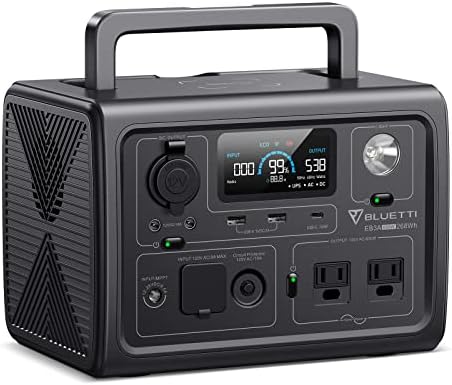
Midrange portable power stations usually cluster around the 300Wh to 1,000Wh span. They fit people who want a single unit for overnight backup, small appliances, and a wider mix of USB-C PD, USB-A, 12V car socket, and AC outlets. Their advantage is balance, while their compromise is that they do not stay light once capacity rises.
LiFePO4 often appears in this tier because buyers here usually care about cycle life as much as size. When your outage plan includes a router, a laptop, and a fan, this type gives more runtime than a small unit without moving into the bulk of a larger station.
High-Output Portable Power Stations
High-output portable power stations are defined by AC output around 1,800W. They suit kettles, microwaves, and many home backup loads that smaller inverters cannot support. Their main advantage is power delivery, and their main compromise is that the battery can still run down quickly if the load is heavy.
AC output power is the figure that matters here, not battery capacity alone. A station with strong watt-hours but weak AC output still fails on a startup surge, so this type is for you only when the appliance’s draw is the first constraint.
The mistake here costs time and a return. You plug in a kitchen load, the inverter cannot keep up, and you end up replacing a unit that was sized for runtime instead of output.
Expandable Portable Power Stations
Expandable portable power stations are built to grow with extra battery packs. They are for people who start with one unit but may need much more than 1,000Wh later, such as longer outages, van use, or multi-day off-grid work. Their advantage is flexibility, and their compromise is higher cost and more parts to manage.
Jackery Explorer 1000 Plus is a common benchmark in this class because expandable designs are usually judged by how far they can scale. If your needs change by season or by trip length, this type avoids buying a second station later.
Portable Power Station Types Compared
| Type | Best-fit buyer | Main advantage | Main compromise |
|---|---|---|---|
| Small portable power stations | Travelers and short-outage users | Low size and simple carry | Limited stored energy |
| Midrange portable power stations | Households needing overnight backup | Balanced capacity and output | Less portable as size rises |
| High-output portable power stations | People running kettles or microwaves | About 1,800W AC output | Heavy loads drain them quickly |
| Expandable portable power stations | Users whose runtime needs may grow | Extra battery packs add capacity | Higher cost and more complexity |
Which type of portable power station fits your situation?
Choose a small portable power station if your loads stay under a few hundred watt-hours and you care most about portability. Choose a midrange unit if you need one station for a laptop, router, lights, and a longer outage window. Choose a high-output unit if an appliance’s startup draw is the first problem. Choose an expandable unit if your runtime needs may outgrow your first purchase.
Portable power station priorities for different loads
If your use case includes a kettle, microwave, or similar load, prioritize AC output before battery capacity. If your use case is backup for electronics, prioritize watt-hours and recharge time before inverter size. If you are unsure, start with the load in watts and the runtime in hours, then match both numbers to the type.
Browse our other battery power station pages
- Which Portable Power Station Is Best for Hiking?
- Best Portable Power Station for Fishing
- Portable Power Stations for Emergency Backup Compared
- Choosing the Best Portable Power Station for Small Apartments Under $500
- Best Portable Power Station for Camping
- Portable Power Station for Home Backup Under $500 Compared