
Battery chemistry is the cell type inside a portable power station, and it determines cycle life, weight, and size. Your choice depends on whether you value longer service life, lower mass, or a smaller case. The first thing to decide is how often you will cycle it and how much weight you can carry.
Which battery chemistry suits which buyer?
| if this is you | the battery chemistry that suits you | why |
|---|---|---|
| You plan frequent charge and discharge cycles. | LiFePO4 | It is built around longer cycle life, so repeated use matters more than low mass. |
| You want the lightest carry for the same general size class. | NMC lithium-ion | It usually gives lower weight and smaller size, which helps when portability matters most. |
| You keep the unit for backup and expect long calendar use. | LiFePO4 | Long cycle life matters when the station may sit for long periods between uses. |
| You move it often between rooms, vehicles, or campsites. | NMC lithium-ion | Lower mass makes repeated carrying less awkward. |
| You want the chemistry choice to favor longevity over compact size. | LiFePO4 | It trades extra bulk for more charge cycles. |
| You care more about compact storage than long cycle life. | NMC lithium-ion | Smaller size is the main advantage when shelf space is tight. |
Portable Power Stations we have reviewed in detail
Each of the 3 shown here has its own full review on this site; they run from $109.99 to $179.99.

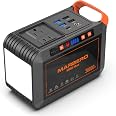
MARBERO MBM82SE Portable Power Station
If you are planning a trip, view our list of the best portable power station for travel to find a compact option.

How do you measure your own battery chemistry need?
Start with how many full charge cycles you expect in a year. If you will use the station only during outages, a rough count of a few cycles each year is enough. If you plan regular off-grid use, the count rises fast, and cycle life becomes the deciding factor.
How battery chemistry changes carry weight when full
Then check how much weight you can accept when the unit is full. The battery chemistry choice affects mass and enclosure size, so the number that matters is the carry weight you can move without planning around it. If you will lift it often, write down the heaviest weight you are willing to move alone.
Where the chemistry is usually written
Battery chemistry is usually listed in the product specs as LiFePO4 or NMC lithium-ion. Sometimes the listing names the cell type directly, and sometimes it uses a longer battery description that includes the chemistry. If the chemistry is not written, treat it as unknown until you find a full spec sheet or a retailer listing that states it plainly.
For household security, compare the best portable power station for emergency backup to ensure your lights stay on.
What to compare in your own situation
Compare cycle life against how often you expect to recharge. Compare mass against the distance and frequency of carrying. Compare size against the space where the station will live when not in use. Those three numbers decide more than brand language does.
Backup use favors cycle life over lower weight
If you are choosing for a backup role, prioritize cycle life over lower weight. If you are choosing for travel or frequent movement, prioritize mass over longer service life. That trade-off is the whole decision.
What goes wrong with the wrong battery chemistry?
Too much focus on compact size can leave you with a chemistry that gives up cycle life. The mistake shows up later, after repeated charging, when the station has spent more of its useful life than you expected. That is a long-term cost, not an immediate one.
Why choosing longevity can make a station harder to carry
Too much focus on longevity can leave you carrying more weight and volume than you needed. The mistake shows up every time you lift, store, or pack the station. A heavier unit is not a problem on paper; it is a problem on stairs, shelves, and vehicle loading.
LiFePO4 and NMC lithium-ion solve different portability needs
LiFePO4 and NMC lithium-ion solve different problems. LiFePO4 favors repeated use. NMC lithium-ion favors lower mass and smaller size. If your use case leans hard in one direction, the wrong chemistry makes the station annoying in the exact way you will notice most.
Understanding your needs is easier once you learn about the correct AC outlet voltage for portable power stations.
There is no chemistry penalty that appears instantly in normal buying. The cost shows up through inconvenience, storage pressure, or earlier replacement pressure, depending on which side you chose poorly.
What if you fall between LiFePO4 and NMC lithium-ion?
If you sit between the two, choose by how often you will cycle the station, not by the label on the box. A few uses each year points one way. Regular use points the other way.
When routine use makes long service life the tie-breaker
When both choices seem plausible, use the heavier-duty use pattern as the tie-breaker. Long service life matters more if the station will be part of your routine. Lower weight matters more if you will move it often and the carrying burden is real.
Returns and exchange policy matter here. A buyer who is unsure about weight or size should prefer a seller with a clear return window, because the right chemistry is the one that fits your actual carrying and storage limits.
If your needs are evenly split, write down the one thing you would regret more: extra weight or shorter life. That answer usually settles the chemistry choice faster than any spec sheet does.
Browse our other battery power station pages
- Portable Power Stations for Emergency Backup Compared
- Choosing the Best Portable Power Station for Small Apartments Under $500
- Best Portable Power Station for Camping
- Portable Power Station for Home Backup Under $500 Compared
- Choosing the Best Portable Power Station for CPAP
- The Portable Power Stations That Work Best for Travel