
Portable power station battery capacity should usually land between 300 Wh and 1,000 Wh. Use 300 Wh to 500 Wh for phone, tablet, and light laptop backup, and 1,000 Wh or more when you need longer runtime or higher-draw appliances.
Recommended Battery Capacity by Use Case
| use case | recommended battery capacity | why this number |
|---|---|---|
| Phone and tablet backup | 300 Wh to 400 Wh | Enough stored energy for short outages, charging cables, and a small margin without carrying excess capacity. |
| Light laptop and mixed USB charging | 400 Wh to 600 Wh | Gives more runtime for a laptop, a phone, and a few accessory charges before you need to refill. |
| Weekend car camping | 600 Wh to 800 Wh | Fits overnight use with a broader cushion for lights, small fans, and repeat device charging. |
| Home backup for routers and small electronics | 800 Wh to 1,200 Wh | Helps cover longer outages when you need more than a few hours of runtime. |
| Higher-draw appliances for meaningful periods | 1,000 Wh to 2,000 Wh | Stored energy matters more here because short runtimes become the main problem with smaller packs. |
| Extended off-grid use | 2,000 Wh and up | Useful when recharge access is limited and you want several days of reserve from one charge. |
Products in this category with a full review here
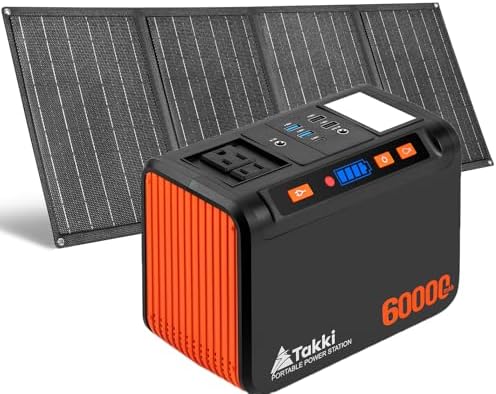
Each of the 3 shown here has its own full review on this site; they run from $169.99 to $1099.


What happens if you go under or over?
Too little battery capacity gives you the wrong runtime first. A 300 Wh unit can still power a device, yet it may run out before your workday, overnight trip, or outage ends.
Underbuying also creates a second problem: you may lean on AC output power while ignoring stored energy. A unit can have enough wattage for the device and still empty too quickly for the job.
If you are planning a trip, you can view our top picks for travel power to find a compact unit.
Overbuying costs weight, space, and money in stored energy you may never use. If you only charge a phone and a laptop, 1,000 Wh can sit idle while a 400 Wh to 600 Wh unit would cover the same routine.
That tradeoff matters most when your use case is predictable. If you mainly want overnight backup for a router and a phone, extra Wh buys margin, not a new capability.
A 1,000 Wh pack makes more sense when runtime is uncertain or recharge access is limited. In that case, the extra capacity reduces the chance that the station dies before the task does.
What mistake do most buyers make with battery capacity?
The most common mistake is treating battery capacity as the only number that matters. Battery capacity in Wh sets stored energy, but it does not tell you how much power the AC outlets can deliver at once.
If your load is small, more Wh often buys longer runtime, not a different class of use. If your load is large, a bigger battery can still fail the job when AC output power is too low.
That is why you should optimize for the task first. Start with the device or devices you need to run, then work backward from their watt draw and the hours you need.
If your goal is a laptop charge, a router, and a phone, stored energy around 300 Wh to 600 Wh usually deserves more attention than a huge inverter rating. If your goal is a kettle or microwave, capacity matters, but output power becomes the first filter.
A buyer planning a 12-hour outage should think in Wh before anything else. A buyer planning a 1,500 W appliance should think about the outlet limit first, because capacity alone cannot cover a wattage mismatch.
How does battery capacity interact with other deciding specs?
Battery capacity works with AC output power, recharge time, and outlet mix. A large Wh rating loses value if the inverter is too small, the recharge is too slow, or the station lacks the outputs you need.
AC output power sets the ceiling
AC output power decides how much load the station can supply at one time. A battery with 1,000 Wh still cannot run a 1,800 W appliance if the inverter is rated far lower.
Homeowners seeking reliable power during a blackout should compare the best portable power station for emergency backup to see which model lasts longest.
That is the key mismatch to watch. Capacity affects runtime, while output power affects whether the appliance starts and keeps running.
Recharge time changes how useful the Wh rating is
Recharge time matters when you will cycle the station often. A high-capacity unit that takes many hours to refill can be awkward for daily use or short outage windows.
If you plan to recharge from solar, car power, or wall power between uses, slower refill times reduce the practical value of extra Wh. In that case, a smaller battery with faster recharge may serve you better.
Outlet mix decides what that capacity can reach
The outlet mix determines whether you can use the stored energy without adapters. USB-C PD, USB-A, 12V car sockets, and AC outlets each serve different loads.
A large battery with only one useful output type can waste capacity on the wrong connection. If your devices are mostly USB-C, capacity is less useful than a layout that supports direct charging.
Battery chemistry affects how you should size the pack
LiFePO4 and NMC lithium-ion point to different tradeoffs. LiFePO4 usually suits buyers who want longer cycle life, while NMC often helps when size and weight matter more.
That choice changes how much capacity feels practical to carry. A larger Wh figure is easier to justify when the chemistry keeps the pack appropriate for repeated use.
Capacity and the reference tiers in this category
The 300 Wh reference figure marks the rough floor for useful overnight phone or laptop backup. Once you move beyond that level, the question becomes how much runtime you need, not whether the station can do anything at all.
The 1,000 Wh reference figure is the point where higher-draw appliances become realistic for meaningful periods. If your use case sits near that line, capacity is the spec that usually separates short backup from broader household support.
Where to go next in our battery power station coverage
- Choosing the Best Portable Power Station for Small Apartments Under $500
- Best Portable Power Station for Camping
- Portable Power Station for Home Backup Under $500 Compared
- Choosing the Best Portable Power Station for CPAP
- The Portable Power Stations That Work Best for Travel
- Which Portable Power Station Is Best for Hiking?