
Portable power station AC output power should usually fall between 600 W and 1,800 W. If you only need phone chargers and small electronics, 300 W to 600 W is enough, while appliances with startup loads usually need 1,000 W or more.
Recommended AC Output Power by Use Case
| use case | recommended AC output power | why this number |
|---|---|---|
| Phone, tablet, and laptop charging | 300 W to 600 W | These loads are small, and this range covers chargers without paying for unused inverter capacity. |
| Mixed personal electronics | 600 W to 1,000 W | This range gives room for several chargers, a monitor, or a small fan without moving into appliance territory. |
| Kitchen basics and small appliances | 1,000 W to 1,500 W | Many devices in this group draw more at startup than their steady draw suggests. |
| Higher-draw household backup | 1,500 W to 1,800 W | This range is for users who want to cover kettles, microwaves, and similar loads for short periods. |
| Light-duty emergency backup | 600 W to 1,000 W | This is the practical middle ground if you want more than charger support but do not need large appliances. |
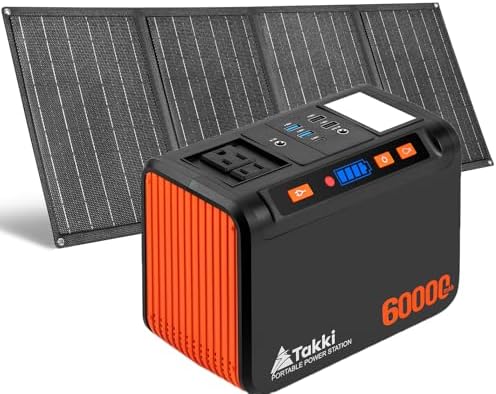
Portable Power Stations covered by our own reviews
Prices across these 3 run from $119.99 to $1099; each one has a full review here.


What happens if you go under, and what happens if you overbuy?
Too little AC output power causes wattage mismatch first. The station may trip or shut down when a device starts, even if that device seems modest on its label.
If you are planning a trip, you should view our list of travel-friendly power units to find a lightweight option.
That risk is highest with appliances that have startup surges. A 700 W heater or blender can ask for more at startup than a 1,000 W inverter can comfortably provide, so the steady number alone is not the whole story.
Overbuying has a real cost too. A 1,800 W inverter adds capacity you may never use if your loads stay under 300 W, and that extra headroom can mean paying for a larger, heavier unit than your use case needs.
Think of it like a road with lanes you never drive in. More lanes do not shorten your commute if your traffic is still one small car.
If your loads are uncertain, prioritize the largest startup draw you expect, not the average draw. That is the figure that decides whether the AC outlets stay usable.
What mistake do most buyers make with AC output power?
The mistake most buyers make is optimizing for watt-hours before AC output power. Battery capacity decides how long a unit can run, but AC output power decides what it can run at all.
If you need to power a kettle, microwave, or tool with a startup surge, the inverter rating matters first. A large battery with a weak inverter still cannot supply enough power at once.
For phone charging and small electronics, you should optimize for the outlet mix and the inverter rating together. A portable battery generator with 600 W and the right ports is often more useful than a bigger battery with the wrong AC limit.
Buyers often ask for the largest watt-hour number they can get, then discover the AC side is the real bottleneck. If your goal is to run one appliance, power output beats stored energy as the first filter.
For home security, explore our comparison of reliable emergency backup units to ensure you stay powered during a blackout.
How does AC output power interact with other deciding specs?
AC output power only matters when the other deciding specs support it. A high inverter rating is wasted if battery capacity is too small for the runtime you need.
That is the usual tradeoff between 300 Wh and 1,000 Wh. The first can cover overnight phone or laptop backup, while the second is the point where higher-draw appliances become practical for meaningful periods.
Recharge time can also cancel out a strong AC rating. If the unit recharges slowly, a battery power station may spend too long unavailable during outages or long trips.
Output mix matters as much as output wattage. A station with AC outlets but no USB-C PD or 12V car socket may force adapters, even when its inverter rating is sufficient.
AC outlet voltage is separate from AC output power. Voltage describes electrical pressure at the outlet, while AC output power describes how much power the inverter can deliver at one time.
Pure sine wave output matters for sensitive electronics. If that standard is absent, a strong watt figure does not remove compatibility risk for devices that expect cleaner AC.
LiFePO4 versus NMC lithium-ion changes how you weigh power against size. If you want longer cycle life, LiFePO4 often matters more than chasing a higher AC number in a smaller shell.
For many buyers, 600 W is the practical floor for a useful portable power station. Above that point, the question shifts from “can it run my charger?” to “can it start the appliance I actually want to use?”
Every battery power station guide in this category
- Portable Power Station for Home Backup Under $500 Compared
- Choosing the Best Portable Power Station for CPAP
- The Portable Power Stations That Work Best for Travel
- Which Portable Power Station Is Best for Hiking?
- Best Portable Power Station for Fishing
- Portable Power Stations for Emergency Backup Compared