
AC outlet voltage is the AC pressure at the outlets, measured in V, and it tells you what voltage your portable power station must match. The right value depends on the appliances you own, the country standard you use, and whether your loads expect 120 V, 220 V, or 230 V. Check the label on the device, its charger, or your wall outlet before you choose.
Which AC Outlet Voltage Suits Which Buyer?
| if this is you | the AC outlet voltage that suits you | why |
|---|---|---|
| You live in a 120 V region and plan to power local appliances. | 120 V | It matches the voltage many household plugs and chargers expect in that market. |
| You live in a 220 V or 230 V region. | 220 V or 230 V | That keeps the station aligned with the local mains standard and avoids a mismatch. |
| You move equipment between countries. | A dual-voltage output, if offered | That reduces the chance that one appliance needs a separate converter. |
| You only charge USB devices and low-voltage electronics. | Any AC outlet voltage your region uses | The AC value matters less if you rarely use the AC outlets at all. |
| You already know every AC appliance you own is rated for one voltage. | That same voltage | Matching the appliance label is the safe starting point. |
Where these choices show up in our reviews
Each of the 3 shown here has its own full review on this site; they run from $109.99 to $179.99.


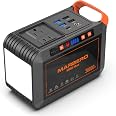
MARBERO MBM82SE Portable Power Station
If you are preparing for a blackout, you should compare the best portable power station for emergency backup to see which model offers the most reliable protection.
How Do You Find Your AC Outlet Voltage?
Find your AC outlet voltage from the labels already on your gear. The number is usually printed on the appliance nameplate, the charger brick, the manual, or the wall outlet standard in your country. A multimeter can confirm wall voltage, but the appliance label is the first number that matters for a portable power station.
Matching AC output voltage to the appliance label
Start with the device you plan to run most often. If the label says 120 V, 120 V is the figure to look for in the station’s AC output. If the label lists 220 V to 240 V, that range tells you the appliance is built for the higher-voltage side of the market. Keep the unit’s AC output in the same family as the device label, not the other way around.
Why adapters and cords do not change voltage
Extension cords, plug adapters, and travel plugs do not change voltage. They only change the shape of the connection. That is why a plug adapter can make a socket fit while the wrong V still causes trouble.
Where the number is usually written
On a wall outlet, the country standard is often enough to identify the value, especially when the label is missing.
A charger marked 100 V-240 V can usually work across that span, while a single-voltage appliance cannot. The range on the label is the clue, not the plug shape.
What Goes Wrong With the Wrong AC Outlet Voltage?
The wrong AC outlet voltage usually shows up as a mismatch, not a mystery. Too low for the appliance can mean the device will not run as expected. Too high for the appliance can damage the device or make its protection shut it down.
What happens when appliance voltage and output mismatch
A 120 V appliance on 230 V output is the sharper error. The mismatch is immediate and can be expensive. A 230 V appliance on 120 V output is less dramatic, but it often means the device will not start or will run poorly.
Understanding how different technologies affect longevity is easy when you learn about battery chemistry for portable power stations before making a purchase.
Voltage and wattage mean different things
Some buyers confuse voltage with wattage. Those are different limits. Voltage is the pressure at the outlet, while wattage is the amount of power the station can deliver at once.
Enough watts do not fix the wrong voltage
That mistake matters because a station can have enough watts and still have the wrong V for your appliance. The result is not weak performance. It is incompatibility.
What If You Are Between Two AC Outlet Voltages?
If you are between two AC outlet voltages, choose the one your main appliance label names. That is the deciding rule. The appliance’s required V matters more than the station’s broader appeal.
When your gear includes both 120 V and 230 V items, separate the decision by device. One station may suit one group and not the other. In that case, the right answer depends on which load you will actually power from the AC outlets most often.
How dual-voltage output helps with different appliances
If the station offers a dual-voltage output, that can reduce the conflict. It gives you more room to match different appliances, but only if the station’s other specs also fit your use. Returns matter here if you are buying online, because voltage mismatch is one of the easier mistakes to miss before the box arrives.
Why the device label should win between close voltage values
When two values both seem close enough, do not average them. Pick the value that matches the label on the device you care about most. If that device is the one you would hate to replace, its label wins.
Every battery power station guide in this category
- Choosing the Best Portable Power Station for CPAP
- The Portable Power Stations That Work Best for Travel
- Which Portable Power Station Is Best for Hiking?
- Best Portable Power Station for Fishing
- Portable Power Stations for Emergency Backup Compared
- Choosing the Best Portable Power Station for Small Apartments Under $500